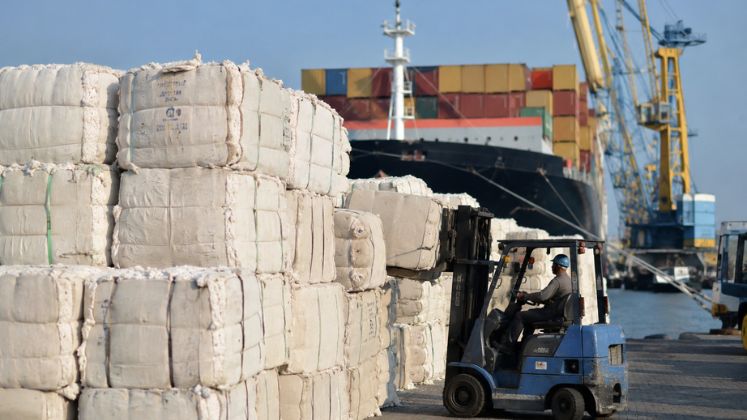
India could import between 35 lakh and 40 lakh bales of cotton during the government’s temporary duty-free import window, according to the Cotton Textiles Export Promotion Council (TEXPROCIL), as the textile industry seeks to address domestic supply shortages and ease raw material costs.
The government recently removed the 11% import duty on cotton until 1st October, a long-standing demand of the textile industry. The move comes amid concerns that domestic cotton production has been unable to keep pace with rising demand from spinning mills, garment manufacturers and exporters.
Siddhartha Rajagopal, Executive Director of TEXPROCIL, said that domestic cotton output had consistently fallen short of industry requirements over the past four to five years, creating a supply-demand gap that has necessitated imports.
According to Rajagopal, the expected increase in cotton imports is unlikely to have a significant impact on domestic farmers, as the majority of the local cotton crop has already reached the market. He described the duty exemption as a temporary measure aimed at improving cotton availability and stabilising prices.
The industry body expects the duty waiver to provide relief to textile manufacturers grappling with elevated cotton prices and rising input costs. Rajagopal noted that spinning mills, garment exporters and small textile enterprises are likely to be among the biggest beneficiaries of lower-cost cotton imports.
India remains one of the world’s largest cotton producers; however, industry estimates suggest that annual domestic cotton consumption could reach between 328 lakh and 340 lakh bales, exceeding current production levels.
The duty exemption is also expected to strengthen India’s competitiveness in global textile and apparel markets. Industry stakeholders believe improved access to competitively priced cotton could help Indian exporters compete more effectively with regional rivals such as Bangladesh and Vietnam, particularly as global trade conditions begin to stabilise following recent tariff-related disruptions.
Rajagopal further noted that the removal of the 11% import duty would reduce a major cost burden for textile manufacturers, as raw material expenses remain a critical component of overall production costs across the value chain.