Finnish fibre maker Spinnova has joined forces with Swedish textile recycling innovator Renewcell to develop and scale what they describe as a ‘first of its kind’ textile waste-based fibre that can be spun into new fibre without harmful chemicals.
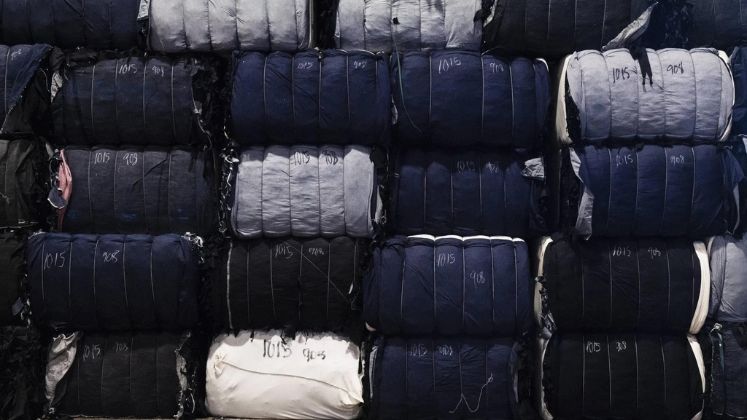
Utilising a proprietary technique, Renewcell recycles cellulosic-rich textile waste, including cotton and viscose, into circulose, a type of pulp. The biodegradable base material, which may be used to make new fibre, is made entirely from recycled textiles.
According to the companies, circulose has previously been used to make synthetic cellulosic fibres like viscose. Circulose may now be converted into a new, biobased textile fibre without the need of any hazardous chemicals thanks to the use of Spinnova’s technology.
The pair characterise it as a significant step towards tackling the industry’s mounting textile waste issue and establishing new benchmarks for the manufacture of sustainable textile fibres.
The circulose pulp was spun into novel textile fibre in successful tests, according to Spinnova. The initial batches of 100 per cent circulose-based Spinnova fibre have been manufactured for yarn and fabric creation, and the initial prototypes include a mix of cotton and circulose-based Spinnova fibre.
Ben Selby, deputy CEO of Spinnova, believes that the fashion and textile sector needs innovative ideas and collaboration throughout its supply chain.
Both Spinnova and Renewcell state that they are now exploring opportunities for scaling up the manufacturing of textile-to-textile fibre with possible partners and anticipate beginning the development of the first consumer collection made from Spinnova fibre based on circulose.
It is anticipated that by the end of 2024, the first consumer items resulting from this collaboration will be ready.