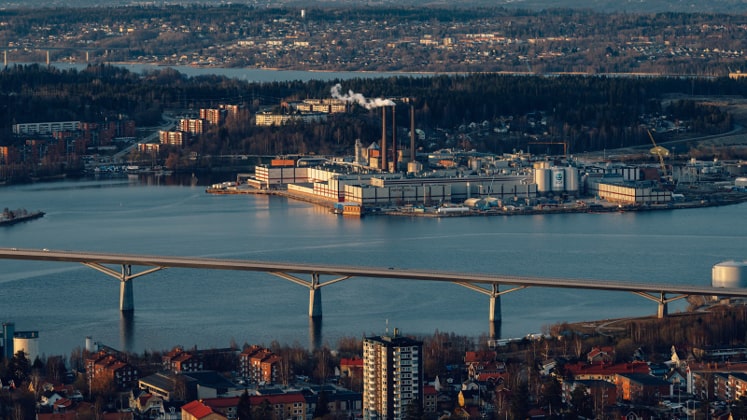
The major Chinese viscose maker Tangshan Sanyou and the Swedish textile-to-textile recycling pioneer Renewcell revealed the next phase of their relationship to make fashion circular, which dates back to 2018.
The announcement was made on the fringes of the Intertextile Shanghai trade show. The new joint goal of the two businesses is to start commercially distributing Circulose® viscose fibres manufactured entirely of recovered textiles in 2024. The partnership has been made possible by Ekman Group, Renewcell’s sole international trading partner.
“I am very happy to announce this acceleration of our long-standing partnership with Tangshan Sanyou. They were the first commercial producer of Circulose®-based fibers in the world and the first to commit to sourcing significant volumes from us. Now, they aim to also be the first to commercialize 100% Circulose® content fibers” said Patrik Lundström, CEO of Renewcell, adding “I applaud Tangshan Sanyou’s vision and support to scaling next-gen raw materials like Circulose®.”
The announcement, which comes after the recent start of 100% recycled textile Circulose® pulp deliveries from Renewcell’s newly opened Renewcell 1 recycling plant, is the result of the Circulose® product’s high quality being successfully validated in production at Tangshan Sanyou’s commercial-scale manufacturing lines.
When it comes to delivering 100 per cent Circulose® content branded viscose fibres to chosen fashion brands and manufacturers starting in 2024, Tangshan Sanyou will seek to complete the mission of producing commercial volumes of 50 per cent Circulose® content fibres during 2023. Using Renewcell’s Circulose® ingredient brand name, the two businesses will work together to sell the fibres internationally.
Mr. Zhang Dongbin, Executive Vice General Manager of Tangshan Sanyou Chemical Fiber, says, “Through the collaboration with Renewcell, we have achieved to use Circulose® made from recycled cotton in the production of our viscose fibers, which is greatly beneficial to improving resource utilisation efficiency and lowering carbon footprint of the industry. It has brought a huge impact on the sustainable fashion industry. We will continue putting efforts into forming good interactions between consumers, brands and enterprises, conveying the concept of circular sustainable fashion, promoting the greening of textile industry, and ensuring a more sustainable way to ensure the sustainable development of the textile industry. Protecting the global ecological environment by applying sustainable solutions is our common goal.”





 Bharat Tex Special Report 2026