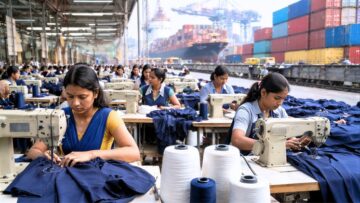
Speakers at a recent event have underscored the pressing need for safe, discrimination-free workplaces and effective grievance redressal mechanisms for women in the ready-made garment (RMG) sector. The gathering highlighted the importance of ensuring maternity leave wages and providing secure transportation for female workers.
Despite the economic empowerment achieved through formal employment in the RMG sector, women workers continue to face vulnerabilities, including violence and sexual harassment both at work and during their commutes. This was a key point of discussion at the event titled Learning Together: A Gender Justice Journey, organised by the Shojag Coalition in collaboration with the European Union at BRAC INN, Dhaka.
The event was part of the project Promoting Gender Justice for Women Workers in the Ready-Made Garment Sector and brought together a diverse group of stakeholders, including employers, buyers, NGOs, INGOs, UN officials, and trade union representatives.
Speakers noted that the RMG sector is a crucial pillar of Bangladesh’s economy, contributing 83 per cent of export revenue and employing 2.59 million workers, of whom 57 per cent are women.
Taposh Barua, program manager at Ethical Trading Limited, pointed out that many factories handle grievances informally and are reluctant to document complaints due to fears of negative audit repercussions. Anindita Ghosh, senior program officer at Solidarity Center, highlighted that the lack of automation training for women and the absence of childcare facilities are contributing factors to the declining number of women in RMG factories.
Mohammad Maruf Hosain, deputy manager at ActionAid, remarked that women predominantly occupy sewing operator roles, with limited opportunities for advancement to mid-level management positions. He also noted the troubling trend of dismissals for women workers over the age of 35.
Sunzida Sultana, executive director of Kormojibi Nari, explained that recent amendments to labor laws and a 2009 High Court ruling on workplace harassment have created legal pathways to address gender-based violence (GBV). She also mentioned the International Labour Organization’s (ILO) guidelines on Occupational Safety and Health that now include GBV, offering avenues for systemic change.
Laila Jasmin Banu, program manager at the European Union Delegation to Bangladesh, reaffirmed the EU’s commitment to promoting gender justice through funded projects and the implementation of best practices for future initiatives.
Nuzhat Jabin, country director of Christian Aid Bangladesh, called for concerted efforts at both factory and community levels to tackle GBV, emphasizing that the challenges faced by gender-diverse communities also require urgent attention and resolution.
The event served as a critical platform for discussing the urgent need for reforms and initiatives that can enhance the safety and rights of women workers in the RMG sector.