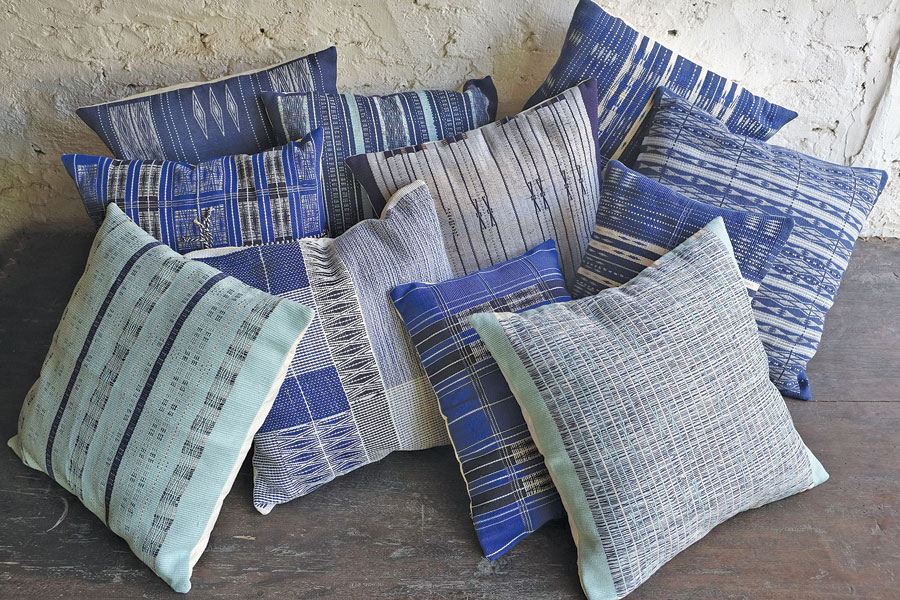
These companies are not in established hubs or even in those cities which have proper industrial areas, but are still able to manage their home furnishing export business by their sheer grit and product offerings. Missing the ecosphere of advantages that working in hubs/clusters give to a manufacturing unit, it is very difficult to survive in such outlying areas, yet the circumstance also has its own few benefits. Within limited resources, while some units are just surviving, few others are actually growing. Apparel Online identified a few such companies and discussed with them the advantages and disadvantages of their locations. Interestingly, each one had almost similar problems but individual values. Also, most of these units are based in such remote areas just because they belong to that particular place.
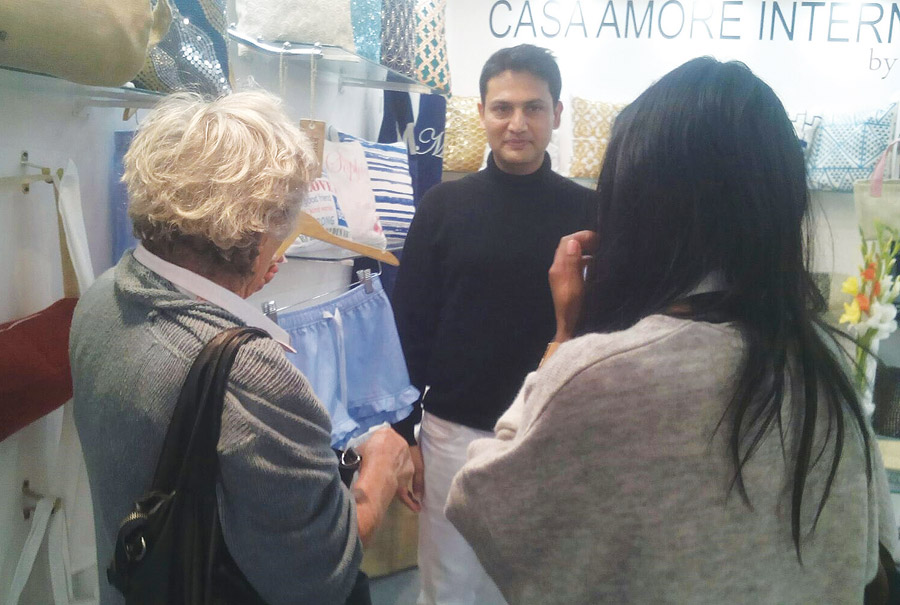
Lack of talent, specially merchandisers, designers and support services, difficulty in accessing raw materials, logistics issues and no buyer visitation…, are the major obstacles that the companies operating in remote areas face. On the other hand less overheads, comparatively cheap land, easy access to administration, peaceful working conditions, local edge of designs/handwork, etc. are the benefits for them. Panjim, which is a famous tourist place, is also the location for Casa Amore International which is the only home furnishing export unit in this city for the last 11 years. Offering good range of bedding, decorative pillows, kitchen linen, yoga mat bags, and that too in organic material, the company is a winner indeed! “We have enough land and buildings in the area to get property on reasonable rent, also there is easy access to local administration and, if required, to the legislature also in case of any problem. Labourers work here peacefully and I don’t need to worry about their unrest or other related issues, but logistics and manpower availability are the challenges. As population is less and people have many employment opportunities, labour is not easily available,” shares Sunil Kumar Dwivedi, CEO of the company, which is exporting to the US, Japan and France, having capacity of producing 10,000 pieces per month.

Heirloom Naga, Dimapur (Nagaland) is perhaps one of the best examples of a unit that enjoys the edge of local tradition and crafts, to indulge in innovative product development which makes it possible to offer niche products. Founded by Jesmina Zeling, a respected name in this industry from the North East, the company has been awarded many times for product innovation. Jesmina strongly feels that there is little advantage of being at Dimapur apart from the Loin Loom, as the Nagas are expert weavers on the traditional loom called the Loin Loom, which is basically a primitive back strap tension loom that is totally dependent on the weaver to use his/her expertise to weave the fabric. “Our operational cost is little less, basic infrastructure is good and we do have labour as there are many trained people who are leaving their traditional work for lack of engagement. So I see full scope for further development of the industry in this area,” says Jesmina. The company, which achieved good growth in the last few years, is proud to partner with a large group of highly skilled women weavers, exporting to the US, EU and Japan.

Similarly, another lady entrepreneur Dr. Mallamma Yalawar, Founder and CEO, Sabala Handicrafts, Bijapur (Karnataka) which is 360 kms. from Hyderabad, is exporting variety of home furnishing products to Europe and Canada. She too is of the opinion that there is no major advantage in working in remote areas and is in fact managing transportation from the nearby villages from where she gets the job done, and of course is a big challenge. “I started this work as an NGO and support local people by offering them employment. But due to legal aspects I turned it into a private company; and still we follow the concept of support, thus giving us an edge with few buyers who believe in fair trade and in turn place orders with us.
Working with workers based in villages is also a difficult task as they have an entire different culture, and work doesn’t seem to be their priority,” shares Dr. Mallamma. The company has expertise in creating lingerie bags which is a niche product.
Moving from Karnataka to Andhra Pradesh, Shiva Kumar Hemdev, Owner, Sri Devi Exports, Rajahmundry (150 kms. from Vijayawada), is also the only company in Rajahmundry city in the trade and he claims not to be having any single advantage. “Nothing is cheap here and due to lack of labour contractors, we are forced to keep all workers on payroll which adds to the cost,” says Shiva. Exporting one lakh pieces per month to countries like US, Europe, Japan and Australia, Shiva doesn’t see any further scope to expand his business. The company manufactures bedding, curtains, cushions and accessories.
Agra, the leather city, too has 5-7 firms which are doing home furnishing (soft goods) but even they don’t see any benefit, though there is easy approach to local administration and scope for further expansion. One of the companies, Balaji Overseas is planning to start its operation in Panipat as Ashish Agarwal, Director of the company told, “We made our base here with sheer hard work of 10 years but now without moving to a hub it is very difficult to achieve good growth.” Similar is the condition in Hathras, as it too has some units in the segment, but all are struggling due to the above mentioned reasons. Few places in Nadia (115 kms. from Kolkata), have small-level firms which are into export but are enjoying the benefits of handwork of Bengal.