Ownership is highly overrated and the millennial population has conveyed it very efficiently. Sharing economy is the new in-thing globally and in India and as per a research, by 2025, it is estimated that many areas of the sharing economy will rival the size of their traditional counterparts. This has evolved in such a way that sharing model has become a default choice for younger consumers in the society. While categories like real estate, furniture, automobiles, etc., have been excelling in this model, clothing and accessories segment is now taking up the market by storm and it makes perfect sense for people who cannot afford luxury brands but do appreciate the intricacies and quality. According to a report by Allied Market Research, globally, online clothing rental market size is estimated to reach US $ 1,856 million by 2023, growing at a CAGR of 10.6 per cent from 2017 to 2023. And this is estimated to grow at a much faster rate in India. The online fashion rental market in India, pegged at US $ 3-4 billion, has been expanding continuously with a number of existing players as well as start-ups like Flyrobe, Rent It Bae, Stage3, The Clothing Rental, LibeRent, among others, which are extensively attracting seed funding.
The clothing rental firms understand the nerve of the millennial customers and are operating in an endeavour to make fashion affordable and easily accessible. Also, its no more a taboo to sport clothes that are rented and not owned, but this is considered practical and economical considering the sartorial demands of a much busy social life.
Market status and growth drivers
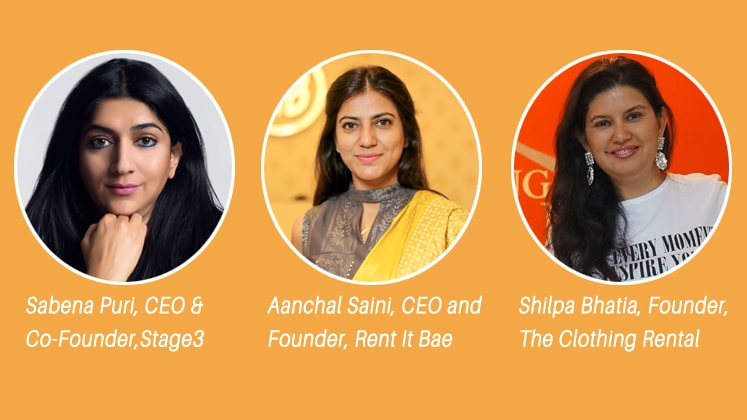
Fast fashion is not a sustainable practice and to top it, the shopping behaviour of today’s millennials has changed drastically wherein they need a new garment for every occasion. And this has led to rise in rental market in developing economies of Asia-Pacific as they are looking for an economical alternative to direct purchasing every time. Fashion rental sites have emerged all over the world — from Rent The Runway in US, to Girl Meets Dress in the UK to Flyrobe in India — and this has accelerated growth of the segment at a rate never thought before. While few think sharing economy will mark the end of hype-consumption, there remains an argument that the segment is yet to grow multi-fold to replace ownership. “Rental industry in India is in an extremely nascent stage. Consumers are just getting aware of fashion rental market and are quite bewildered with the concept and it will take quite some time for the industry to grow organically. We are fast moving into an age where attention span is often limited and the audience is craving for freshness, newness and quick ease and a lot of brands are taking cue to cater to these needs; I don’t see the end of hyper-consumption anytime soon and there will be co-existence of fast fashion and rental industry in the times to come,” affirms Shilpa Bhatia, Founder, The Clothing Rental.
While there has been a huge surge of start-ups in the segment, it is still in its early stage while North America is the market leader in the category, accounting for 40 per cent of the global market in 2017, followed by Europe and Asia-Pacific which is estimated to be growing at the highest CAGR of 11.64 per cent during the forecast period. The fashion rental space in India is extremely influenced by Bollywood and is further accelerated by the wedding industry as dressing up for occasions is a type of status symbol for the aspirational India. So, what really is driving the growth of this niche market? Apparel and fashion requirements among millennials have transformed from need-based to aspiration-based where consumer are either frenzied social media users or avid Bollywood fans and their sartorial choices are influenced more than ever before by the country’s leading designer fashion and celebrity wardrobes. “There are a lot of factors affecting this segment. Millennials and Generation Z value experiences over possessions and it is about access versus ownership for them; the increasing prevalence of social media has made wardrobes more susceptible than ever before; and an increased interest in sustainability by utilising existing resources instead of creating new garments. Also, the fashion rental websites help designers with an exponential increase in market size, including access to a younger consumer base as also visibility in Tier-2 and Tier-3 cities,” asserts Sabena Puri, CEO & Co-Founder, Stage3.
What’s on offer?

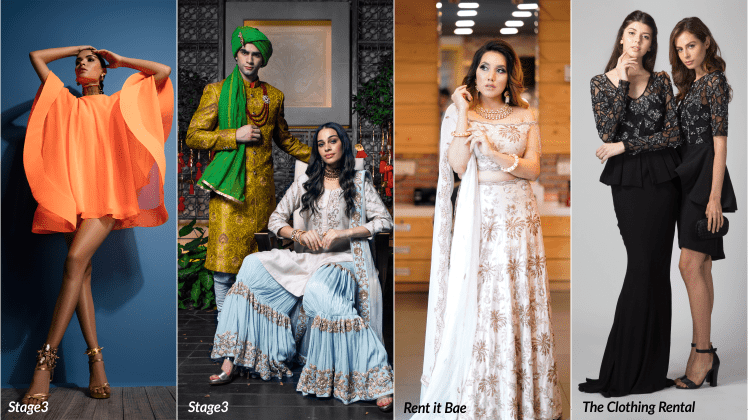
Sourcing from aspirational brands, upcoming as well as established designers and high-end stores, the fashion rental companies offer products in both ethnic and western category for men and women, which comprise of range varying from tuxedos, shervanis, kurtas, shirts to shoes and accessories for men and lehengas, sarees, gowns, dresses, workwear, footwear, clutches and jewellery for women. These exquisite collections can be rented within three hours or more for a period of three to four days usually and the rental cost varies between the range of 10-15 percent of the retail price of the product. “At Rent It Bae, we offer a variety of clothes and accessories from popular brands, including high-street and luxury labels even as we also have an in-house brand which is curated by our own stylists and offers unique designs which are not easily available in the market. Our target consumers fall in the age group of 20-45 years with an annual income of Rs.2 lakh and above. The rentals are 10-15 percent of the retail price and there also is a security deposit with few products (mostly ethnics), the refund of which is made via account transfer after the product reaches the warehouse and goes through a quality check process,” maintains Aanchal Saini, CEO and Founder, Rent It Bae. Additionally, subscription model has added to this industry and is taking it a notch higher as Aanchal informs, “We have introduced an unlimited Fashion Subscription Model for Rs.3,999 per month, according to which an ‘Unlimited’ member can pick 2 dresses and 1 accessory to build their fashion box and keep the selects for as long as they wish till the subscription period lasts. The consumer can, at any point of time, exchange the products as he/she pleases.”
There are, however, concerns of hygiene issues attached with the fashion rental system but the rental firms claim that every product goes through a series of quality checks and is drycleaned and sanitised after every return, before it goes out to the users. The consumers also get customised fittings done and avail personalised delivery system, all in the comfort of their homes. Even as the business is brisk, it is worth mentioning that women end user segment accounts for the highest market share accounting for nearly 58 per cent, while the men end user segment is catching up with growing will to dress up for occasions. Furthermore, ethnicwear segment possesses higher market share and is expected to witness a considerable growth, on the back of factors like frequent use in festivals, higher cost of rental and greater maintenance costs. “For Stage3, festive and wedding season remains the most active time of the year. The latter half of the year sees the most traction with rentals since people usually have numerous events during then,” confirms Sabena.
Challenges and roadblocks
Even as the industry is growing at a phenomenal rate and is a huge rage among millennial population of today, fashion rental industry still has challenges which would take more time and efforts by the start-ups in the segment to pass through. “The primary roadblock at this point is the stigma attached to the idea of renting versus owning. Customers are also sceptical about hygiene issues associated with renting a garment. Educating them about the same is a task we are overcoming with time,” maintains Sabena. The segment is new and has immense potential which has attracted a lot of players trying the model, which Shilpa from The Clothing Rental, feels is a challenge moving forward since too many firms ‘are trying to ape each other and are losing on the identity and thereby also diluting the model’. The rental start-up invests around 5-10 per cent of its revenue in marketing to keep it above others and in the minds of the consumer. Having both online and offline presence, The Clothing Rental, amongst most other renting platforms, opines to have a stronger traffic offline than online, however they prefer to be present through all the mediums possible in order to remain as close as possible to their end users.
Customer retention remains a problem in businesses like these but contrary to the contention, these start-ups has shown an impressive rate of repeat customers. “Our initial stages of marketing focused on social media platforms like Facebook, Google, Roposo and Instagram. Gradually, the fashion rental start-up built a strong pool of social media influencers and bloggers. It recently tied up with celebrities, including Bani J, Daisy Shah and Nitibha Kaul, which has contributed to customer retention,” prides Aanchal.
The road ahead…

The allure of no ownership is moving beyond what the consumers or even start-ups riding the model, could ever have thought of. While the majority of orders come from the metro cities, a number of them also come from aspirational consumers of Tier-2 and Tier-3 towns. “We don’t have an offline presence in Tier-2 and Tier-3 towns. We believe that at this stage, the industry will work majorly in metros. However, we do ship all over India and to remote places too but most of the online orders come from metro cities,” says Shilpa.
Rental market has matured as a model in India courtesy the digitisation and the e-commerce boom and start-ups are trying to grab a pie of the overall industry. Though it is still too early to predict the exact future of this segment, renting sure has found favour with this generation and start-ups are not shying away from expanding their presence to become the next Amazon of the fashion rental space. Stage3 is planning to open 30 stores across the country in the next two years and also extending its inventory to include maternitywear and kidswear, even as The Clothing Rental is keeping it slow and is growing organically in accordance with the industry and the consumer trends, and Rent it Bae has plans to go tech-savvy in its stores.