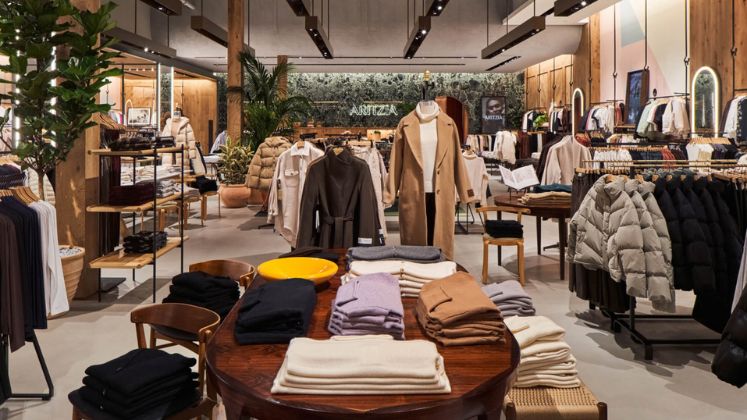
Several apparel retailers, including Levi’s and Canadian label Aritzia, are moving towards selling more full-priced products, testing the spending power of affluent shoppers despite the ongoing impact of tariffs.
Levi Strauss raised prices on some products in July without seeing a slowdown in demand, according to chief financial officer Harmit Singh, who spoke at the Goldman Sachs Global Retailing Conference in New York. Singh said the company was making a stronger push into full-price sales than in the past, noting that Levi’s typical customer earns over US $ 100,000 a year and remains resilient despite wider economic pressures.
Aritzia’s finance chief, Todd Ingledew, offered a similar perspective, saying that the company had seen minimal impact on US customer spending since raising prices earlier this year. He explained that the brand, popular among celebrities, would not pursue aggressive discounting during the holiday season. Instead, it planned just one week of sales around Black Friday, with a return to full-price offers immediately after Cyber Monday.
While lower-income households continue to seek bargains as companies raise prices to offset trade war costs, wealthier consumers remain largely unaffected. Analysts noted that strong stock market gains and relatively low credit card debt have cushioned higher earners. According to Moody’s Analytics, the top 10% of US households—those making at least US $ 250,000 annually—now account for half of all consumer spending.
Other retailers are also adopting the full-price model. Ralph Lauren’s chief executive Patrice Louvet said earlier in August that the company had been shifting its focus towards a more elevated, full-price consumer base, which had proven effective as core shoppers worldwide remained resilient. Under Armour chief executive Kevin Plank pointed to success with full-price testing on items such as the US $ 45 Self-Form hat and the HeatGear collection, adding that the company was considering price increases for loyal customers who demonstrated consistent willingness to pay.
Industry experts highlighted the role of advanced consumer-tracking technology, which allows retailers to adjust promotions dynamically. Goldman Sachs managing director Kate McShane explained that companies could now discount selectively—such as offering reductions on seasonal items only in specific regions with lower demand—rather than applying blanket nationwide sales.
Analysts also observed that many retailers had already absorbed much of the tariff burden and were determined to avoid heavy discounting during the upcoming holiday season. Alison Furman, retail consultant at PwC, said companies were increasingly testing consumer tolerance for full-price sales, placing seasonal products on shelves at full value initially and only resorting to promotions when demand fell short.





 Bharat Tex Special Report 2026