The luxury apparel market’s surprising bounceback from the pandemic left many stunned last year and the sector continues to surprise us still as it maintains momentum by continuing to surge again this year, with data to support its dominance.
The market grew by 24.1 per cent last year as it recovered from the devastation seen during the first year of the pandemic, GlobalData revealed in its recent report – Luxury Apparel Market Size: 2020-2025.
Key global luxury conglomerates, particularly LVMH and Kering, made the most of heightened consumer appetite for luxury goods as demand skyrocketed when restrictions were loosened – translating to luxury recovering from its COVID-19 related losses before most other market segments.
With the recovery still gaining momentum, growth is predicted to remain high at 10 per cent to reach a market size of US $149.2 billion this year. Why this figure is important is particularly because it is higher than the wider global apparel market that’s set to rise ‘only’ 8.4 per cent in 2022.
The performance in the luxury fashion market will be driven by ‘strong domestic demand in the Asia-Pacific region and the US’, despite mounting economic difficulties. Interestingly, APAC is expected to outperform the total luxury market until 2025, with a compound annual growth rate (CAGR) of 7.9 per cent from now until then, compared to 6.7 per cent for the total luxury market.
But the US will also be key.
Many luxury businesses have highlighted the current strength of the segment in the US and GlobalData points out that the market was helped in 2020 and 2021 by stimulus cheques when many consumers invested in items such as high-end handbags.
In this regard, the US is predicted to witness a CAGR of 11.3 per cent up until 2025.
In terms of consumer segment, younger adults namely the Gen Z and millennial consumers perceive the market as increasingly aspirational, with brands such as Balenciaga and Louis Vuitton ‘successfully tailoring their offers to younger shoppers’ and selling products at ultra-luxury prices.
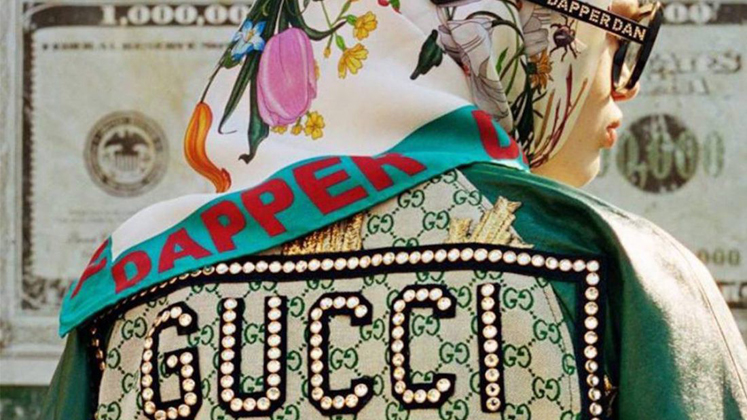
To achieve this, luxury brands have been absorbing more casual and streetwear-inspired styles into their main offerings. In addition to this, brands such as Louis Vuitton, Dior and Gucci have been entering into collaborations for successful limited edition drops with leading sportswear and streetwear brands such as Nike, Adidas and The North Face to capture the attention and market share of the aforementioned younger shoppers.
APAC and younger generations in the limelight

The rising popularity of aspirational luxury products, the increase in internet penetration among the local millennials and Gen Z, combined with the active engagement of brands on social media have facilitated the growth of Asia-Pacific (APAC) luxury sales. Having recorded strong growth in the APAC region, brands are now seeking a deeper level of connection with luxury consumers and are adopting strategies to engage with local consumers, particularly the younger cohort.
Millennials and Gen Z locals are predicted to drive luxury market growth in the Asia-Pacific region, as internet penetration levels and social media brand engagement increases in the region post-pandemic.
In its latest report, Asia-Pacific (APAC) Luxury Retailing Market Size, Consumer and Retail Trends, Competitive Landscape and Forecast, 2016-2026,GlobalData has revealed that APAC luxury retail market sales fell by 14.6 per cent in 2020 – a loss of US $ 16.1 billion – as COVID-19 induced economic uncertainty made the consumers wary of making high value purchases.
However, the market bounced back and experienced a growth of 29.7 per cent in 2021 to reach US $ 122 billion, 10.8 per cent above 2019 as vaccination drives opened up retail access and boosted consumer confidence.
“Despite the disruption, the COVID-19 pandemic had a positive impact on sales in 2021 in the region, as consumers who were earlier shopping for luxury items from Europe are now unable to travel and have thus shifted their purchases to brands that were available in the region, boosting luxury sales in the APAC region. Brands are hiring regional celebrities to market their products and adopting strategies such as Livestream commerce events which are in vogue in the region,” Koyel Ray, Retail Analyst at GlobalData, said.
Strategies adopted by brands to increase market share

In terms of strategies mentioned earlier, brands and designers are upping their game with a slew of approaches.
Some brands are riding the resale high tide by launching their own resale platforms, which helps the brands to take the reins in their own hands and provide a better customer experience. That in turn allows brands and retailers to maximise gains from the ongoing trend of the younger generation looking to buy products that are more accessible, rare finds, and that allows them to update their wardrobes more frequently.
Furthermore, brands are increasingly looking to adopt digital collections to attract a growing population of digital clientele worldwide.
“Luxury retailers in the APAC region are now leveraging NFTs as a lucrative source of secondary revenue. Brands are targeting the young, affluent APAC consumers who are likely to invest in digital tokens like the NFTs and bitcoin and sell digital tokens of their iconic products. Brands are reducing their dependence on traditional sources of revenue as the young and affluent luxury consumers are looking towards the metaverse as their second life, making it an important place for trade of luxury goods,” concluded Koyel.