India’s e-commerce sector is entering what consultants describe as a structural transformation, with future growth increasingly driven by smaller cities, direct-to-consumer (D2C) brands and emerging models such as quick commerce and social commerce.
Separate reports published by Boston Consulting Group and McKinsey & Company indicate that while headline growth remains strong, the underlying engines of expansion are shifting significantly.
BCG estimates the country’s e-commerce market at between US $ 120 billion and US $ 140 billion at present, with projections of US $ 280 billion to US $ 300 billion by 2030. McKinsey, focusing solely on e-commerce retail, values the current market at US $ 70 billion to US $ 80 billion, forecasting growth to US $ 180 billion to US $ 200 billion over the same period.
Despite differences in scope, both firms conclude that online retail penetration remains relatively low at 6–8% of total retail sales, leaving substantial headroom for expansion over the next five years.
McKinsey reports that more than 60% of e-commerce shipments now originate from Tier-2 and Tier-3 cities, while BCG estimates that nearly 30% of online shoppers are based in rural India. By 2030, more than 140 million households are expected to surpass the US $ 10,000 annual income threshold, a development likely to accelerate discretionary online spending.
This geographic shift is compelling brands to recalibrate language strategies, logistics networks and product discovery models, particularly as vernacular content and social-led commerce gain traction.
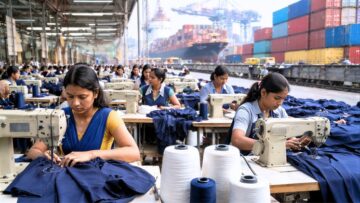
BCG identifies a change in category momentum, with apparel as a category, is growing at roughly 22% CAGR, emerging as a primary growth driver. Women now account for nearly 45% of online shoppers, contributing significantly to expansion in lifestyle and personal care segments.
On the supply side, McKinsey highlights a decisive pivot towards D2C channels. Of India’s 60 million micro, small and medium enterprises (MSMEs), 53% surveyed indicate a preference for selling through their own websites or social channels rather than traditional marketplaces, citing lower platform fees, improved margins and access to first-party customer data.
The D2C segment, currently valued at US $ 10 billion to US $ 12 billion, is projected to grow at a 38% CAGR to reach US $ 55 billion to US $ 60 billion by 2030 — nearly three times the anticipated growth rate of marketplace channels.
McKinsey further identifies a US $ 25 billion to US $ 30 billion opportunity for digital infrastructure providers offering modular solutions across payments, logistics and storefront management tailored to MSMEs.
Both reports identify quick commerce and social commerce as the fastest-growing formats within the ecosystem. Quick commerce, presently a US $ 5 billion to US $ 6 billion market, is expected to expand to US $ 35 billion to US $ 40 billion by 2030, broadening beyond groceries into categories including beauty, electronics and over-the-counter healthcare products.
Social commerce is also gaining momentum, particularly in non-metro markets. Product discovery via platforms such as Instagram and Facebook is increasingly influencing purchasing decisions, especially among smaller businesses reliant on creator-led and community-based engagement.
BCG observes that offline retail continues to expand at 13–14% annually, with nearly half of offline shoppers researching products online before completing in-store purchases. The firm characterises this trend as “connected commerce”, emphasising integration between online and offline journeys rather than direct competition.
Taken together, the reports suggest that India’s next phase of e-commerce growth will not be defined solely by gross merchandise value expansion on marketplaces. Instead, it will be shaped by Deeper penetration into Tier-2 and Tier-3 markets, Rapid scaling of D2C brands and modular seller infrastructure, Expansion of quick commerce and social commerce formats and Integration of online discovery with offline fulfilment.
With the number of online shoppers projected to increase from approximately 300 million today to 440 million by 2030, India’s digital commerce ecosystem is poised to broaden both in participation and business models, reshaping how brands, platforms and MSMEs pursue growth over the coming decade.