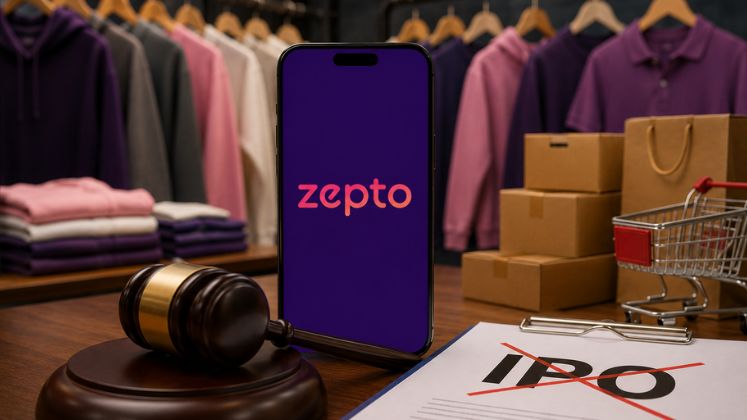
The All India Consumer Products Distributors Federation (AICPDF) has called on the Prime Minister’s Office (PMO), the Ministry of Finance, the Securities and Exchange Board of India (SEBI) and the Competition Commission of India (CCI) to suspend the proposed initial public offering (IPO) of quick-commerce platform Zepto until a comprehensive review is conducted.
The federation described the proposed public listing as a significant concern for India’s retail ecosystem and urged policymakers and regulators to examine its broader implications before granting approval.
AICPDF, which represents more than 450,000 distributors across 25 states and claims to service over 13 million retail outlets, argued that the rapid growth of quick-commerce platforms has been driven by aggressive discount-led business models that traditional retailers are unable to match on a sustainable basis.
The federation stated that permitting a company that continues to incur substantial losses to raise significant capital from public markets could further encourage deep discounting, predatory pricing and other practices that distort market competition.
The federation also raised concerns regarding retail investor protection, arguing that public markets should not be used to finance prolonged cash-burn strategies. It maintained that investors should be provided with complete transparency regarding the long-term sustainability of business models that continue to report substantial losses despite receiving multiple rounds of private funding.
As part of its representation to government authorities and regulators, AICPDF has sought the immediate suspension of the IPO approval process and called for a nationwide assessment of the impact of quick-commerce platforms on India’s retail structure.
The organisation has also requested an investigation into deep discounting and below-cost pricing practices to determine whether such strategies are contributing to unfair competition and increasing market concentration.
Among its key recommendations, AICPDF has proposed the formation of a national committee comprising policymakers, economists, regulators and representatives from the trade sector to evaluate the long-term impact of quick commerce on India’s retail landscape.
The federation further called for the development of a regulatory framework that would ensure a level playing field between traditional retail channels and digital commerce platforms, while balancing innovation, consumer interests and fair market competition.






 Bharat Tex Special Report 2026