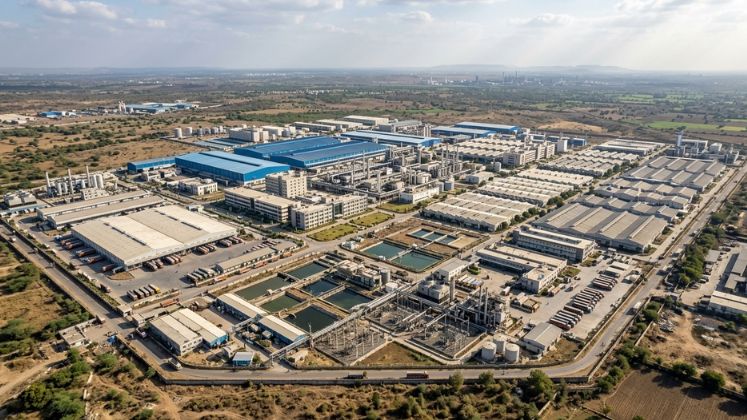
The Gujarat government is set to introduce a new category of industrial investment, termed “ultra mega”, as part of its upcoming industrial policy, which is expected to be unveiled within the next fortnight.
According to the draft policy, an ultra mega industrial unit will be defined as an industrial undertaking operating in designated thrust sectors with a minimum investment of Rs. 10,000 crore (US $1.04 billion) and the creation of at least 3,000 jobs.
The proposed policy also stipulates that for every additional Rs. 5,000 crore (US $524 million) invested, companies will be required to generate an additional 500 jobs.
The move marks a significant shift from the existing framework under the Atmanirbhar Gujarat scheme, where industrial projects involving investments of more than Rs. 10,000 crore (US $1.04 billion) were classified as “mega industries” and received customised incentives. Under the new policy, the government plans to formally establish a separate “ultra mega” category with clearly defined investment thresholds, employment commitments and incentive structures.
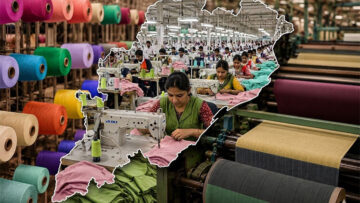
The draft policy expands the number of identified thrust sectors from nine to 16. Among the new additions are ancillary units supporting textile waste recycling, reflecting the state’s growing focus on sustainability and circular economy initiatives. Textiles and apparel will continue to remain among the designated thrust sectors under the revised framework.
According to sources familiar with the policy discussions, industrial projects approved under the ultra mega category will be eligible for incentives of up to 40% of their capital investment. These incentives are expected to be offered through a flexible structure, allowing investors to choose from benefits such as capital subsidies, interest subsidies and power tariff support.
The proposed policy is aimed at attracting large-scale investments into priority sectors while ensuring substantial employment generation. By creating a dedicated ultra mega category, the Gujarat government seeks to provide greater clarity on eligibility criteria and incentive mechanisms for high-value industrial projects, strengthening the state’s position as a preferred manufacturing and investment destination.