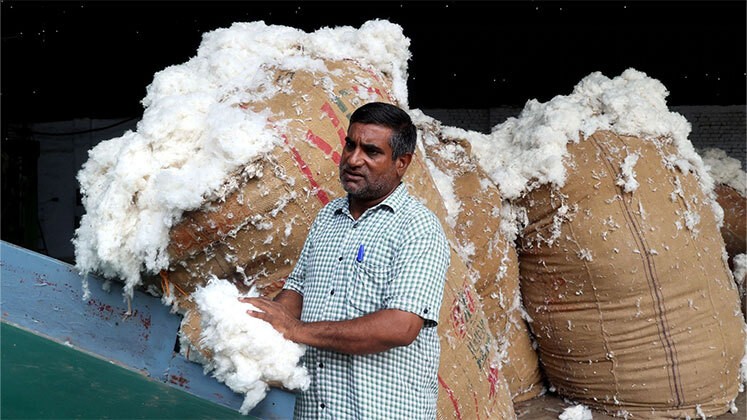
The Cotton Association of India (CAI), the industry’s apex body, has urged the Centre to abolish the current 11% import duty on cotton, warning that the survival of the entire cotton and textile value chain is at stake.
The association said that lower domestic productivity, high minimum support prices (MSP), and global uncertainties have rendered Indian cotton significantly more expensive than competing international varieties. According to CAI President Vinay Kotak, the duty not only distorts domestic pricing but also intensifies the strain on manufacturers. He stated that the only viable way to strengthen the textile sector is to ensure a sustainable and competitively priced supply of raw material. Farmers, he noted, are already shielded through MSP operations, and the time has now come to extend similar support to the textile industry by eliminating the duty so that spinning mills can access affordable cotton.
Kotak said the sector is already battling uncertainty arising from potential tariff changes in the United States and recessionary pressures in Europe. He warned that without immediate support, the textile industry risks widespread job losses, loan defaults, and rising bad debt across the value chain. He added that the government’s ambition to achieve USD 100 billion in textile exports by 2030 would be realistic only if manufacturers have access to competitively priced raw cotton.
The CAI pointed out that the 11% import duty was introduced under special circumstances during the Covid-19 pandemic. Before that, India generally imposed no duty on cotton imports, and farmers did not experience adverse effects. Kotak also highlighted that unseasonal rains this year have significantly damaged the quality of Indian cotton, leaving mills with little choice but to import to meet buyers’ specifications. If the duty remains, he argued, Indian textile products will lose competitiveness, prompting global buyers to shift sourcing to Vietnam, Bangladesh, Pakistan and other markets—potentially causing long-term harm to India’s position in global cotton textiles.
Kotak said the government was making strong progress on free trade agreements with several countries and was close to securing a favourable tariff arrangement with the United States. He stated that these developments could open substantial export opportunities for Indian yarn and textile products, but such gains would be achievable only if raw cotton can be imported duty-free at competitive prices. He also praised the efforts of PM Narendra Modi and Commerce and Industry Minister Piyush Goyal, noting that global shifts such as the “China Plus One” strategy and potential supply-chain diversions from Bangladesh present a significant growth opportunity—provided the cotton import duty is removed.