-

International brands are increasingly looking for adding seamless garments to their product line. Seamless technology with its origin in Italy has revolutionized the global production process.
- The technology saves costs by 40% compared with usual knitting in manpower.
- Quality of yarn is the most critical factor that determines its quality.
- Indian brands are also lapping it up as the demand is growing.
- There are about 40 Santoni seamless circular machines with three companies operating in India.
- The current production capacity in India is nearly 6 million pieces per annum.
Seamless garments are fast emerging as a potential growth segment in the global apparel market as ‘comfort’ becomes the buzzword in inner and body fitting wear. Buyers such as JCPenney, Old Navy, La Sanza, Mother’s Work, Benetton, Reebok, Ahlens, Next, Victoria’s Secret, Wisport are already picking up seamless programmes from India with many other exploring options. There are about 40 seamless circular machines operating in the country, the current capacity is nearly 6 million pieces per annum. From market indications the capacity is set to double over the next one year.
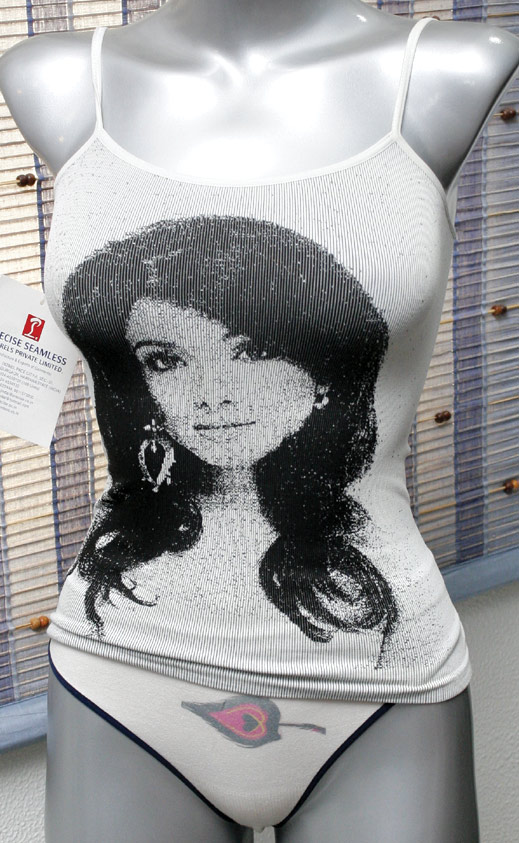
It would not be wrong to say that seamless technology has revolutionized the global production process. The seamless technology was initially used for manufacturing of innerwear. The minimum number of seams, absence of the elastic bands and tags makes such innerwear very comfortable to put on. Within just three years the seamless underwear production has jumped from 2% in 1998 to 9% in 2001. The segmet continued with its exponential growth of 18% in 2003 and in 2007, 35% of underwear segment was coming from seamless technology.
The list of international retailers/brands looking to convert a section of their product basket to seamless is ever growing. The advantage of knitting in the label details within the garment also makes for a tag less garment that only adds to the comfort value. Recently, Gap has unveiled a collection of tag less T-shirts for men under the Gap brand and for women and men at its Banana Republic stores. This follows the launching of its tag less and seamless women’s T-shirts sold by Gap Body. Sara Lee Corp. has also launched a tag less bra version of Barely There, a seamless undergarment collection. The company also produces tag-free underwear for men, women and children under the Hanes brand.
In Spring 2007, Intertex collection of seamless colourful tops called Simply Seamless by Maurice Sasson was a sellout, which made its debut in 220 stores, including Macy’s. For Spring 2008, Intertex has added skirts to its seamless range in as many as 1500 stores. Based on strong sales, fashion company BCBG Max Azria now produces about 40% of its knit tops without seams, up from 10% two years ago.
[bleft]The demand for seamless products has increased manifold because not only is the international market seeking the concept but Indian brands are also lapping it up[/bleft]
The concept has been picking up as it has found a positioning in the fast evolving fashion market for many reasons that include a synergy between fashion and functional performance. The product range is diverse and while undergarments are a hot favourite, tops, leggings, active wear, shorts and swimwear are also sourced from India. Further, seamless technology is flexible, as it allows the making of different structures like rib, net, jacquard, piquet, stripes, laces, as well as pre-sharpen structures, hidden supports, pockets, collars and hoods in one operation. The increased productivity and energy, supplemented with reduced fabric stock and fabric wastes, while fulfilling the market needs for shorter timing, also allow the process to move from yarn to finished garments in a few minutes. “Undergarments take around 3-4 minutes, sleeveless top take about 5 minutes and a sleeved garment takes around 8-10 minutes from yarn to finish,” says Alok Nayyar from Flying Fashions, currently working with 3 Santoni machines and looking at expanding to 9 machines in 2008-09.
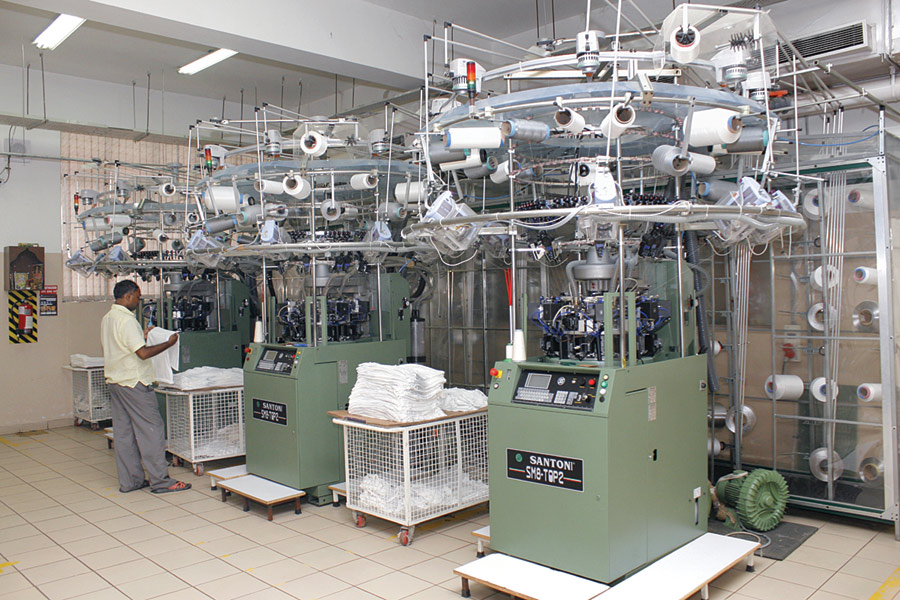
The productivity of seamless technology is very high and a set of 12 machines is capable of producing 5000 pieces per day. “The labour involved is limited and in the same set of machines, 3 operators, 1 technician and 1 helper are sufficient to run the operations effectively,” says Lalit Malick from Personal Creations, the largest manufacturer of seamless garments in India with 21 Santoni machines, and who plans to instal 20 more in the time to come. For the stitching section, a set of 12 machines requires 20-22 sewing machines. Precise Seamless Apparels, manufacturing for buyers such as JCPenney, La Sanza, Old Navy and Victoria’s Secret, functions with a total work force of just 50 in all areas of operation to produce 2 lakh pieces a month. However, Tarun Jindal, Precise Seamless, points out, “As it is, the cost of the seamless technology itself is very expensive at Euro 70,000 per machine.”

In fact, unlike in conventional garmenting where there are many elements to the product quality, in seamless the quality of the yarn is the most critical factor that determines quality. Innovative yarns in nylon, polymide, polyester, cotton and blends are at the core of any design in seamless garments and since Israel has been the hub of seamless garments the best yarn for seamless garments are available in the country, followed by Italy, the birth place of the concept. The versatility of the technology allows the use of all types of Nylon but in cotton it cannot work on counts below 20. “There is no compromise on yarn quality and we are importing yarns from Nillit, Israel which is specializing in yarn of seamless garments,” says Lalit. Other sources include Sri Lanka for Nylon 66 and Borgolon, Italy for Nylon dyed yarn.
A critical issue is the non-availability of the right quality of yarn in India which is the reason that the lead times in seamless are still 90 days. “We can do the same order in 45 days but since the yarn has to be imported, another 45 days is required to procure the raw material,” says Tarun. However, repeat orders are being done in 60/45 days depending on the quantities.
Since seamless is about body-hugging garments that are comfortable, the use of elastine/spandex is a normal practice. “One of the biggest advantages of seamless technology as against conventional knitting is that we can blend up to 30% spandex for maximum stretch, whereas in conventional knits, it is difficult to blend in more than10-15% spandex,” says Tarun. The yarns that are used have properties that help in the dyeing process and since all garments are dyed for different effects, the dyeing technology is unique to the process. That is why the companies working with seamless have invested in Flainox dyeing machines from Italy, which are specialized for seamless garments.
[bleft]Within just three years the seamless underwear production in 2001 rose to 9% of the total global production compared with only 2% in 1998. There was exponential growth of 18% in 2003. And in 2007, 35% of underwear segment was coming from seamless technology[/bleft]
Designs are also knitted in with use of dyed yarn (mostly for stripes) and mix-and-match of different yarn types for different effects. Because the design element comes from what can be knitted into the garment, product development is done on software similar to a CAD system and transferred to the knitting machine by USB port or disk. The technology presents unlimited options in knitted designs.
The demand for seamless products has increased manifolds because not only is the international market seeking the concept but Indian brands are also lapping it up. “We are supplying men’s under- garments to Color Plus and though the product is retailing at Rs. 500 a piece, the stock vanishes up almost as soon as it reaches the shelves,” says Tarun. “We are working for adidas, Reebok and Benetton for their domestic stores. Today they are buying 20,000 pieces a season and for the next the order has increased to 40,000,” adds Alok.
While Precise Seamless with 12 running machines is planning to install another 24 machines by the year end, Personal Creations that already has 21 machines has placed orders for another 20. Flying Fashions with 3 machines is installing another 9 machines in the first phase and increasing to another 12 planned for phase two.