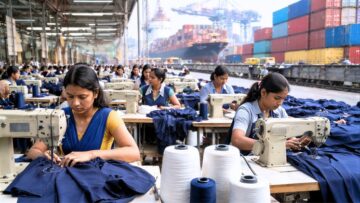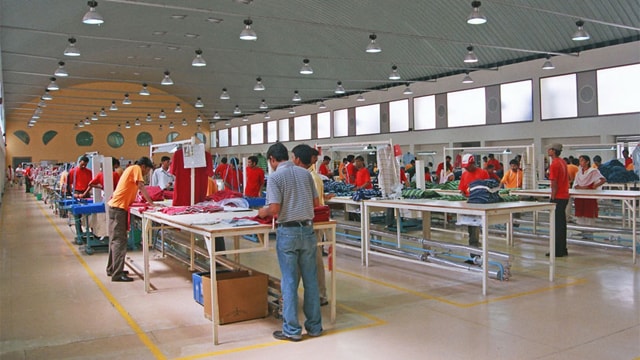
Empowering under-privileged sewing machine operators by providing them social and technical skills, enhancing their income and social status as well as benefiting garment manufacturers by giving them the best of the trained people are the goals which drive Gunina Solutions and its success. “While focusing on ‘Social Entrepreneurship’, we realized that there is a gap between apparel industry, employees and entrepreneurs, and to bridge this gap, I had to take this leap and come to this field of training,” shares Shalabh Srivastava, Partner & Founder, Gunina Solutions.
By the end of March 2017, Gunina Solutions had achieved about 70 per cent of the planned target by bringing in gainful changes in the lives of about 70,000 young workers employed in the apparel and textile industry.
“We aim to enhance technical and social status of migrated workers from rural areas of UP, Bihar, Odisha and Jharkhand,” comments Shalabh.
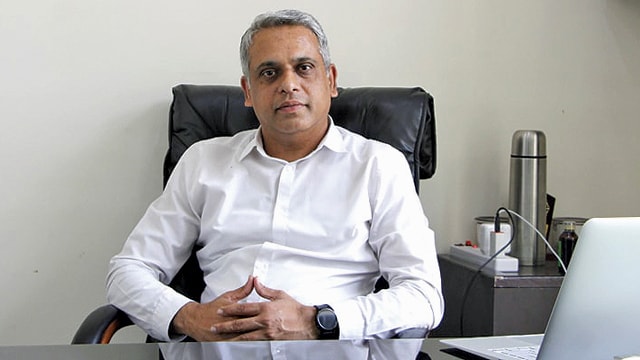
Shalabh further states that through strong tie-ups with Government schemes, NGOs and other agencies, his company brings migrated people to the training centres. Speaking about the training methods applied to upgrade workers’ skills, he describes, “We have certain SOPs and we train people on these SOPs to make them understand what exactly apparel units want from them.”
Additionally, a living area with safe and protected environment is provided to these workers as they have to change their living location for earning. “Once a worker feels secured about his living place, we impart technical skills to them,” comments Shalabh.
After providing them a place to live, the next 10 to 15 days are reserved for training on sewing machines. Firstly, they are asked to work on simple sewing machines (Non UBT) keeping quality factor on priority and after 15 days, they are propelled to produce garments keeping both production and quality on top of the list.

Shalabh opines that a training programme should be effectively designed to impart skills to the workers as demanded by the apparel industry. Too many skills provided at the same time are often wasted as the operator is initially put for one or two sets of operations only, where he or she has to gain efficiency and stamina to work for longer duration. Gradually, the skill matrix can be enhanced for the line/unit through planned intervention of industrial engineering and upskilling.
He also emphasizes that training of trainers is another area which GS works on being an advisory to enhance efficiency and technical skills of the trainers who are pivotal in providing rightful training to the operators. Shalabh briefs about his expectations from a trainer specifying, “By technical skills, I mean the trainer must know about the quality aspects, machine maintenance, industrial engineering principles, role of efficiency, productivity calculation, method study and time study.”
A trained operator is just useless under an untrained mid-management of a garment factory. “The major responsible factor for less productivity is managerial gap which almost accounts for 90 per cent of the total loss in a production line,” says the Founder of GS, who did a root-cause analysis for identifying the reasons for low productivity which were ‘poor’ supply chain, monitoring of production processes and maintenance. He adds that these trigger a need for second-level training programme and GS is geared up for that.
Goals and Objectives
One of the most aspiring visions of GS includes building a team of 100 social entrepreneurs during FY 2017-18, who will be entrusted to bring positive changes among the unemployed youth of the country and connect them with the apparel industry. “GS Skills Accelerator, an initiative of the company, will provide technical training to the entrepreneurs with an aim to provide centralized curriculum development, financial management services, liaison with various departments and agencies, business plan and strategy formulation, creative problem solving, and enhance the calculated risk taking ability through innovative training models,” informs Shalabh.
He sincerely believes that the entrepreneurs need to understand the business side of skill development programmes and to spread this understanding, the company will create a platform with adequate infrastructure and human resource to invite technical graduates from NIFT, Pearl, AIM, TISS, XLRI and XISS to participate in this endeavour.
What is Gunina Solutions all about?
Gunina Solutions is a Gurgaon-based skill development advisory and support system provider which is dedicated towards the upliftment of the workers of apparel and textile industry. This is done by the company’s training wing ‘GS Skills Accelerator’ which has a collaboration with Integrated Skill Development Scheme (ISDS) of Ministry of Textiles (MoT), India.
Working with ISDS as a training partner, GS Skills Accelerator is currently collaborating with an Implementing Agency called Clothing Manufacturer Association of India (CMAI) under Component-II of ISDS, while in Component-III (state sponsored), the company is a partner of SPINFED, Odisha. Thus, through collaborative efforts, it plans to achieve the qualitative and quantitative target of training about 100,000 youth in the next one year.
Apart from working with ISDS, Gunina Solutions has also tied-up with Pradhan Mantri Kaushal Vikas Yojna (PMKVY) to fill the gap between demand and supply of skilled manpower. The role of the company will be to ensure that all the stake holders do not miss the opportunity created by PMKVY.