
Start-ups in the fashion industry are plenty, which are funded by small and big venture capitalists alike. But how many survive the struggle is a question. Survival is often hidden behind the idea of differentiation from the competition.
Bummer, an Ahmedabad-based start-up by Sulay Lavsi, is a perfect example of disruption in a niche product category. Completing two years of its inception, the D2C innerwear brand, moving ahead on the basis of sustainability and funky design pillars, has grown tenfold. Sulay is a firm believer that the youth of India is keen on sustainability; hence, this should be focused upon when launching a new start-up. Besides, he also states that funding for a start-up depends on your clarity of vision and how well a product speaks for itself. He shares his exciting journey with Apparel Resources(AR) so far, from idea landing to fund-raising and ambitious plans.
Kick for learning
Having a family background in the textile business for the last six decades, Sulay was motivated to learn tailoring even before his higher studies. And this passion of his converted into an idea during his Master’s degree in Entrepreneurship & Innovation from the University of Southern California, where Sulay met a lot of business founders, start-ups, venture capitalists and investors.
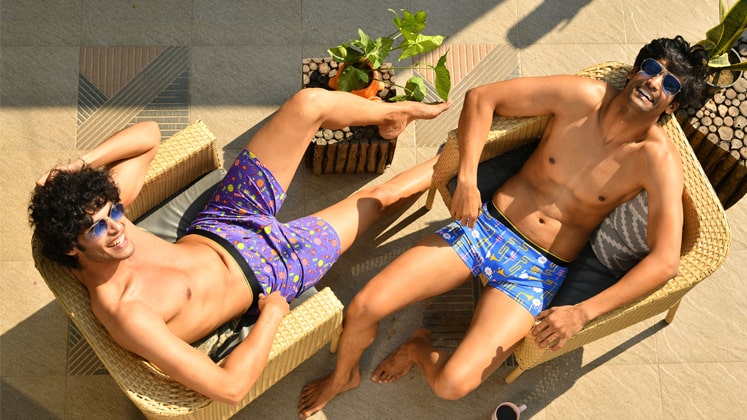
“I met a person in the university who was trying to disrupt the underwear market and I found that extremely amazing. And at that time, there was very little disruption happening in the Indian innerwear market and that was too at the raw material level, not at the design or fashion level. Fashion across all product categories is completely different for a 50–60-year-old person and for his 20-30-year-old son but still both have the same simple black or brown underwear. So, I decided to do very funky communication in innerwear like very bold prints, bold design and quite bold branding so that the youth of India can relate to our product,” tells Sulay.
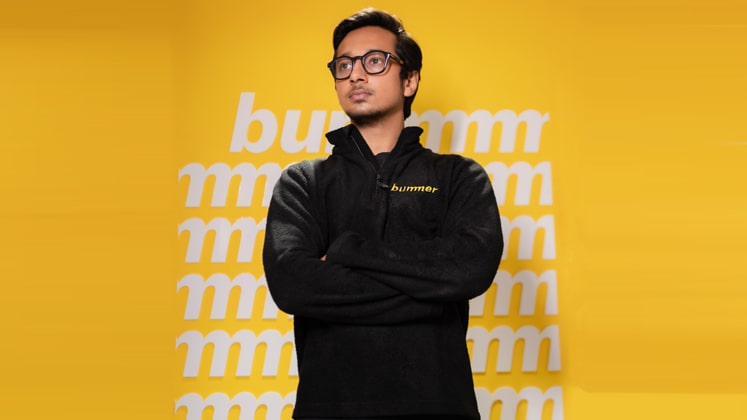
He also finds that the youth has recently developed a strong tilt towards sustainability, so just a funky design-based innerwear is not enough to make a difference. It has to be highly sustainable also.
“See the food space – how the youth of India is reducing dependence on McDonald and KFC and starting to eat healthy. It’s a similar approach with today’s millennials when it comes to what they wear. Even if it comes to packaging, they want non-plastic packaging, so sustainability is the inherent core of the brand which is very important to be able to connect with the millennials of today. If I were building regular cotton underwear high on pesticides and chemical usage, the overall likeability of the brand would have not been as much. So, when you are targeting the youth of India who care about sustainability, ethics and value of the brand, the product has to different from sustainable aspect also,” he says.
And to bring forth this sustainable aspect, Sulay initially used modal fabric with softness, combined it with really funky prints and cool colours. To make his product sustainable apart from using mainly modal fabric, Sulay played a lot around Gram Per litre (GPL) of the softener in the manufacturing process until he arrived at a certain best practice method to build the perfect quality of softness. It does not compromise on quality and at the same time achieves the fantastic hand feel that will make consumer fall in love with the product.
Once he was ready with the desired product, Bummer was launched as a digital-first brand and it never looked back.
The biggest challenge, in the beginning, was sourcing raw materials and working with the right kind of factories. When you start, big factories typically don’t want to work with you as you have lower MOQs and multiple designs. Initially, I worked with pretty small factories which were ready to take small quantity, but over a period when quantities increased, our brand started working with well-established factories across the country which have certain certifications,” says Sulay and adds that trust and relationships are major aspects of this.
“All our work today happens on relationship basis more than professional basis. We have built very strong relations with the factories, which is very important. For sustainability, the second important part is understanding lab reports as these reports give clarity on everything. Every single fabric roll that passes through Bummer, goes through stringent lab tests at top testing agencies. Similar work is done at the yarn stage where every report is taken care of in terms of our output. The third important thing is working with the factories that have certifications like SEDEX and WRAP. These are the three core pillars for sustainability,” avers Sulay who is now associated with 10 factories across India.
Funding aspects
Sulay strongly believes that there is always a learning curve for all of us and it continues on most of the levels. The same strong effort and learning is also applicable when it comes to funding. So far Bummer has two fundings (both in December 2021) – US $ 180K from Singapore’s Beenext and Rs. 75 lakh from Shark Tank India’s Judges: Aman Gupta – Founder, Boat Electronics and Namita Thapar of Emcure Pharma. But before this, Sulay pitched in to more than 50 to 60 venture capitalists and investors.

“When I started approaching VCs and investors, I also learned a lot. While speaking to the first 4-5 investors, I was not very confident but over time, one learns from mistakes and tries to rectify them on the next calls, next pitch. Funding depends on how clear you are about your vision, where and how you wish to take your brand further. This vision sells and similarly the product has to speak for itself,” affirms Sulay and adds, “There will be multiple rejections and pitfalls. But if you can sell your vision very well, there will be someone who backs you.”
Sulay believes that funding from VCs or professional investors is essential because their advice and feedback, the value addition, and the overall approach they bring to brand building are critical. So, support of VCs is more than money – they add value regarding how to scale as they have seen multiple portfolio companies. Their network connect even tremendously helps to get onboard someone, seeking for anything, solve some primarily challenges where one cannot get breakthrough. Having someone to talk to primarily is significant as they can advise you the best. One can’t get all these in case of funding from friends and family.

With all these efforts and learning, Sulay is geared up to add new prints and new categories continuously and he also has plans to go offline in the next 2 years while the long-term target is to expand the brand out of India and take it to new heights.