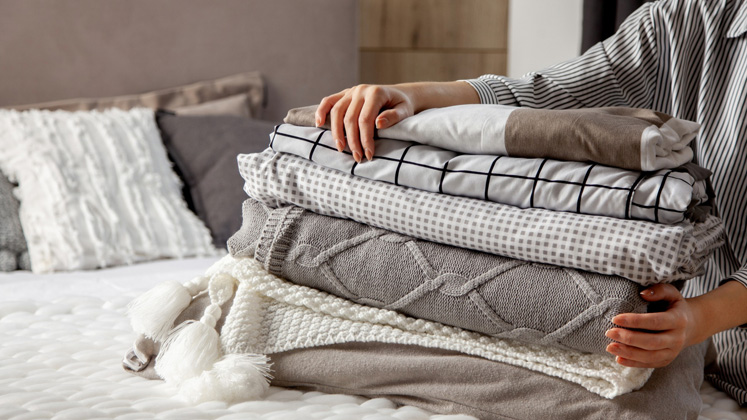
The numbers say it all! According to Bangladesh’s Export Promotion Bureau (EPB) — the home textile export basket of the country includes bed linen, bed sheet and other bedroom textiles, bath linen, carpets and rugs, blankets, kitchen linen, curtains, cushions and cushion cover and covers for quilts — home textiles raked in US $ 1.62 billion in the recently concluded 2021-22 fiscal year from exports, marking a year-on-year growth of 43.28 per cent.
Here, one would like to add that in the last fiscal year, home textiles had earned US $ 1.13 billion from exports.
Also, considering the fact that several big-ticket players from across the world have started sourcing home textile products from Bangladesh, only corroborates the country’s rising popularity in the global arena.
Continuing the good run
The sector first crossed the US $ 1 billion mark in fiscal 2020-21, registering 49 per cent Y-o-Y increase in export earnings.
“We have been witnessing increased demand for home textiles from the last fiscal year,” opines Shahidullah Chowdhury, Executive Director of Noman Group, which is a major player in Bangladesh’s home textile sector. Like most other home textile players in Bangladesh, it counts European Union countries along with Canada, United Kingdom and Japan as the major export destinations.
More and more people resorting to work from home pushed the demand up for home textile products. So even if sales of garments may have taken a hit, home textiles sales in retail stores across Europe and America, have been on the rise even if many within the industry doubted if the same trend would continue once normalcy returned and people went back to the grinds of daily life amidst reopening of office and workplaces.
Fortunately though, contrary to the fears, home textile exports from Bangladesh have managed to maintain the good run stepping into FY ’22.
Reasons aiding rising popularity
“Shifting orders from Pakistan during the Covid-19 outbreak was the prime reason for increase in Bangladesh’s exports,” reasoned Md Harun-Ar-Rashid, President of the Bangladesh Home Textile Manufacturers and Exporters Association.
Being able to keep production going amidst the pandemic, only helped Bangladesh’s cause while also strengthening the buyers’ confidence in Bangladesh since, underlined industry people.
Bangladesh, which entered the market of home textiles in the 1980s and managed to earn only around US $ 150 million by exporting home textile products in the initial days (FY 2004-05), also managed to bag orders shifting from China and Turkey (production in both these countries took a hit owing to the pandemic), thanks to its rising popularity amongst the global buyers.
Opportunities and challenges going ahead
Despite the steady and gradual rise in popularity, Bangladesh’s share in the global textile export market is still only somewhere around 7 per cent — according to Technavio, the global home textiles trade was valued at US $ 118 billion in 2017, US $ 131.5 billion in 2020 and is expected to reach US $ 170- US $ 180 billion by the end of 2025, growing at a CAGR of 3.5 per cent or more during 2018-2025 period — and much needs to be done to capture more market share, felt people in know of things.
They emphasised on a host of focus areas including investments in research, product quality and innovation, adapting latest technology, sustainable development along with adequate Government support including increasing the cash incentive for exports to 10 per cent from the current 4 per cent, to give that added thrust.
There are some unforeseen challenges too!
Global supply chain disruption and rising inflation are some of those, which Bangladesh has very little control over.
“A number of home textile factories have shut down while many had to reduce production by 30 per cent to 50 per cent due to the price hike of raw materials and transportation issues,” claimed Managing Director of Momin Tex, Momin Miah.
Momin felt the market could have recovered from the pandemic, impacts of supply chain disruption, raw materials price hike and ripple effects of the Ukraine-Russia could still apply the brakes in the sector’s growth.
Adding to these is the current power scenario in the country — Bangladesh has recently resorted to power rationing in the form of load shedding — which not too long ago made many buyers to move orders out of Pakistan for good.
No matter the current challenges, industry players are more than hopeful that the sector is poised for growth going forward as there aren’t many that can match Bangladesh in terms of price points, proficiency and commitments. Besides, having served many of the clients during the pandemic period successfully, who had shifted orders from other destinations to Bangladesh, the country’s home textile sector has been able to instil that much-needed confidence amongst the global buyers which will only hold the sector in good stead in days to come.





 Bharat Tex Special Report 2026