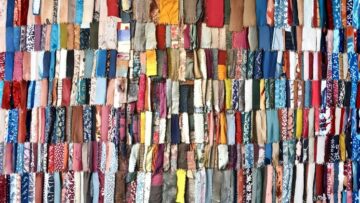
Bangladesh’s apparel and knitwear manufacturers have strongly opposed a proposed 20% safeguard tariff on imported yarn, warning that the measure would raise costs, disrupt production and undermine the country’s export competitiveness.
The proposed duty, which would apply to imports of 100% cotton and blended yarns in the 20–30 count range, was sought by local spinners who petitioned the Bangladesh Trade and Tariff Commission (BTTC) for protection. Manufacturers argued that the tariff would force them to source higher-priced domestic yarn, increasing input costs for export-oriented factories and weakening Bangladesh’s position in global markets.
Domestic spinners, however, have maintained that a safeguard measure is necessary to protect the local spinning industry. In the final week of December, they accused Indian suppliers of dumping yarn in the Bangladeshi market at below-cost prices and said the sector was holding unsold stocks valued at around Tk 12,000 crore.
Spinners have also claimed that domestic mills are capable of meeting the country’s entire demand for cotton and blended yarns, including PC, CVC, PV and grey melange varieties. In addition to the proposed tariff, the Bangladesh Textile Mills Association (BTMA) has sought the withdrawal of bonded warehouse facilities for the affected yarn categories, according to industry sources.
Amid growing tensions between upstream and downstream segments of the textile value chain, the BTTC convened a meeting on Thursday with representatives of spinning mills, garment manufacturers and knitwear producers. The commission had already held an earlier session this week to examine the proposed safeguard measure.
The proposal has faced opposition from both the Bangladesh Garment Manufacturers and Exporters Association (BGMEA) and the Bangladesh Knitwear Manufacturers and Exporters Association (BKMEA). In separate letters to the commission, the two trade bodies warned that a 20% safeguard duty on yarn imports would place the export-led garment industry under severe pressure and erode its global competitiveness by pushing up yarn prices.
The associations urged the government to address structural constraints facing domestic mills, including unreliable gas and power supplies, and called for targeted incentives to improve the competitiveness of local spinning operations rather than imposing trade restrictions.
BTMA president Showkat Aziz Russell said at a press conference in Dhaka in late December that local spinning mills had been left with Tk 12,000 crore worth of unsold yarn due to a surge in low-priced imports from India. He said yarn imports from India rose by 137% last year and were being sold below domestic prices, contributing to the closure of nearly 50 spinning mills in recent years.
While apparel and knitwear manufacturers have argued that safeguard measures cannot be applied selectively to individual countries under World Trade Organization rules, Russell also said the BTMA was not seeking a country-specific tariff. Instead, he called for subsidies to encourage the use of locally produced yarn as a means of strengthening the domestic industry.
Russell also said that unsold yarn inventories had eased slightly as mills cut production in response to weak demand, adding that many spinners were currently operating at around 50% capacity due to low gas pressure.
According to BTMA estimates, total investment across Bangladesh’s garment and primary textile sectors exceeds US $ 75 billion, including US $ 23 billion in primary textiles. Together, the two sectors generate around US $ 40 billion in annual export earnings.
BTMA leaders said Bangladesh imported roughly US $ 2 billion worth of yarn from India in the 2025–26 financial year, with local mills consuming about 1,600 tonnes of yarn per day. Between April and October 2025 alone, yarn imports reached US $ 950 million. They added that Bangladesh has become the largest destination for Indian yarn exports, accounting for 44% of the total, followed by Cambodia at 21%.




 Bharat Tex Special Report 2026