One of the biggest challenges for apparel export businesses in the last two years has been to stay relevant and alive. While for the bigger companies, the challenge was to feed huge capacities when buyers started pulling out, for smaller ones it was to leverage buyer relations with flexibility. In this scenario, there were a few brave hearts who had taken the plunge into the industry only a few years ago, but kept their spirits and targets high, finding success in difficult times with grit, sharp business acumen and years of industry exposure on ground. Team Apparel Resources recently visited two such apparel manufacturing and exporting start-ups based in Faridabad (Delhi-NCR region) – Ethnic India and Karan International that don’t crib about government policies, challenging environment and even high costs of operations, but play on their strength, which results in better opportunities for them.
It is indeed heartening to see experienced people with over 2 decades of deep understanding of the industry taking the plunge to start their own garment manufacturing unit. During our onsite visit to the companies, Team Apparel Resources could feel the passion that owners of both Ethnic India and Karan International had for the industry. In many ways, their stories are similar and it is no surprise that their approach to business is also in sync. Having seen the industry and its working from bottom up, they have no false illusions and are very practical and deep-rooted. Both are flexible to work according to their buyers’ requirements and their agility to complete orders as per commitment without cutting corners on quality is creating the path for good growth for them. At the same time, they are not compromising on their bottom line, for which they are using their experience well, putting their heart and soul into the job at hand.
Industry understanding helped sail the ship through tough times…
After working for 25 years with leading companies like Orient Craft, New Delhi Export House, Daksh India, Dimple Creations, Mehboob Hussain decided to start his own business around two-and-a-half years ago with a determined mind and heart. However, soon after he started a small-scale factory in 2019 named Ethnic India, the COVID-19 uncertainty started hovering over his long-term plans! And, like other factories, his business came to a standstill in the beginning of 2020 but he didn’t back off and kept communicating with buyers, who were his close contacts for over 25 years.
The garment business has come as an inherent quality in Mehboob as his father had also worked as a pattern master in factories. So, Mehboob believes he is walking on his father’s footprints…

“My strength is my technical know-how as I worked as GM production with top export houses and know how important timely delivery and quality are for the export market. Exposure of working with different companies also has given me a fair idea of raw material sourcing. My strong relation and network helped me to get orders and best possible service to the clients is helping us to get continuous orders,” said Mehboob, adding, “Just because of the service to the buyers, I am able to work on good payment terms which includes advance and the surety of remaining payment within one month of delivery.”
On a similar note, Sanjay Rathore commented that his father Bhanwar Singh Rathore has dedicated over 30 years of his professional life to fabric sourcing while working with renowned apparel export houses across India! And because of his strong network, he gained strength of arranging any kind of fabric in minimum lead time, as well as finding vendors for dyeing and printing.
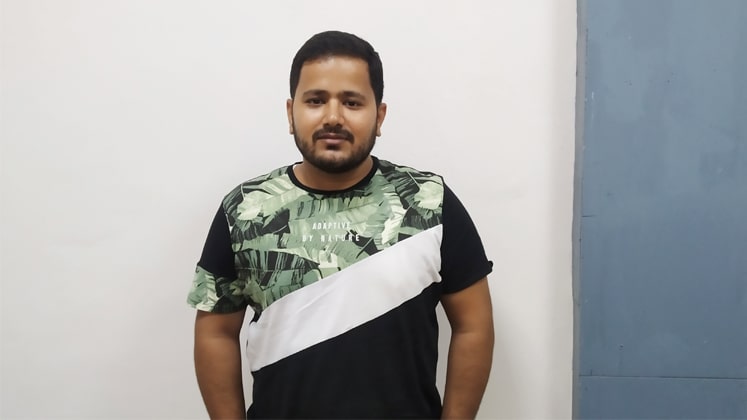
“In apparel export, it is a well-known fact that if fabric is on time and within the budget, you have won half the battle. My father knows this fact and it is because of his network, when textile supply chain during pandemic time was punctured, we could source raw material as per our requirements and were able to feed our machines,” asserted Sanjay.
Karan International is a completely family-owned business as Bhanwar manages fabric, raw material sourcing and production, while Sanjay is responsible for merchandising and overall export and Sanjay’s wife takes care of designing and building network through social media channels.
Focus on quality-driven high-fashion products fetched higher margins…
One thing that could contribute in propelling both Ethnic India’s and Karan International’s business from Q2 ’21 onwards was focus on high fashion garment categories (both women and kids) that consist of beautiful handwork carved by skilled Indian artisans.
As a strategic decision, Ethnic India is doing 100 per cent export only and works on a minimum of 15 per cent margin which goes up to 35-40 per cent in some niche categories. The average FOB of the company’s products is around US $ 10 while it also does basic products, with some little value-addition, costing US $ 6-7 and products that have FOB prices touching US $ 40. This is why even small quantity orders could fetch higher margins for the company in tough times and that helped Mehboob and his factory stay afloat during pandemic time.
“We are doing whatever orders (in quantities) our clients are placing as our focus is to keep feeding the machines and this also enhances our experience. Quality is our main motto and, at the same time, the bottom line is also highly important for us so we don’t compromise on this,” commented Mehboob saying that Ethnic India does have an installed production capacity of around 1.50 lakh pieces annually and that can be increased depending on the size of orders.
Currently, Ethnic India is working predominantly with the US and France-based buyers – both through buying agencies and direct connections. The factory is now Sedex approved, and is planning to get more approvals in coming months.
Even Karan International produces apparel items with an average FOB of US $ 15-16. At the same time, its product basket also includes products that cost as high as US $ 50. Over the years, the company has developed specialisation in supplying different kinds of premium woven garments of women.
“We work mainly with boutique buyers especially those who prefer value-added garments as with these kinds of buyers and products, we can get good margins. Our production floor of 50 machines is perfectly laid out for such buyers. We have a strong tie-up with Jaipur-based firms that are known for quality block printing. In value addition, we offer everything right from sequins work, use of different designer laces, beading to hand embroidery,” commented Sanjay Rathore.
Facing challenges head-on without compromising
Staying positive doesn’t mean entrepreneurship becomes easy! In fact, apart from COVID-19, there are multiple other challenges that are trying to derail the small-scale factories in the Indian manufacturing industry today and both Ethnic India and Karan International are no exception!
Since Ethnic India doesn’t have a big team to monitor the factory processes and all is done/monitored mostly by Mehboob himself, he has to invest enormous amount of time in the factory which he happily does, but still finds it sometimes difficult to control overheads as well as faces issues in workforce management that results in more attrition rate.
“It is the time when I need to save costs wherever I can due to lack of finances, so I’m indulging myself entirely in most of the processes of my factory. Once these business uncertainties get faded and I am able to capitalise on the positive market sentiments, I will systematically invest in process improvements,” mentioned Mehboob, who concluded by saying, “I was aware that owning business will be challenging but COVID-19 was unexpected; however I never have ‘Option B’ and I will make my venture successful sooner or later.”
Keeping workforce motivated during such difficult times is not an easy task even for a big exporter, let alone MSMEs. Endorsing the same, Sanjay said that Karan International is finding it difficult to keep employees encouraged (other than the ones working on piece rate who by and large are self-motivated species) and staff due to fluctuating cash-flow all these months. “We have had a lot of discussions regarding this and recently we have come up with a defined budget to be spent as incentives for our workers. This is giving us good results on shopfloor and we have seen workers’ attrition rate is somehow reduced,” averred Sanjay.
Karan International is majorly working on piece rate concept which, its top management believes, is giving better productivity. Its entire operations (pre-production, production and post-production) are on a single floor platform which ensures quick and smooth material movement and easy monitoring as well.
Emphasis on meeting turnover targets prove fruitful…
With the continuous efforts pushed in right direction, both the companies are hopeful of clocking the set target by the end of FY ’22. Ethnic India could generate Rs.1.40 crore in FY ’20 that increased to Rs.1.60 crore in FY ’21 despite pandemic – all thanks to buyers’ timely support and the products it is catering to. “I am hopeful that we would ship somewhere around Rs.3.50 crore worth of garments in the ongoing FY that is double of the value we clocked last fiscal,” shared Mehboob.
On the other hand, Karan International is on its way of making a sustainable future for factory stakeholders and aims at clocking Rs.6 crore turnover in FY ’22 which is a significant jump from Rs.4.50 crore that it clocked in FY ’21. “We are pretty much confident of our planning and team work which will get us go past our set target this year,” shared Sanjay.
Future seems bright with planning and step-by-step execution
The markets in the Western world are now open, consumers are out on streets and in stores, their spending on clothes and related products has increased as festive season is on the line, and buyers are not reluctant anymore to place good quantity orders. All these factors are enough to make a factory ecstatically work on their future sustainability in business.
So, what are Mehboob’s future plans? He disclosed while talking to Team Apparel Resources that he is looking to expand his design and marketing teams to build a complete factory for big overseas buyers. “Not just team expansion, I am confident of having my own factory premises in the next 3-5 years to cater to the orders of these big buyers through assembly line concept,” unveiled Mehboob.
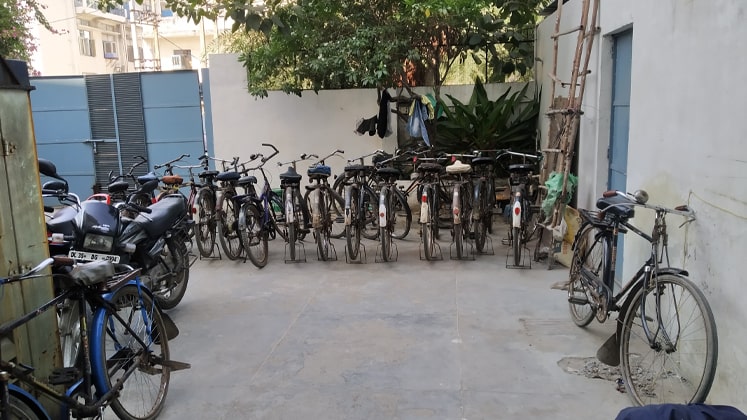
While, Ethnic India has plans of expansion, Karan International is continuously looking for new buyers through online search and social media networking. Currently, the company works with clients across UK, US, Italy, Australia and Spain. However, as global retail market is giving positive outlook, Sanjay informed he is in touch with buyers in other prominent markets such as middle-east, Japan and Latin America where customers love purchasing the kind of products Karan International has expertise in making. “Boutique buyers are huge potential clients for us and our future strategy of business expansion includes working with such buyers in long-run. We are in touch with few new clients and are sure to close some deals in weeks to come,” concluded Sanjay.




 Bharat Tex Special Report 2026