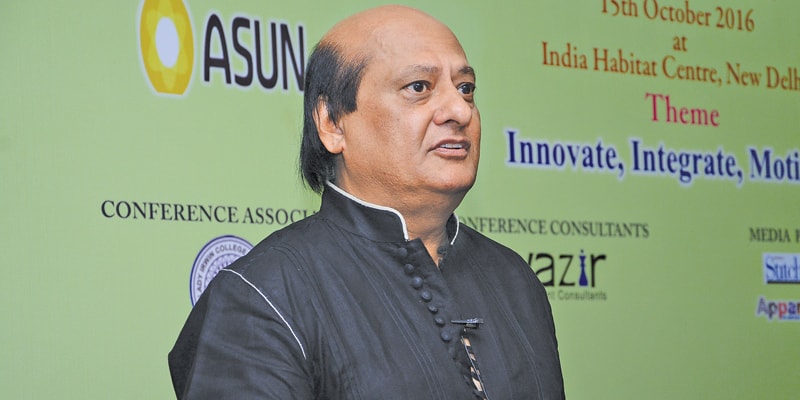
Having worked with many leading companies from the garment export industry, both on buying and export side, Ranjiv Kapur, COO, Triburg has over the years experienced how companies can overlook small things that eventually pile-up and become a major problem for any organization, affecting not only performance, but also profitability. He strongly advocates the need to have a clear roadmap and a vision to stay on the planned path. In his long journey in the industry, taken through his various stints, Ranjiv has learnt, un-learnt and re-learnt many things, being a facilitator of many ‘turnaround’ journeys – from cost to profitability for many of the companies he has worked for. He is an architect of developing innovative strategies and synchronized productive teams that deliver measurable performances in deployment with the organizational goals. He shared some valuable tips with Team StitchWorld…
In an interesting twist to the definition of a CEO, Ranjiv believes that the letters ‘C’, ‘E’ and ‘O’ stand for someone who has to maintain the delicate balance between his ‘Customers’, ‘Employees’ and the ‘Organization’. “The industry should start looking at what needs to be accomplished and how, rather than merely discussing issues that the company faces,” he says. For this, there is a need to create a timeline of all the events in a project/order, where each activity or process that the garment goes through is mapped. Such a timeline proves to be a structured method, which ensures no activity is missed out, and if there is any delay, it is followed up.
The word ‘CEO includes the letters ‘C’, ‘E’ and ‘O’ which stand for someone who has to maintain the delicate balance between his ‘Customers’, ‘Employees’ and the ‘Organization’.
It is noted as a common problem that each individual in a company prepares a ‘to-do’ list as a routine that creates a list of tasks they need to accomplish. The only thing lacking in such a list is a timeline and a final goal of the activity. A measurable goal not only provides results, but it also puts an end date to the activity discussed, making it easy to report quantitatively the tasks executed. Since all apparel manufacturing companies have their own set of clients, Ranjiv urges the companies to be such idols that their buyers/clients think twice before shifting their garment sourcing from them. “Service your customers in a way that they become your raving fans and fall in love with your products or services,” he says. The factors that destroy a business are not its strengths, but its weaknesses. He further voices to build upon the strengths, but address the weaknesses with a focus and a timeline too.
Keeping a checklist of the unique demands of a client helps in retaining them. Considering the time and money spent on acquiring a customer, retaining and providing satisfaction to a client should be of utmost importance for a factory. “How much does it cost to acquire a customer? What percentage of customers would you lose by giving them less than expected product, quality, service levels or experience? And can you handle such a loss?” questions Ranjiv. He also adds that merchandisers are the direct contact with customers and the company’s customer base should be measured, as it incurs substantial costs to the company.
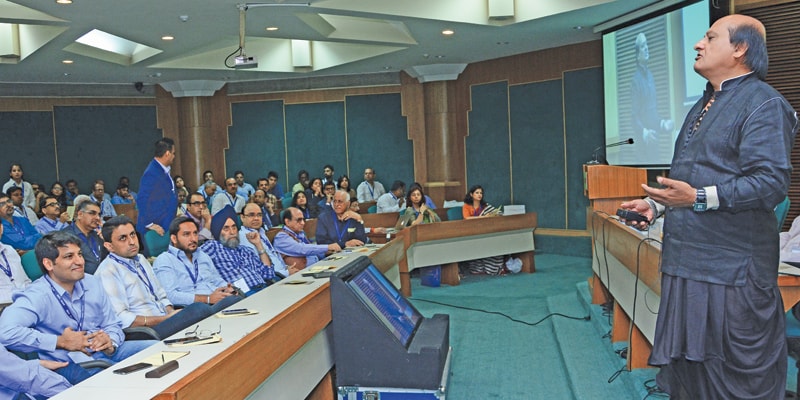
In an industry where most people argue that ‘low operator efficiency’ is the biggest reason for lack of competitiveness, which eventually results in closure of business, Ranjiv reveals that it is actually ‘Management Failure’ that contributes 52 per cent in making business go sick; ‘Market Recession’ – 23 per cent; ‘Faulty Planning’ – 14 per cent, ‘Shortage of Inputs’ – 9 per cent are also responsible; while only 2 per cent of the business failures were ‘Labour Unrest-Oriented’. “Meetings are continuously being held to discuss the growing absenteeism on the production floor, but none discuss the workforce that is present and how to get the best productivity out of them,” underlines Ranjiv.
In terms of saving costs, Ranjiv raises the question, “When every rupee matters, what can be eliminated from your products or services so that you subtract cost and at the same time add value to it?” He further urges the industry to introspect and figure out the ‘cash draining’ activities or materials in one’s factory, creating a correlation between cost and profitability. Humouring the common misconception of what a DPR is, Ranjiv clarifies that it is not a ‘Daily Production Report’ but a ‘Defective Production Report’. He also says that such a report is of no use if planning for raw material is not done correctly, adding that to maintain quality right first time, any company should not only push operators on floor, but also work along with fabric suppliers so that raw material received is correct the first time too. “This would save a lot of time and loss of fabric, which constitutes the biggest share in the cost of a garment,” he argues.
Battling productivity woes in a factory is a big challenge and even the most experienced of managers fail to find the right formulae to break the jinx. “The secret to achieve productivity is to check the production made on the first eight machines in any line. If they don’t produce according to the Operation Bulletin and the number of units required in the first hour, they cannot produce in the next 40 machines as well,” reasons Ranjiv.
He adds that to have a profitable business, companies need to map the critical factors that bring in profitability, which is not only linked to productivity, but also all measurable elements in the process, such as product development strike rate, raw material pass rate, file transfer on time to production, PCD, productivity and efficiency, factory cost, wastages, a minimum of three days cut stock to feed in the lines, alteration rates, on-time delivery, first time quality pass rate, etc.
Attacking issues faced in Sampling Department, Ranjiv comments that it is one department where no one tracks efficiency or has a timeline for the progress made. “If a sampling tailor takes three weeks to make a correct sample, after 2-3 tries, who keeps track of what he changed to achieve it? How can you assume that you will get an order if your first fit is not right? If your first impression on the buyer results in ‘failure’, how can you make sure that you meet delivery dates, or even quality for that matter? Everyone discusses the final, approved sample in a pre-production meeting, and not the samples which were rejected,” he states. To counter these problems, he suggests that there should be digital photograph for each such samples and comments received on all samples should be discussed at the pre-production meeting.
Batting for more realistic and purposeful pre-production meetings, Ranjiv brings up the point that members debate over line planning, sewing plan, but nobody plans the finishing lines, washing timeline, embroidery timeline or even a fluid cutting plan. These activities must be all visible at a glance; a whole timeline should be prepared for each style, with planned, actual dates and variance, along with corrected action plan of the activity. Explaining his work method, Ranjiv shares how during one of his stints in the industry he monitored 23 factories, 240 production lines and 14,000 machines on eight TV screens live and noted the productivity, amongst other attributes closely monitored every hour by a dedicated team to this critical area. This enabled him to track the difficulties faced in production lines so that cost per minute, cost per garment and the floor cost is taken care of for every hour of the shift.
There are five areas that should be mainly focused on in any company – Product Development, Raw Material Management, Quality Consistency, Process Management, and On-Time Delivery. All companies want 99 per cent first time pass rate, cut to ship at 1 per cent and quality execution at AQL level 1. To ease the work of operators, Ranjiv suggests that the operational breakdown be made in a flow chart format, rather than in the essay format.
Laying great emphasis on the fact that companies should not be lulled into a false sense of hope that customers will always stay with the company, Ranjiv makes a strong point, “To retain your customers, you should match your products and services with the customer’s needs, and work in that direction.” The only way to do this is to use the dashboard, which he considers the ‘Bible’ for all companies, as such a tool can serve as a mirror for teams to survey their business and make sure their goals regarding the future of the company are met. “If a company makes organizational goals for the coming three years, factoring in the probable market forecasts and wage increments, there is no way that the company would face losses,” concludes Ranjiv.