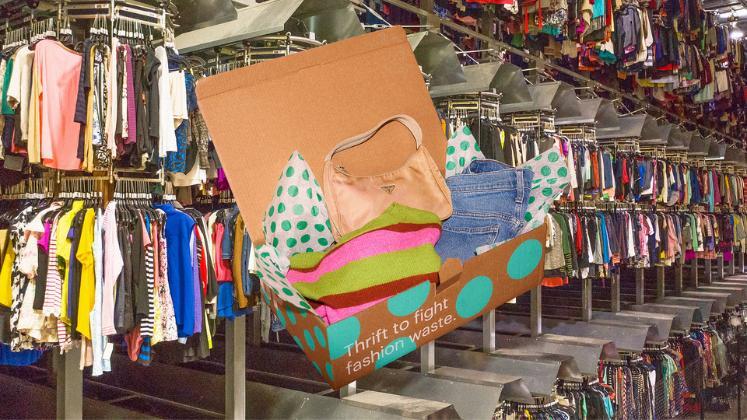
The global market for secondhand apparel is expected to expand at a compound annual growth rate (CAGR) of 12 per cent and reach US $ 350 billion by 2028, according to the annual “Resale Report” released by online resale platform ThredUp.
The research for this year, which was co-published with GlobalData, emphasises how the market for used clothing is growing faster than the overall retail industry. The used clothes market in the United States is predicted to grow to US $ 73 billion by 2028, having grown seven times faster than the whole retail clothing market in 2023.
When it comes to their purchasing habits, people—especially younger ones—are becoming more and more inclined to purchase used clothing online. As a result, it is predicted that online resale would more than double over the next five years, growing at a CAGR of 17 per cent to reach US $ 40 billion by 2028. Similarly, over two thirds of customers who bought used clothing in 2023—a 17-point increase from 2022—made at least one online transaction.
It’s also more obvious that resale buyers are taking advantage of sales. According to 60 per cent of consumers, buying used clothing offers them the best value for their money, and if the economy doesn’t improve, 55 per cent of consumers say they’ll spend more money on used clothing.
With branded resale increasing, purchasing for used goods has never been simpler for fans. Resell shops are presently offered by 163 brands, an increase of 31 per cent from 2022. Among the newcomers in 2023 were Kate Spade, American Eagle, and J. Crew.
The potential influence of government intervention on quickening the fashion industry’s shift to a more sustainable future is also highlighted in the research. Notably, 40 per cent of consumers think they are more likely to vote for a politician who supports sustainable fashion, and 42 per cent of consumers support legislative actions encouraging sustainable fashion.
“The global secondhand apparel market continues to burgeon – a testament to the intrinsic value shoppers find in the secondhand experience and proof of the seismic shift towards a more circular fashion ecosystem,” said James Reinhart, CEO, ThredUp.