Today, many consumers are eager to buy from companies they believe are environmentally responsible and actively working to lower their emissions’ footprint, but how can anyone tell if a retailer or a brand is truly sustainable or just ‘greenwashing’ as a marketing ploy? The clothing industries have received a lot of criticism for being ‘greenwashers’.
The term ‘greenwashing’ is basically coined for companies that deceive everyone into thinking that a brand is sustainable by using false practices, assertions and marketing that suggests they are being considerate of the environment when in fact they are not.
The topic has gained much more attention as a result of the development of standards that evaluate how accurately companies represent their products or the establishment adhering to sustainable standards.
Shein, a global leader in ultra-fast fashion, came under fire for greenwashing when it introduced a resale platform for American consumers in October 2022. Studies have shown that resale systems, in general, do not contribute to lowering production levels, especially for fast-fashion brands.
It should not come as a shock that the Japanese store Uniqlo is included in the list of fashion brands that engage in ‘greenwashing’, given its reputation as one of the most well-known fast fashion brands in the world. Uniqlo has received numerous labour rights accusations and infractions, similar to other fast fashion retailers. The company has over 3,000 locations worldwide, but its reputation for sustainability isn’t good. Products it sells are made with a lot of cheap synthetic materials, such as rayon, polyester, nylon and elastane and are sold for very low prices.
Another campaign against ‘greenwashing’ targeted the French athletic goods store Decathlon for making ambiguous sustainability promises in its advertising. The brand’s vague use of phrases like ‘eco-design’ prompted the Netherlands Authority for Consumers and Markets (ACM) to demand compensation. Following this, Decathlon promised to change or stop making any sustainability claims regarding its products.
What is the deal with ‘recycled polyester’?
How often do we see tags that read ‘95 per cent recycled polyester’ in stores? First of all, recycled polyester clothing is created from PET bottles rather than pre-owned clothing. Although it’s wonderful that we’ve found an application for all the single-use plastic bottles we use, it also means that there are still a lot of polyester clothes out there, in landfills all over the world, that do not decompose.
It is also a known fact that companies continue to advertise their products by identifying them as ‘100 per cent recycled polyester’ even though they are not. Also, it makes no sense to refer to something as sustainable if recycled polyester is combined with virgin polyester.
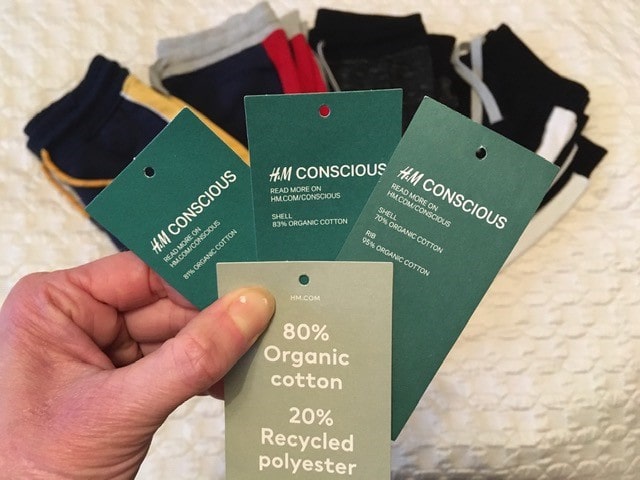
Many brands have been caught in the crossfire since the public is still skeptical about the effectiveness of recycled polyester on Mother Earth. One prominent example is H&M. Despite being mostly composed of polyester or recycled plastics, H&M used green scorecards to identify and sell its ‘Conscious Choice’ products. The defendants believe that this is a fraudulent portrayal of products by H&M that do not have an adverse impact on the ecosystem.
Similar to H&M, Zara launched ‘Join Life’ about 20 years ago in an effort to improve its sustainable reputation. By 2030, Zara wants to run all of its internal operations entirely on renewable energy and transition to a circular economy model to extend the lifespan of items. The garment company has also made plans to utilise exclusively recyclable and sustainable cotton and polyester, as well as to cut and offset all emissions by 2040. However, a lot of people criticise the brand and raise questions about transparency.
“Textiles made from cotton and polyester blends are used in 98 per cent of the sector. Cotton that has been blended with polyester is no longer recyclable, and all of this cannot be reversed. Fabrics containing a 5 per cent polyester blend are permitted to be labeled as sustainable by certain certifying organisations. Blended polyester yarns are not environmental-friendly, and polyester is usable only if it is properly recycled,” said Shankar Dhakshinamoorthy, Founder of FABORG, a company that produces vegan wool made from the wild flowering shrub Calotropis.
Consumer awareness of greenwashing
Consumer awareness is the first step in managing, removing and altering human behaviour and choices. This implies that the only way to encourage effective customer behaviour is through awareness.
It is challenging, but not impossible, to tell whether companies are greenwashing from those that are truly sustainable. Before purchasing products labeled ‘sustainable’, consumers can use a few different strategies. Looking for certifications that support the claim that a brand is sustainable is one of the most obvious ways to do so. Another strategy is to ignore the ambiguous language that marketers use and instead look for numbers, statistics and other tangible evidence that would support their claims.
Neha Kabra, Founder of Maati, an ethical fashion label, said, “The whole point of sustainability is to question where everything comes from, and consumers should do the same. They can eventually eliminate greenwashing in this manner. Instead of relying on the package, consider the contents. Asking the correct questions, such as how the product is created, can have an impact. Asking why a particular product costs that much and grilling brands to get the appropriate breakdown, this cross-questioning will encourage businesses to create sustainable products so they can at least answer the people to whom their market is relevant.”
Some companies claim that the raw materials used to make their textiles, such as viscose, bamboo and rayon, are sustainable. However, consumers should know that these textiles can still be subjected to countless pesticides and chemicals and can be transformed into garments that are extremely harmful to the environment.
Labels provide a wealth of information on the origins and contents of the clothing. Check for certification if someone decides to purchase organic cotton. Companies are starting to take note of some manufacturers that are moving toward sustainable eco-fashion, which has a minimal impact on the environment throughout the garment life cycle. For instance, since 2004, Walmart has offered women’s organic cotton T-shirts (Cloudio, 2007). By using post-consumer plastic bottles in their apparel, brands like Patagonia are promoting eco-fashion.
Role of certifying agencies and the Government
While brands have grappled with their own answers for years, governments and regulatory bodies are signaling that existing definitions may be insufficient and, in many cases, misleading.
The European Commission is working hard to get rid of the fake labels that fashion businesses have posted. The commission’s strategy is to restrict the use of the term ‘sustainable’ to products that can demonstrate recognised excellence in environmental performance. Furthermore, consumer protection agencies in Norway and the Netherlands discovered numerous brands that were deceptive and misleading.
A law requiring companies to apply carbon labels to their products and assign them an environmental score on a scale of A to E is anticipated to be established in France in 2023. As a result, customers will be able to make more informed purchases since the information provided on the label will be more precise and clear.
Despite the fact that impact assessment tools and third-party certification systems have evolved to help brands and customers, controversy has also been generated by them. The Higg Index, one of the most widely used rating systems in the fashion industry, came under fire in 2022 for a variety of reasons, including the reliability and validity of the data it offers and the possibility that major labels could influence it. The use of Higg Materials has been forbidden by Norway’s consumer regulator, which found that the index’s consumer-facing efforts can be deceptive.
Future of Greenwashing
The market has become inundated with greenwashing in more than 35 years since it was given a name. It’s easy to see why, given that consumers are looking for sustainable products more than ever. Additionally, they are more conscious than ever of greenwashing.
The increasing prominence of ‘greenwashing’ has sparked concern among several fashion industry professionals. While some think that the trickle-down theory—the idea that fashion trends move from the upper to the lower classes—and the influence of powerful figures like the government and large fast-fashion retailers must change, others think that consumer awareness and how people perceive products before purchasing them can have a significant impact.
“Greenwashing is a positive indicator since it shows that there is a market for sustainability. However, there is a lack of information about what sustainability actually is. Brands need a more comprehensive understanding of how to produce a minimal carbon footprint at every turn. Some companies may simply lack the necessary expertise. Therefore, we need stronger leadership. This can be done by major fast-fashion retailers urging people to make sustainable choices. So, it is difficult unless leadership steps in,” said Shivangini Padhiyar, Founder of The Summer House, a considerably designed organic clothing brand with a focus on quality and sustainability.
On the other hand, Swikruti Pradhan, Founder and Creative Director of Rustic Hue, a sustainable and handwoven fashion label, believes that “consumers today need to be educated about the actual meanings of terms like ‘eco-friendly’, ‘sustainable’, ‘circular fashion’ and more. Product knowledge and brand awareness are two ways to tackle greenwashing. The media, fashion magazines, fashion influencers, designers, researchers, fashion events and shows, etc., play an important role in creating awareness.”

Many fashion designers think that stronger government engagement is necessary to prevent greenwashing, whether it be through sludge-free systems, modified wet processing steps, recycling or energy-saving methods.
Brands will need to be extremely watchful about how they speak about their sustainability-related projects and achievements to ensure they are not ‘greenwashing’ in light of new and emerging rules as well as increased consumer awareness of fashion’s role in the climate problem.
Transparency over manipulation is the only option. When they said that honesty is the best policy, they were not mistaken. No customer will adopt the detective persona of Sherlock Holmes and start making inquiries. Their responsibility is to be informed, to raise awareness and to make eco-friendly product purchases. The brands and the people with power, in fact, control it.
The best method for apparel companies to combat greenwashing is to examine every stage of production in greater detail and look for opportunities to improve it. Brands would then be able to understand the source, consequences and price of their products. Due to the strictness associated with making sustainability claims, this process and technology have a great chance of becoming widely used worldwide. This clarity can also assist brands in obtaining a clear understanding of the processes that go into producing their clothing, right from where the raw materials come from to the final product.