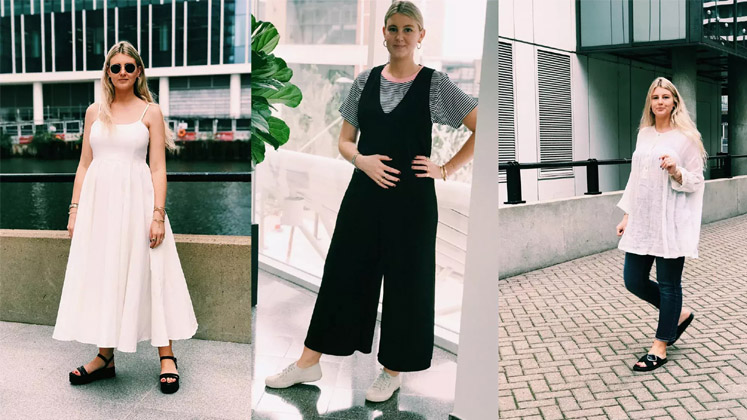
Improving men-to-women ratio and the increasing number of working women, who continue to work during their pregnancy, are facilitating the growth in the market.
Consequently, the global maternity apparel market is now expected to reach US $ 41.3 billion by 2031. Currently, the same is around US $ 21.6 billion.
As per a recent survey conducted by FMI, the demand for maternity apparel grew at a CAGR of 3.5 per cent between 2016 and 2020.
Increasing penetration of fashion trends amongst millennials due to growing influence of fashion magazines, social media and celebrity endorsements is encouraging modern mothers to opt for occasions- and venue-specific maternity clothes.
It is pertinent to mention here that various clothing brands are focusing on launching new and stylish maternity collections to capitalise on the surging demand for maternity apparel. Driven by this, the demand for maternity apparel is projected to expand at 6.7 per cent CAGR during the forecast period 2021-2031.
World’s leading brand Zara launched its first maternity clothing collection comprising around 25 dedicated maternity apparel such as jeans, sweaters, knitted dresses and overall. A slew of such developments is expected to spur the sales of maternity apparel.
Outerwear maternity apparel is estimated to emerge as the most attractive product type segment, accounting for nearly 76.2 per cent of the overall sales in 2021.
Increasing demand for outerwear stylish clothing such as jeans, skirts, tops, dresses and tunics, available under various brands, is favouring the growth in the segment.
The report reads, “Key manufacturers are emphasising on launching innovative and fashionable maternity wear for protecting mothers and babies from harmful ultraviolet (UV) radiation. They are using natural and eco-friendly fabrics to tailor these garments. This is expected to bode well for the market.”
With regard to regions, the US is anticipated to dominate the market in North America, accounting for more than 79.2 per cent of the regional sales by 2021-end.
Favoured by the increasing number of working pregnant mothers in Australia, the country is expected to account for over 51.7 per cent market share, while India is projected to emerge as one of the most remunerative markets in South Asia, accounting for around 31.7 per cent of sales in 2021.