Even though the industry is going through one of its worst phases, surprisingly many new, albeit small players, are entering into apparel export. The environment is charged with positivity, as exporters are making efforts to overcome challenges… If wages are increasing and price is decreasing, exporters are proactively looking to manage it with automation. If existing client base is facing ‘down sentiments’, exporters are now exploring new markets… If existing product categories are not creating more orders, exporters are adding new product categories, and even if Indian domestic market is full of challenges and not giving enough business to some of the garment manufacturers, they are venturing into exports…, and vice versa. The list, to find a way against challenges, is long… Apparel Resources caught-up with some progressive exporters and garment manufacturers across India, using various tools/strategies to survive and grow.
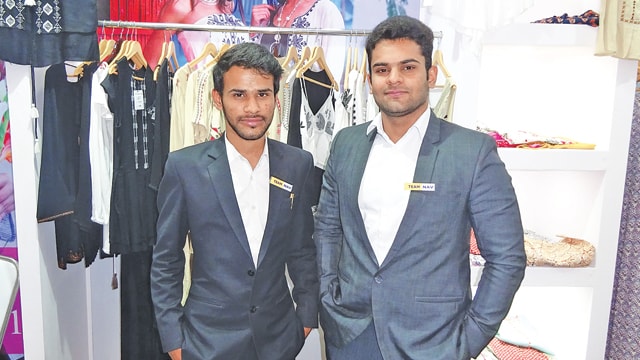
To begin with start-ups or comparatively new players, who are full of confidence to survive, they are happy with the response achieved from their buyers so far. The good thing about these small companies is that they are not just trying to venture into exports, but are sure to move till last mile with proper homework, a long-term vision and planning. Nav Apparels, Jaipur is just a 2½-month-old organisation and is exploring export as well as domestic markets. Buyers have reacted positively to the company’s collection (purely for women) which was focused on embroidery. Currently, it has 60 stitching machines and is planning to expand its infrastructure further. Himanshu Maheshwari, GM of the company shared: “I have support and basic knowledge of textile business as my father is into home furnishing from many years. We are getting repeat orders from domestic, and for export, we have participated in sourcing event like IIGF.” He further added that there are some issues to understanding of fabrics, product developments and sourcing of raw material.
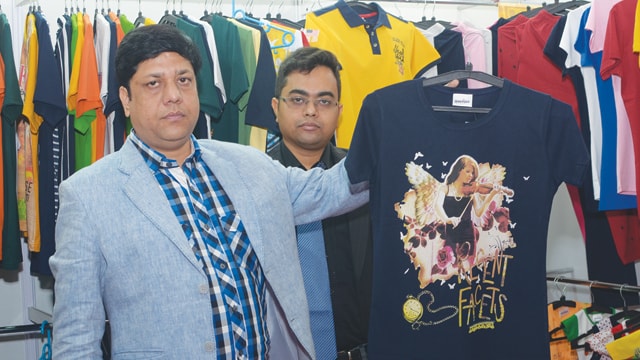
Ghungur Impex, Kolkata is also just eight months old in apparel industry and it offers knitted as well as woven garments for men, women and kids. “We entered into garmenting from real estate as garment sector is quite big; despite challenges there are opportunities. With participation in international sourcing events like IIGF, we will definitely add more buyers. We see unavailability of some pattern experts, otherwise there is no such issue,” says Somnath Das, Director of the company who has support of product development from his sister. The company is currently having 48 stitching machines and exporting to Middle East countries.
“Work is there in industry but problem is price… So we have expanded by diversifying into products by recently starting trousers, shirts and flat knit sweaters. We have approached our existing buyers for the new products. By this we should be able to generate more business without putting much more efforts into marketing. We should grow 100 per cent in next two years.” – Rajeev Bansal, MD, Celestial Knits & Fab, Noida
Territory Jeans, Delhi, founded by textile graduate AK Mahato, is just a 3-year-old denim company, but has its global clients and it seems to be growing with each passing day. He adds, “For almost 14 years, I have worked with some top Indian textile companies, have strong relations with most stakeholders and also possess deep knowledge of product as well as market which helped me to add buyers with me.” Currently the company’s market ratio into export and domestic is 70:30. Its overseas clients are into Chile, El Salvador and Dominican Republic. The company has associate vendors for manufacturing.
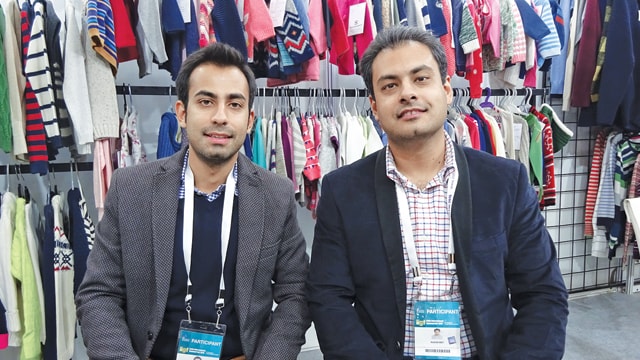
Established players doing reasonably well are also geared up with automation as well as new marketing strategies. Automation is helping them to offset their labour cost and market opportunities are strengthening their confidence. Nagesh Knit, Ludhiana is investing Rs. 1.50 crore in automation and focusing more to work with direct buyers rather. For this the company participated in IIGF after a long gap. Rohit Mehra, Partner of the company informs, “We are going for automation by adopting advance flat knitting machines of Stoll, automatic sewing machines and allied infrastructure. We are trying to work with direct clients as currently most of our business is through buying agents which is not much sustainable.” Sedex approved Nagesh Knit is further going for more such standards like BSCI or SA8000. It is producing 50,000 sweaters and 30,000 tees per month. There are many more such examples of exporters exploring automation.
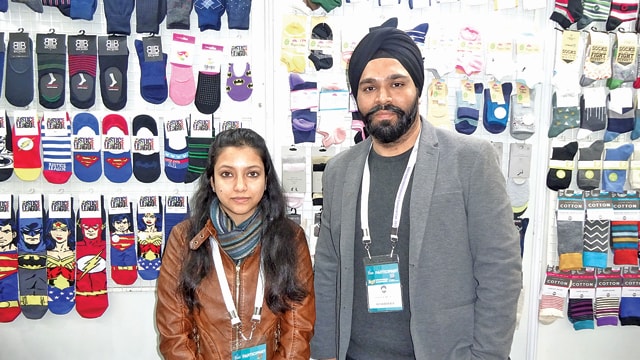
Some of the domestic players are also entering into export as they feel that domestic is like being at a saturation point for them while export has enough opportunities. Kamra Lingeries, Delhi, an established player in domestic market, is exploring export markets and participated in IIGF for the same. Prateek Kamra of the company is geared up as he says, “Yes, India is not a sourcing destination for lingerie but whatever challenges will be there, we will find a way as export is currently a learning process for us but we have to succeed in this.” Vice versa, Jagmini Micro Knit, Kanpur, a leading supplier of socks for Zara, is now exploring domestic market which is currently 10 per cent of total business. Dilpreet Singh, Senior Merchandiser of the company shares that the reason to focus more on domestic is the increasing footprint of organized retail in India. The company, manufacturing 9 million pairs of socks per year, is working more systematically now with the use of IT tools. It has certification and standards like WRAP, Sedex, Fairtrade and GOTS etc.
“I am exploring automation in all segments, be it cutting, stitching or finishing, etc. As the industry is still on oxygen, the only way to survive is to adopt automation as much as possible so that we can reduce workforce and minimize cost.” – GS Madan, MD, Madan Trading Company, Delhi
Manufacturers who are already using maximum automation are investing into new product categories and enhancing capacity too. Like Hans Apparels Exporters India, Tirupur recently added 200 stitching machines and now has around 1,200 machines. The company also started manufacturing organic kidswear. Rathna Kumar, MD of the company says, “Currently we are doing annual business of Rs. 50 crore and with the recent expansion of organic kidswear, we are targeting for at least Rs. 60 crore business this year.” It also participated in IIGF after 5 years. With regard to Tirupur, it is worth mentioning that the Amazon team also highlighted in various seminars that exporters in Tirupur are the most active on the digital platform, manufacturers from other hubs can move with same aggression. Ashapura Intimates Fashion (Valentine), Mumbai is focusing on his collection which is neither casual, nor formal but is like resort and airport wear (transitional apparel, not bound to any particular segment). Deepak Tiwari, DGM, Sales of the company shares that they are now focusing on export as well as domestic markets. So, the message is loud and clear, keep pace with the required changes be it any level. That’s the only way to survive and grow.




 Bharat Tex Special Report 2026