The visitation profile of the recently concluded GTE’13 in a way indicates the direction that the garment manufacturing industry is taking. Though over the last few years the event has been seeing increased visitation from domestic hubs in and around Delhi, this year the dominance of manufacturers with very small setups targeting the domestic market was undisputed. The technology providers too have accepted that the domestic players are the future growth segment and many are re-strategizing to service this segment, which has needs that are very different from those of the export manufacturing units.
Having emerged as a major meeting ground for technology providers and the garment manufacturing industry, the annual GTE is also a barometer of the health of the industry with indications coming as to whether companies are looking to invest and if yes where is the focus. This year, most of the exhibitors felt that the garment manufacturing industry has finally started to look up and the overall vibes were positive. For exporters, the focus for investment is on automation, both to reduce requirement of skilled labour and to improve operational efficiencies, while for domestic players, the focus is on upgrading their very basic machines with more effective technology for better quality.

Though the fair did see visitation from exporters, the faces were mostly of those who have been regular visitors year after year, with very few new faces seen. Sandeep Gupta, Gupta Exim; Shreyaskar Chaudhary, Pratibha Syntex; Rajeev Kapoor, Affordable Exports; Naresh Bhandari, Bhandari Hosiery; teams from Madura Clothing, Mahajan Overseas, Tynor Orthotics, Gokaldas Exports, Impulse and Interconti Projects, besides a number of industry consultants were seen during the three days’ fair. But the companies that swarmed the venue were domestic players from Kanpur, Indore, Surat, Ahmedabad, Kolkata, besides Delhi’s Gandhi Nagar, Tank Road and other domestic hubs. “A good number of people and companies from Delhi-NCR, Ahmedabad, Kolkata, Ludhiana and Kanpur visited our booth. These people were small manufacturers working majorly with domestic brands, and were not from the mainstream industry. The new entrepreneurs are not manufacturing in metros, hence they have the labour advantage and the savings are enough to spend on deskilling the labour for ensuring the quality of a few critical operations. And that is a right thing to do for them, I believe,” averred Anil Anand, MD, HCA.
No wonder, a growth area for most technology providers today are the manufacturers in the domestic market and all the technology providers who fully understand the importance of targeting this segment. “We would be foolish to ignore this highly potential market, but we also understand that the interventions required to capture this market are going to be very different from the approach we have for targeting the players working in the export market,” said GV Aras, Director, A.T.E. Enterprises. Among the most important is creating awareness of better technology within the domestic players, and second, it is to have on the platter machines that will appeal to these players who have just recently started to upgrade technology.
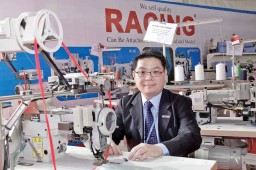
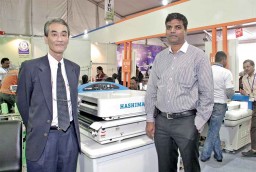
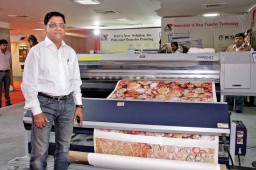
A few of the companies came with entry level machines to capitalize on the trend like MS Orange, Jaysynth and IMA. While MS Orange had digital printers for starters, IMA focused on cutting solutions for small units.“It is a misconception that automatic cutters are viable only in large setups where the production volumes are huge. The machine we have displayed is comparatively cheaper than a full-fledged high ply cutter, and can still give substantial amount of production,” said P. Gunasekaran, CEO, IMA.
Also in focus, for both the export and domestic manufacturers, was value adding technology as fashion is at the core of most companies. Many of the booths that had on display technology for printing, engraving, embroidery, and bead & sequin attachment were kept busy throughout the day. These companies also reported business with many putting up ‘sold’ stickers on many of their products. Other exhibitors who were able to close deals at the fair were those companies that had entry to mid-range of technology, which were in demand by the domestic players.
Exhibitors who were showcasing high-end technology claimed they had many visitors seeking to understand the usefulness of the technology and many enquiries to be followed up later were generated; very few talked about closing any deals during the fair. “I would say the fair was a success for us as a lot of people showed positive response towards our technologies and solutions, with an overall inclination towards automation,” said John McCall, Regional Sales Director, South West Asia, Gerber Technologies. The way business moved for Tukatech is a reflection of what most of the exhibitors saw, wherein the company claims to have sold 25 of their basic manual spreaders and booked enquiries for another 50, only one CAD/CAM was sold, that too to an exporter in Noida, who was already negotiating on the product.

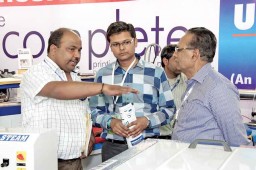
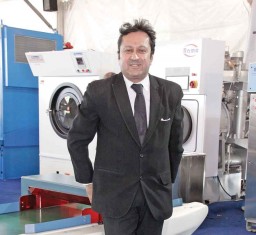

Due to this slowdown, buyers are refraining themselves in investing in fully automated machines but are always looking for upgrading their existing machines by adding right kind of attachments and folders in order to keep up with the fast moving fashion.“Though the industry is facing a tough time from the past two years, spare parts and attachments never go out of demand because this is one thing that keeps the machine running,” said M. L. Jain, Gauge Sewing Machines and Spares.
The big technology suppliers like IIGM, HCA, Mehala, EH Turel & Co and A.T.E. were present with their array of brands representing almost every aspect of garment manufacturing from cutting to finishing. Besides receiving many industry professionals and businessmen, the companies also spent a good amount of time interacting with students. “What was also very fulfilling for us was the large number of students who visited our stall, we were very happy to receive them and explain the technology. After all they are the future and three-four years down the line, they will be the torch bearers of various companies making decisions on what technology to be investing in,” said Ashim Das, CEO, Mehala Machines.
Satisfied with the way the event has shaped up, the organizers claim that the fair attracted good business and they have received positive feedback from most exhibitors. “We are already charged up for next year’s event and want to thank our exhibitors in having confidence in our ability to attract visitation even when market sentiments are not at their best. This year the fair was a major draw for local manufacturers and with all the technology providers now looking in this direction for growth our fair has provided the platform for synergy in future growth,” concluded Ricky Sahni, MD, GTE.