 New markets are the buzzword today. Caught off guard since the global slowdown in traditional markets picked up in 2008, Indian exporters, supported by Government incentives and export promotion activities, are charting fresh frontiers for business. After Latin America, Japan and South Africa… the new focus is South Korea, Turkey and Russia. Three exporters – Madan Trading, A.A.A. Apparels and Sargam Exports – share their experience of venturing into these new markets…
Accepting that traditional markets can no longer sustain growth or in some cases even survival… many exporters have over the last few years commenced business in new markets, while many more are aggressively exploring options either through BSMs initiated by trade associations, through contacts in such countries or participating in local fairs in emerging economies. The Government under its Market Development Assistance (MDA) Scheme financially supports exporters participating in international fairs and BSMs in new markets; they also offer 2 per cent inter-subvention and 2 per cent under Focus Market Linked Scheme, which have been extended to include USA and European Union.

Though not all have a good experience to share in their effort to penetrate
emerging economies, many have been successful in finding the right partner to get a firm foothold in a new market. The major markets that the industry is looking at today are the Latin American Countries (LAC), Turkey, Russia, South Africa, Japan and South East Asia. These markets are growth markets and have been least affected by the global economic slowdown. Over the last five years these emerging markets have on an average shown growth of 8 per cent to 10 per cent annually and their combined size is estimated to be worth over US $ 2,300 billion.
In 2012, the exports to ‘other counties’ as they are called saw 20 per cent growth, while exports to US and EU both declined. No wonder the share of exports from India to the EU has dropped from 54 per cent in 2005 to 45 per cent in 2012, while the US share in exports of garments has dropped from 34 per cent to 23.2 per cent last year. As the presence of Indian exporters in these countries is very little, with a share hovering around 1-1.6 per cent, there is immense scope to grab bigger share provided exporters study the market and offer what is often called ‘right product at right price’.
South Korean buyers looking for China alternate
 A market which has surprisingly shown interest in Indian manufacturing skills in the last few years is South Korea. With its steady economy, South Korea is currently experiencing a thriving fashion retailing business. As one of the BRIICS countries, South Korea is certainly an emerging country the county’s GDP per capita has reached US $ 30,000, as compared with the figures for 2009 of US $ 28,300, showing clearly that its customers’ buying power is indeed climbing over the years.
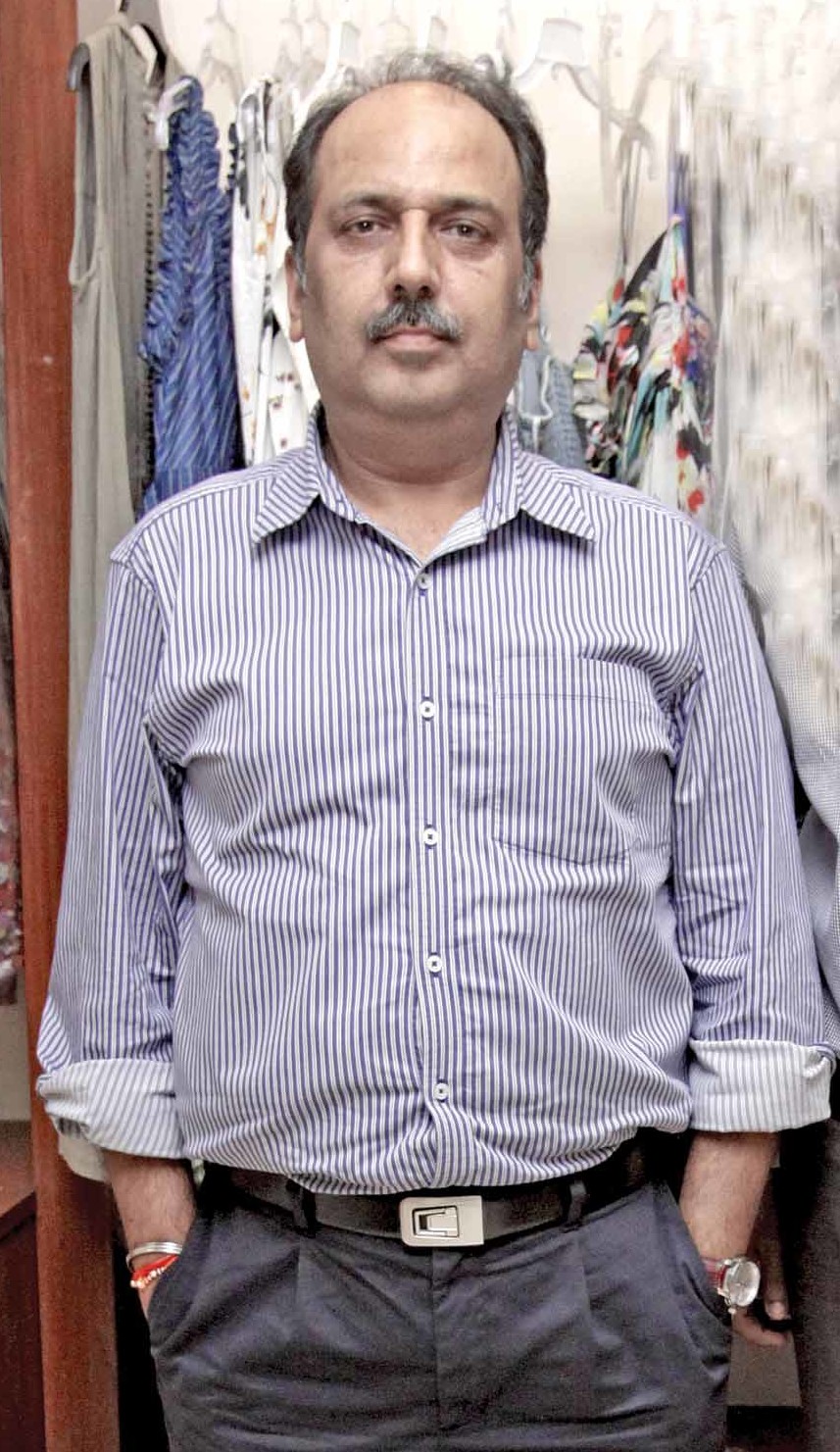
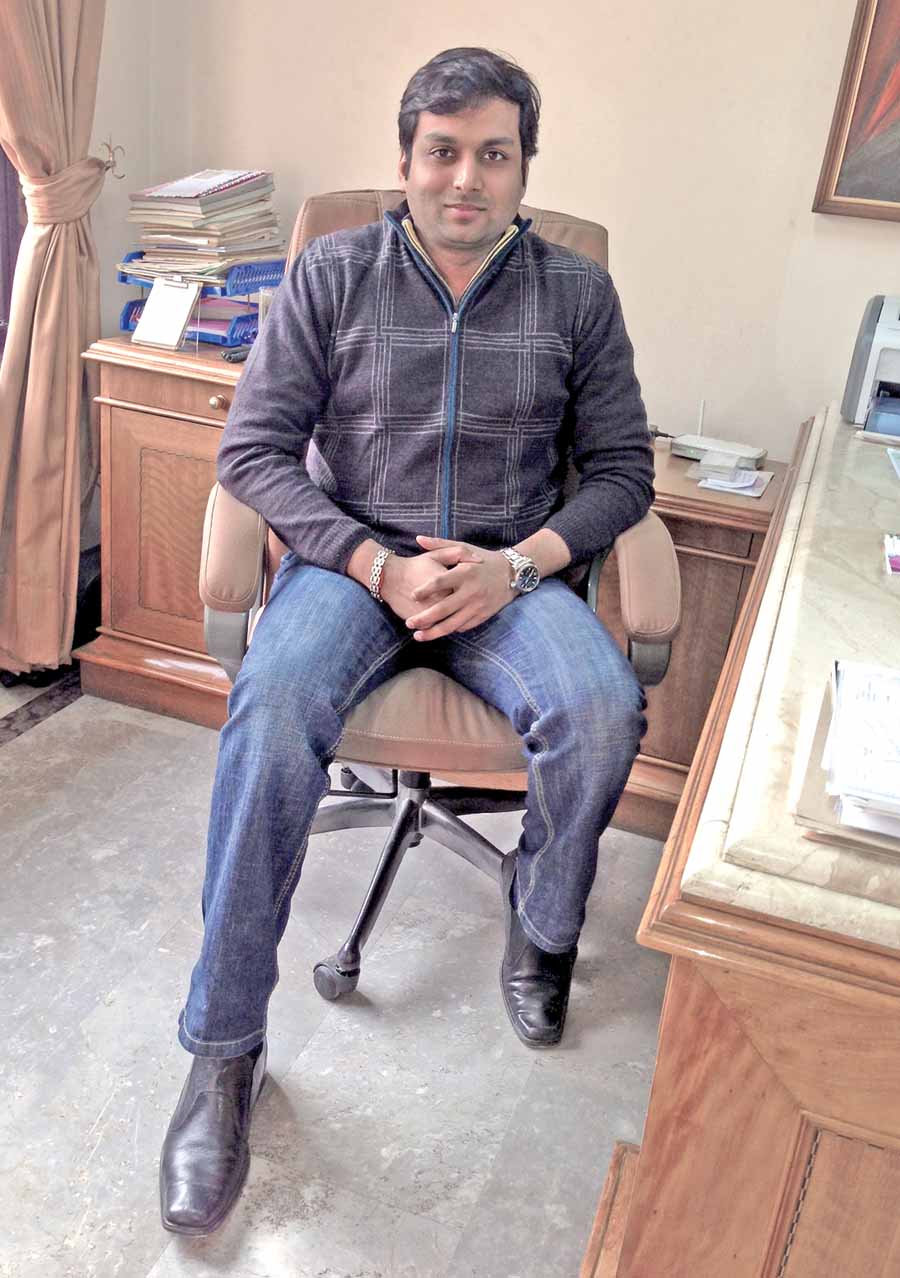
Finding a firm foothold in this excitingly positioned market is Faridabad based Madan Trading. This 40 years old company which has seen a steady growth of 20 per cent for past 2-3 years has been mainly doing business with the European and UK market, for brands like Matalan, Debenhams, River Island, and couple of buyers in Denmark. About two years ago, the company added Eland to this list, a buyer from Korea. “The UK and EU market have been slow for the past few years but that cannot be an excuse for incurring losses. So we discovered new buyers. They were buying from China earlier but now because of the free trade agreement with India; they are looking at us as a more cost-effective supplier. They have a strict eye for quality and our ability to do high-value garments earns us the preference over Bangladesh. Also they want to establish a footprint in India,” says GS Madan, MD, Madan Trading. Fashion in South Korea is a mix of European and Japanese sensibility and value addition is preferred.
[bleft]“Koreans were buying from China earlier but now because of the free trade agreement with India, they are looking at us as a more cost-effective supplier. They have a strict eye for quality and our ability to do high-value garments earns us the preference over Bangladesh. Also they want to establish a footprint in India,” says GS Madan, MD, Madan Trading.[/bleft]
The company believes that fabric is the primary attribute of the garment which truly determines its quality. Especially in ladies wear, how it flows or hugs the body is very important to enhance the femininity. “We try and give value to the garment through the fabric, and we market it as our strength. Our Korean buyers came to us with Chinese fabrics which they believed are impossible to source out of India. We surprised them by developing identical fabrics from our suppliers in Surat,” says Madan. “People emphasize too much on the stitching, when the emphasis should rather be on the fabric. Fabric is the main component in the cost of the garment. There is only so much you can save in stitching, but if one could buy a quality that is identical and satisfies the customer, and at a cheaper rate, the saving can be manifold,” he adds.
Madan is looking at Korea for growth as clothing retailers are doing particularly well in the country, led by both domestic demand and a massive increase in tourists from Japan and China. International brands have seized the opportunity to enter the market or expand there. Swedish fashion chain H&M opened three stores in 2010, while Zara owner Inditex has introduced further brands, and Japan’s Uniqlo built its biggest Asian store in Myeong-dong. Lacoste and Forever 21 have also boosted their presence in Seoul with new stores along fashion street Garosugil, near Apgujeong.
Luxury goods sales are also booming, with growth in double digits last year. That encouraged France’s Louis Vuitton to open a 550 sq. metre store in Incheon International Airport, while Donna Karen of the US and Italy’s Gucci opened stores in the Cheongdam Fashion Street.
Other new entrants include footwear retailers Charles & Keith from Singapore and Aldo from Canada, plus fashion retailers French Connection and Bebe, all of which are pledging more aggressive store growth in 2013.
Turkey turns buyer for Indian fashion
 Having already earned the reputation of a major manufacturing base for European fashion brands with the ability to offer quick turnarounds and innovative washes, Turkey is turning towards India for casual fashion with embroidery and embellishments. The Turkish market is divided into many segments and Indian manufacturers are servicing all segments. At the bottom of the pyramid are the small store owners having 2-3 stores in major towns. These buyers look for small quantities of 100-200 pieces and for them price is not such a major issue. Then there are the semi-wholesalers who are supplying to both local and luggage boutiques, these buyers are mostly asking for 1,500 to 2,000 pieces per style. Then come the wholesalers supplying to Eastern Europe, they demand bigger orders ranging from 10,000 to 15,000 pieces. And at the top of the pyramid is the Big Store formats who have QCs in India and can pick up as much as 1,00,000 pieces.
A company which has found a saviour in the newly developing Turkish market is Gurgaon based A.A.A. Apparels. The company which completely closed down in 2007 because of the ongoing market slowdown and increasing cost of production has made a strong comeback working with only new markets of South Africa and Turkey. While South Africa is the smaller market, it is Turkey with its volumes that has supported the bounce back and since its comeback in 2009, the turnover of A.A.A. Apparels has increased steadily standing at US $ 6 million today. “We have completely changed our strategy and in future will invest to develop in new markets instead of working with traditional markets which are now saturated,” says Abhishek Chopra, Manager (Garments), A.A.A. Apparels.
[bleft]“We have completely changed our strategy and in future will invest to develop in new markets instead of working with traditional markets which are now saturated. Today Turkey is our growth market and we are already doing business worth US $ 5 million with our Turkish buyer,” says Abhishek Chopra, Manager (Garments), A.A.A. Apparels.[/bleft]
Son of the owner, Ashwini Chopra, Abhishek has led from the front the comeback story and today their biggest buyer is from Turkey called LCYGG. They are doing almost US $ 5 million worth of business with them. The products include dresses and tops, and since Turkey is an Islamic country the dresses are longer in length and more conservative, but definitely stylish and value added. While Abhishek is very happy with the market, he admits that there are problem areas. “Being a developing country, every 3 months they have new rules and regulations and it’s tough to adhere and make your vendors change accordingly. Also the testing requirements are very stringent and all the goods are reopened on the Turkish border and tested mostly for azo-free. If they match the standards they are passed, otherwise the shipment is returned or sometimes even burned in some cases,” informs Abhishek.
Since Turkey is at the cusp of Europe and Asia it has developed as a re-exporting point for Eastern Europe. It also has a huge domestic market for garments as around 80 million tourists visit the country annually and they all shop for clothing as Turkey is known for apparels. Besides that Turkey is the home of shopping malls and Istanbul alone has over 200 malls which have many local Turkish brands and retailers who source from India. Some of the Turkish stores sourcing from India are Collizone, Rodi, Coton, Mavi Jeans, LC Waikki, Perlina, Seris, Batik Vakko, Boyner and Faiksonmez.
Another area that Turkish buyers are very particular about is the ‘price’. It is also important because the garments are sold further to other countries. The average prices of garments to Turkey from India vary from $ 5 to $ 20. While a plain short dress would be acceptable at FOB $ 5, a long dress would fetch around $ 6 and adding some embellishment would take the dress to $ 7. A dress with handwork like chicken can fetch $ 9, while a beaded blouse is picked up by buyers for around $ 15.
Russia – The market of the future
Market watchers predict that the Russian market for clothing will see exponential growth till 2016, growing beyond the 2008 peak of US $ 50 billion at a year-on-year growth of 8 per cent, slightly ahead of expected income growth of 7 per cent. The market for men’s and children’s clothing should grow even faster. The predictions are based on facts that suggest that Russians spend more of their income (3.1 per cent) on apparel than those in any other country surveyed by Eurostat, including China, Germany and the US. While the sense of aspiration is strong, retail space for clothing is still seriously limited. According to a McKinsey analysis, apparel makes up only 3,500 sq. metres of retail space per 1,00,000 Russians, just 10 per cent of the figure in the US.
While international brands dominate stores in Moscow and St. Petersburg, some domestic retailers like Kazan, Yekaterinburg, Samara, Nizhny Novgorod, Perm, Voronezh, Chelyabinsk, and Novosibirsk have successfully branched out into second-tier locales. Some major buyers/ stores who source for the Russian market include Golfstream, Wild Orchid, Charovnitsa, Ofros, Olggetta, 1000 and 1 bags, Voyage, Pactor, Moskovskiy Department Store, Kupchinskiy Departmental Store, Bolshoy Gostiniy Dvor, Kirovskiy Departmental Store, Vkus Mody, Union-trade, Sati, Oxford Street and many more.
[bleft]“On the surface Russia sounds like a very risky market with its image of active mafia and difficult import procedures, but in reality it is an untapped cash rich market where people are ready to spend on fashion,” says Nishant Maskara, Director, Sargam Exports.[/bleft]
One company which has recently entered the Russian market and is very upbeat of growth is Gurgaon based Sargam Exports. With a turnover of around Rs. 50 crore, the company has major markets in Europe and more recently in the US doing niche detailed garments with product development at its core. Nearly two years ago, Sargam ventured into the Russian market through a contact made at one of the fairs. The company, which has over 1,200 machines spread over 7 factories manufacturing 3,50,000 pieces per month, is working with the Melon Fashion Group that has popular brands like Zarine, Love Republic, Befree, Springfield, besides representing Women’s Secret in Russia. “Though the macro influence on fashion is European, there is a strong undercurrent of American influence. The body fits are very different from both the US and EU markets and colour preferences are brighter and eye catching,” says Nishant, who has a dedicated design team developing exclusively for the Russian market.
The fact is that by and large the Russian clothing industry is import-oriented, demonstrating 35 per cent annual growth, posing a very promising market for international suppliers of garments and accessories. “I will not say that entering the Russian market is easy, but once you locate the right partner the growth potential is huge,” says Nishant, adding, “for us the Russian market is a growth driver as it gives us both volumes and price.”
As of today, 65 per cent of apparel sold in Russia is low-cost imports from Asian countries, while 20 per cent of the market is of Russian products and 15 per cent is branded clothing by Russian and foreign companies. The import duties on garments vary from 12-15 per cent and the best port for exports from India is the southeastern seaport of Port of Vladivostok near the country’s borders with China and North Korea.
Many challenges have hindered the growth of business for Indian exporters some of which are uncertain economic and financial conditions, payment behaviour of companies where average corporate default probability is relatively high, language barrier, extensive paper work to work with Russia, ownership and security issues, customs calculation is difficult, administrative difficulties, strong parallel market run by mafia and bad logistics.



 Bharat Tex Special Report 2026