The fashion industry business model was preparing for the future season, by forecasting trends and demands; however, with the uncertainty around us, this business model holds no value anymore. Now the decisions have to be made based on the real-time data. “Indian apparel industry is one of the most globalised industries, and is also the most complex and inefficient, and it takes a crisis like the one we are in right now to bring the change,” said John S. Thorbeck, Chairman, Chainge Capital LLC, a firm focused on transforming the fashion business via process innovation.
Understanding the new normal is a process that would need time for a complete recovery, as it is also based on the market sentiments which have been affected owing to a huge number of job losses, businesses going down and other similar reasons. The need of the hour is change. Change in process, innovation, and technology adoption can help businesses remain afloat and also get prepared for a post-pandemic world!
Process innovation and shorter supply chains
Every retailer is trying to figure out the right steps in their journey towards a speedy recovery and understanding the new normal. Digitation, automation and innovation are three stepping stones towards successfully coming out of the crisis even stronger. But what is the right way to achieve 100 per cent output? While the implementation of artificial intelligence, machine learning and data science has become fuel for the businesses, getting the process right is the most important aspect for retailers. Thus, process innovation still remains to be very important to enhance productivity, capital, and efficiency of operations and manpower.
“The main benefit of the right process innovation is to reduce the uncertainty for all partners in the supply chain. If we can do that, we can improve the performance and begin to integrate the supply chain to be fast, lean and flexible. Once we start there, we can then optimise by adding on capabilities of data science,” explained Thorbeck.
While the apparel retail industry was hugely dependent on planning, forecasting and bulk manufacturing in the pre-coronavirus world, retailers can’t think of planning even 3 months ahead now. Moreover, assuming that the situation might come back to normal wouldn’t be right, as the revolution that is going to take place is not country-specific but will be for the global economy. “In the new normal, everyone is going to do smaller quantity and shrink the supply chain,” said Ram Sareen, Chairman & Founder, Tukatech, a US-based fashion technology design software provider.
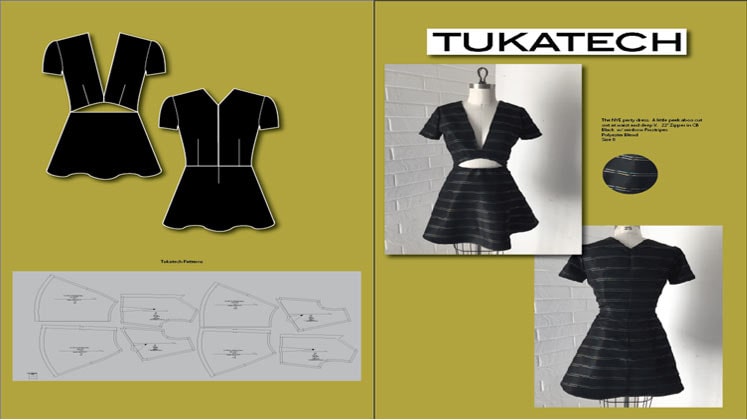
He further explained the situation through his mantra – ‘change is the only constant and growth is option’. By this, he meant that yesterday’s problems and their solutions will no more be applicable in today’s situation. “So stop thinking about what was being done yesterday, as there is no coming back. There will be nothing called the old normal,” underlined Ram Sareen.
Also Read: Garment sanitisation for safer and healthier shopping experience
One approach to shrinking the supply chain can be to identify which processes are unnecessary and can be reduced or eliminated to reduce the market time. One such area is the sample making process which takes the major part of the time before starting with the production of the order. For this, companies can rely on 3D technologies to digitise the entire process of sampling, known as Virtual Sampling, thus reducing the time from months to days. The team including the merchandisers, buyers and designers can redefine the products before moving them to real physical prototyping and manufacturing. The process can help them save a huge amount of time that is involved in the creation of physical samples, getting the approvals from buyers. Digitising the process will also help retailers and brands in not just saving the time and reducing the market time, but also in saving extra cost that is being utilised in resources.
Having shorter supply chains also has benefits like lesser inventory which is wasted capital and is a burden on all tiers of the supply chain. Also, more focus can be paid on the productivity rather than the volume. John Thorbeck highlighted that this model would work with more frequent batches of collections and will have a seasonless approach unlike earlier, which is higher volume and low cost. For this, retailers and brands should rely on data science to get more accurate predictions about the market trends. “We should focus more on productivity and profitability rather than volume and lower cost. Moreover, it’s not just a change in the opportunity, but also a change in the mindsets of people that needs to be inculcated,” said Thorbeck.
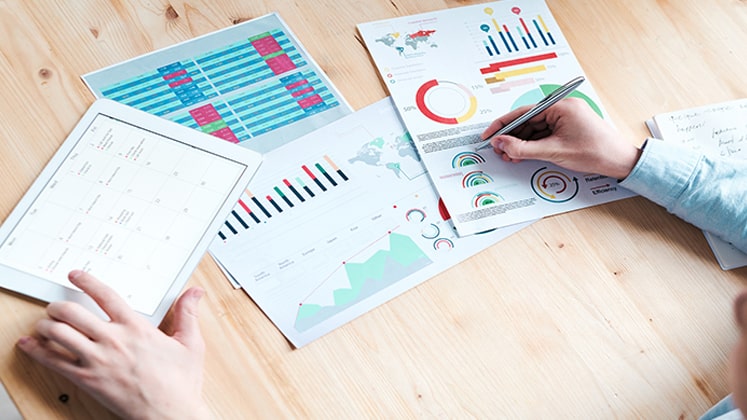
For forecasting accuracy, technologies like AI, ML and data science are playing a major role today, helping crunch thousands of data into meaningful insights. All sorts of data – including sales data, customer purchase history, trends, colour, prints, etc. – are available on the internet today. The data science technology collects all these data available online, and then AI and ML help understand and predict the trends and identify customer preferences. The level of accuracy with the right kind of data will help them in understanding the consumer demand and the market trend. “So while looking at the total profitability, you must look at reducing the cost of uncertainty which is reducing the cost of mark downs, stock out, working capital,” said Thorbeck.
Market demand and customer expectations
In order to obtain a quick recovery and a better future, the retailers must understand the market demand and the consumer of the newer generation. Since the ultimate success of the product is totally dependent on the customers, it’s highly important to understand the customer preferences. “The new consumer is very different. His mindset is very different from the previous generation. He has become extremely conscious and is keen to know who made his clothes and whether those were made the right way,” said Ram Sareen.
Unlike before, lower price tags don’t motivate today’s customers to buy a product as much as the desired value does. Sustainability, ethical practices, personalisation and fitting are among some of the key customer demands today. This is precisely why everyone is opting for ethical practices, and more fit stores are being opened now.
Another important area that should be paid attention to is social media. It’s all the more significant in this day and age to understand what people are talking about their brands and products. Also, apart from these, there are many channels and resources customers can look up to for finding the information about products and brands. This makes it vital to manage the content that is being delivered to customers because it may motivate or de-motivate them to buy a product from a brand. For this, retailers must have a marketing or customer intelligence team to identify what the customers are willing to pay for in a product.
Furthermore, the idea of shrinking the supply chain would need innovation, as the retailers will have to offer more frequent batches. “Innovation really helps to get more deltas on a product because that is new and that is bringing more performance to the product,” shared Akshay Kumar Sardana, Technology Leader, Dupont.
He further mentioned that innovation in any company should be practiced as a process rather than as a yearly thing. The businesses should have dedicated teams that are continuously working on innovations, new ideas and creativity. As in the fashion industry, the customer demand is very dynamic; therefore, it’s important to keep on introducing something new for them to stay relevant and ahead in the competition. And so, having a dedicated team for understanding the market trend, customer reaction, customer demand and working on those innovations should be practiced on a regular basis.
Also Read: Queue Management & Appointment Booking: Technology to monitor social distancing in retail stores





 Bharat Tex Special Report 2026