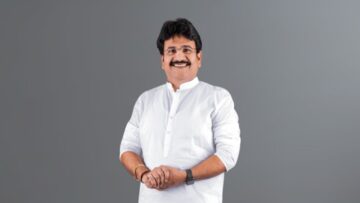
Re-joining Duerkopp Adler AG in December 2011, after a short stint with the European subsidiary of an Asian manufacturer, Dietrich Eickhoff is happy to be back leading the company to greater heights as the new CEO. With over 40 years of experience in the machine manufacturing industry, both on the production and marketing side, Eickhoff is well equipped to handle the challenges that the industry is throwing to technology providers today. “Owing to my long-standing experience and understanding of the company and its products, I am prepared for consistent development of our customer base and with the backing of the management team as well as all our experienced and highly motivated employees, we will succeed in mastering the challenges of the coming years,” says a confident Eickhoff.
The company is not unduly worried about the current market conditions. “In the years 2010 and 2011, Duerkopp Adler managed a turnaround and we are prepared for a “slowdown”. However, as always in life, this is a question of the respective dimension. On the whole the Duerkopp Adler group with its production locations in Bielefeld, the Czech Republic, Romania and China has been flexibly positioned in the past years,” says Eickhoff.
Though sewing technology has been subject to a continuous change, but nevertheless the majority of sewing is still done on the basis of relatively simple technology because the industrial sewing of clothing, shoes, etc. is mainly realized in countries with a very low wage level. “After constantly shifting production bases to cheaper destinations, now there are only a few countries left where labour is still cheap, so automation needs to come in,” argues Eickhoff. He firmly believes that Indian garment manufacturers not only need automation, but are also willing to pay for good technology. “We have met many customers and they all talk about automation, the real question is what to automate,” says Eickhoff.

Indeed the growth of the industry depends on the right mix of basic, semi-automate and fully automated machines. “Depending on the product, buyer and availability of labour for particular operations it is important to understand where the economies of scale lie,” says Eickhoff. With increasing unit labour costs, productivity, delivery reliability and logistics costs have also come to the foreground. Under these new production conditions a flexible sewing automation will be needed in future. “As regards sewing automation, special attention is given to our brand ‘Beisler’ which is the “number one” for many of our customers as far as automated trousers production is concerned. Now the focus is to get a larger share in the shirt market,” says Eickhoff.
The most important aim for the company today is expansion of business and extension of customer base. “We are working closely with our agent Mehala to reach new customers and educate them on our technology and though business in India is still owner-driven, where relationships matter, professionalism is coming in and even the way technology is being marketed is getting more professional,” avers Eickhoff.
Furthermore, a quick and flexible response to the short-term global production trends will be of special importance this year for Duerkopp Adler. “We want to expand our activities in China and other Asian countries bearing in mind the growth of population and the average income. Apart from the technological leading position we have in the field of medium-heavy duty sewing we want to achieve a leading role also from the economical point of view. In the segment “clothing machines”, it is our aim to win customers by means of new products and an attractive price/performance ratio so as to improve our market share. But apart from all aims of growth, the long-term profitability is in the focus of our activities. Only this way we will be able to hold our technological locations in Europe and secure our future success,” concludes Eickhoff.