India’s traditional strength in garment exports has been value additions and one of the basic techniques, which have always been strong from the country is printing, be it hand block printing or more recently screen and rotary printing. Adding a new dimension to the art of printing, digital printers are fast becoming a rage. It is becoming a challenge for technology providers in printing to satisfy the creative and commercial needs of the industry. Team Apparel Online talks to a few technology providers on where the printing industry is going…

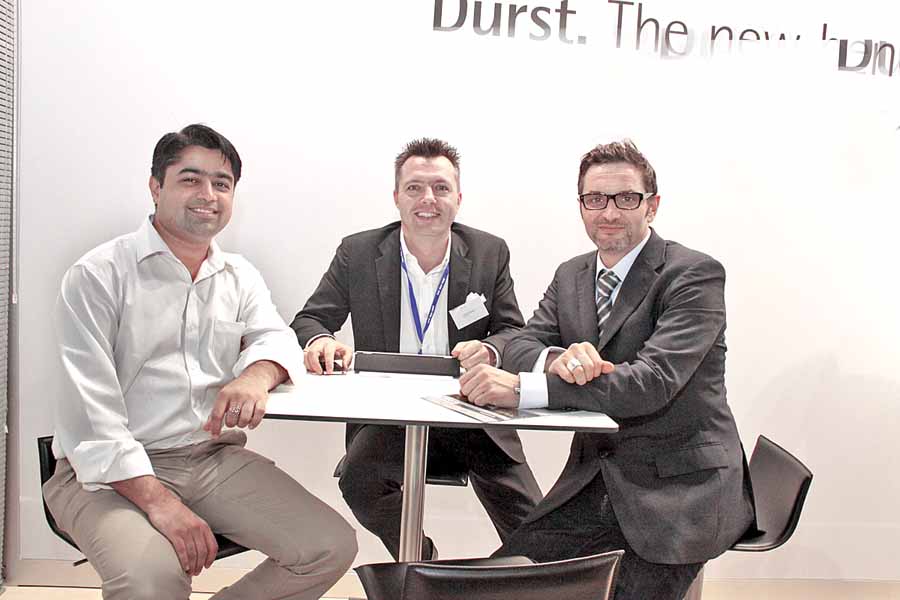
No doubt, digital printing is a speedily growing segment in the textile and apparel industry even though the cost of running the machine is higher and the production capacities are limited. Encouraged by the acceptance of digital printing, more and more companies are entering the segment looking at India as a growth market. The most recent entrant is the 80 years old Durst from Italy, a world leader in industrial inkjet technology, which only two years ago started its textile digital printing segment with the first commercial installation in mid 2012. “In the next 10 years, the textile market will totally switch over to digital, due to needs related to fashion and sustainability, basically saving on energy and water,” says Christoph Gamper, Executive Vice President, Durst.
The company is not too worried about the cost aspect. “The higher cost in digital printing is due to the cost of inks and pre treatment. As the production will increase, there are chances to decrease the cost of inks. On the other hand, cost of traditional printing is also going up due to high labour and input cost. As for the cost of the machine/printer, it is definitely high at the entry level, but the cost of the machine we have developed is close to a rotary printer. If someone is using it with full capacity, they can achieve its ROI within six months,” adds Christoph. Durst has two manufacturing units, in Italy and Austria, and the Italy plant is mainly for textile, where even the electronics and plates are manufactured in-house.
Also coming from Italy is Reggiani, which is already having a strong presence in India despite the fact that the machine is very costly, with installations at Alok Industries, Shri Lakshmi Cotsyn and Laxmipati. “In Italy and Europe, digital is the present and for India it is the future. Our textile printing machines are much-much ahead as we have wider experience of various textiles activities in our various group companies. All our machines have a direct link with quality and cost. As cost of our machine is high due to the use of European technology, customers with high quality mindset give us preference,” says Luca De Ascentiis, Area Sales Manager Reggiani. Offering many options in printing, their hottest selling machines in India include the Unica, Rotary printing machine; Prima, Flat bed printing machine; and now ReNoir, Digital printing machine.
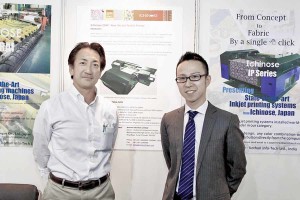
Having about 10 inkjet printer installations in Surat and Ahmedabad, and 300 around the world, Ichinose from Japan is a well known name in digital printing technology. “We are producing inkjet printers for more than 15 years and it is only now that customers are really focusing on inkjet. Industry is also focusing on its speed for better productivity; our new generation inkjet machine 2040 is fitted with a new type of print head that gives beautiful printing results at a speed of 360 square metre per hour,” says Chief Sales Dept. N. Kataoka. Ichinose has its presence in India with Kothari Info-Tech, Surat.

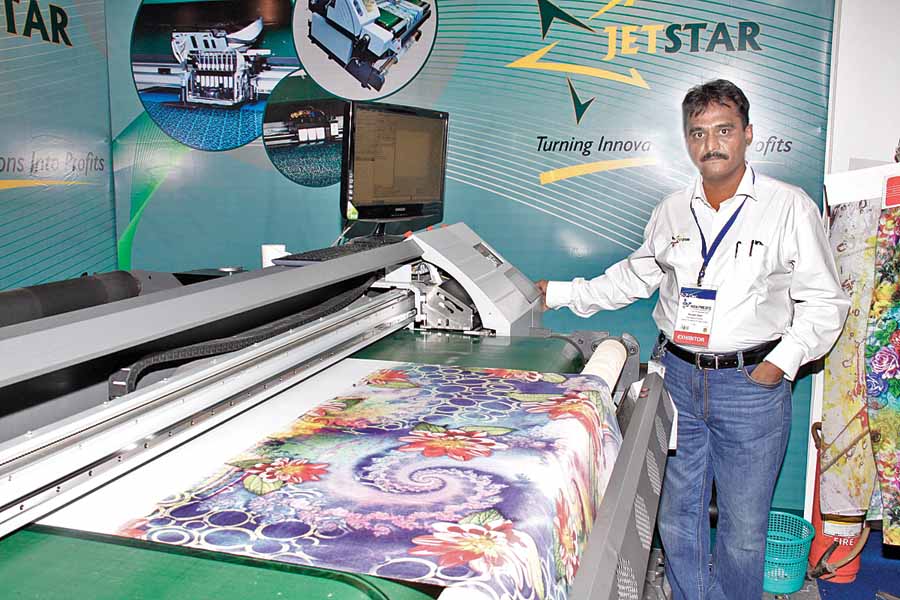
Apart from many foreign companies known for printing technology, an Indian player has also launched a digital textile printer in the Indian market. JetStar Innovations, Surat, which was earlier dealing into CTS (computer to screen), Rotary and flatbed engravers, had five months ago come up with a digital textile printer having a width of 1.8 metre with Epsom printing heads. Naveen Dixit, MD of the company claims that with 720 x 720 dpi, it has the printing capacity of 22 metre fabric per hour. The company has installed five printers in Surat and is now expanding itself across the nation.
Five decade old company in textile screen printing machines Gali Group, Spain is into the Indian market for last 20 years and is well acquainted with the Indian mindset. “Indian companies are demanding high speed machines and companies like us providing machines for high quality, but low production, is now not a priority. Our machine prints 500 metres/8 colours in a shift of 8 hours but it gives the look of hand printing. Shingora, R K Overseas and Sharman are our few customers in India,” informs Pere Sanchez, Techno-Commercial of the company. He feels that Indian companies should not run after speed, but concentrate on the creative value of the printers.
As cost is one of the biggest factors determining the decision to buy technology, DCC, a respected name in the Indian textile and apparel industry for complete printing solutions has come up with an interesting solution, claiming to have developed a new concept by combining the digital and screen print technology. “Digital and screen, both have their advantages and disadvantages; so keeping the best of both in mind, we have integrated the Kornit and M&R machines in such a way that it gives amazing cost-effective results. The new product is useful for knitted garment as digital printing was not very successful in knits. Actually, we want to upgrade and bring printing technology to the viable level in terms of cost and production. Our concept is viable in terms of cost/production and operations. An operator with little basic knowledge of screen and digital can easily operate this. It will take some time to make people aware of this concept, but we are very much sure about its demand as 2013 will be the year of this combined technology,” says a confident Narendra Dadia, Group Chairman, DCC.
“In the next 10 years, the textile market will totally switch over to digital, due to needs related to fashion and sustainability, basically saving on energy and water.” Christoph Gamper, Executive Vice President, Durst
Claiming 90 per cent share of North India’s screen printing sector, Dhaval Dadia, Executive Director, DCC is very enthusiastic about the growing Indian market for digital printing. “Our future growth plan is all about digital, as satisfaction ratio is very high in this category.” DCC got tremendous response last year in Ludhiana and it is going to start its full-fledged office in Kolkata soon. It is also exporting water base ink to Bangladesh and China. DCC is also going to start its new centre in Tirupur that will focus on training of its customers, besides organizing some seminars and training events over the year. “We hired professionals from printing institute, Pune and prepare them for the industry to make our after-sales service more effective.” says Dhaval.
Service and after-sales response remains an issue in printing machines and the companies are quite conscious on this front. Ichinose provides training to its distributors Kothari, Surat and to the customers also. With regular focus on training in India and Italy, Reggiani also keeps complete stock of spare parts in India. It has also the facility to sit in Italy and check any parameter of machines working in India. The company claims that after-sales service is the secret of its success. Durst is also offering very good training and online monitoring to its customers with complete plan that involves the minutes of details about the machine and material being used for it.




 Bharat Tex Special Report 2026