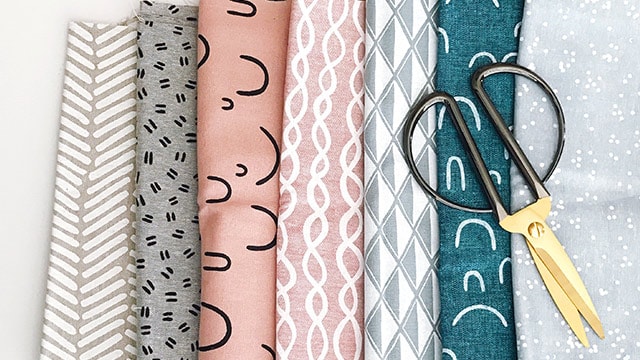
“Digital printing is the best gift of the accelerated global revolution”. Speaking about its swiftly spreading popularity across the world, Navdeep S. Sodhi, Partner, Gherzi Textil Organization, Zurich/Gherzi Consulting Engineers, Mumbai, claimed in a recent seminar, that digital printing which at present constitutes around 4 per cent of the world’s total fabric production, will reach 10 per cent in the next few years. Most in the audience agreed with his view which speaks a lot about the digital printing craze across the globe. No doubt, various stakeholders of the industry have varied opinions on this because some people are still finding it difficult to adopt this innovative technology and few are averse towards its high cost.
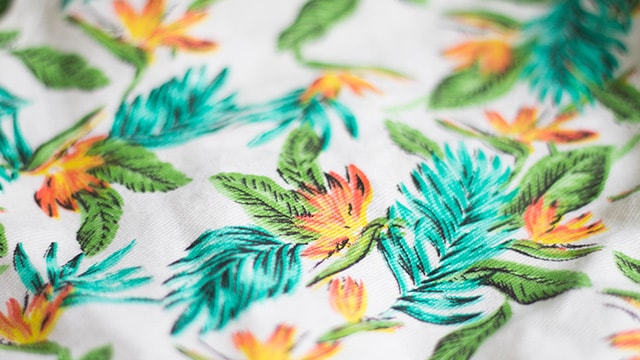
Nevertheless, capabilities in digital printing give one an edge over other exporters in terms of faster solutions, servicing and better outcomes. In a candid discussion with Apparel Online, several Indian companies, having heavy as well as small capacities of digital printing, speak about the attributes and future scope of this technology’s newer form. N. Chandran, CMD, Eastman Exports, Tirupur, shared, “Printing is gaining momentum in all areas including polo’s, fashion tees and even underwear. Digital printing is receiving more prominence in women’s and sports apparel collections. Our design team has noticeably been working more with buyers with respect to digital prints.” He further added that digital printing certainly will help to beat the competitors if coupled with a design team and other capabilities. The capacity of Eastman Exports is comprised of the best equipment and techniques for varieties of prints, and digital printing is one part of it. The company is one of the most respected name in India’s apparel export industry with a turnover of more than Rs. 1,000 crore.
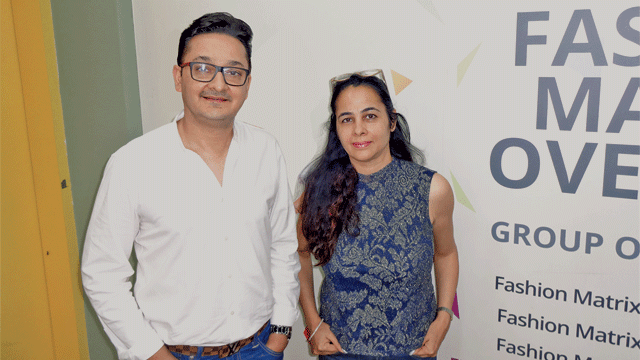
It would not be wrong to say that Bangalore-based ENVS Eco Friendly Digital Fabrics India (a venture of Fashion Matrix Overseas), is one of the most enthusiastic, sustainable and aggressively growing company in digital printing industry. Pre-GOTS certified, this company uses 100 per cent bio-degradable ink and eco-friendly processes. It also has expertise in print of any kind on fabric surface and leather. Using advanced technology of Kornit, the company is expanding to add more capacity. Elaborating on his company’s specialization in digital printing domain, Vipin Sethi, Director of the company states, “We have taken a conscious decision to invest in sustainable technology. Our printing machines are from the world’s best brand. The concept of ENVS is to only make high fashion apparel which is organic or made by natural fibres, so we are now venturing into very high-fashion ladies apparel with the core thought that the fabric we use will either be organic or natural. The printing that we do on them should also be eco-friendly and sustainable. We do not use even a single drop of water in the entire process as we have invested in the world’s best printed technology. We can have 10 digital printers at the cost of this particular machine we have, but those machines would have to be purchased from China and they would not use eco-friendly inks and will also require a lot of water. On the other hand, our machines of Kornit are quite sustainable in this regard, though they are pretty expensive. As of now, we have two machines and installation of the third machine is in process. We have already invested US $ 3 million in our digital initiative and would be investing another US $ 3 million for the brand’s launch and its awareness.”
With a capacity of 1,200 metre per day, Cheer Sagar, Jaipur, is of the opinion that buyers’ response on digital printed collections is good, and the edge is fat sampling which saves time. Ravi Poddar, MD of the company informed that mainly boutique buyers prefer digital printing as they can pay a better price. Quick response from buyers is another advantage in this regard. Hiren Ruparelia of Maestro Fashions, Bangalore, even feels that there is a huge demand from all customers. Buyers are obviously well aware of the outcome of digital printing, compared to conventional printing methods. And they want to use it as often/regularly as possible.
However, showing his unhappiness on its current demand, Alok Agrawal, Managing Partner, Aloka Exports, Mumbai avers, “Digital print is now less in fashion and the business is moving more towards hand print screen technique. We are still hopeful for future that with improved digital print techniques, we will be able to give screen print look.” He feels that more open ground prints, placed prints with mix of screen look, are needed in the market rather than real 3D photo prints and digital prints. Sharing experience regarding the response of buyers’ on collections used in digital printing, Alok says, “It is more about how you design your article by mixing various concepts/techniques. Just a digital print garment or scarf is really not a tool to get positive reaction nowadays.” Aloka Exports has a digital print capacity of about 12,000 to 14,000 metres per day.
Surat leading as usual
Industry strongly believes that the digital printing business has now shifted to mills in Surat which can afford and justify the post-production facility required for big production runs like 5,000 to 10,000 metres a day. Some of the leading players of Surat are going extremely steady in digital printing. Rakesh Patel, CEO, Dtex Prints, affirms, “At the end of a day, you need to create something to grab business and satisfy yourself. That’s the most beautiful part of this business when each day, you create something and share. Days are gone when we were rubbing clogged heads, it has really become smoother presently with more stable high-speed industrial heads and printers which cater to larger needs and are replacing screen printing.” Completing a decade in digital printing, Dtex prints is highly committed to produce high fashion printed fabric.
Sahiba Limited, Surat, is one of the most prestigious groups of Surat which functions on a vertical system. Sarabjeet Saluja, Director of the company, shared his optimistic view on digital printing saying, “From last one year, Surat market has improved in digital printing and now it is growing like anything. Prices are also coming down. The main cost is the ink and it has to come down as volume is increasing.” The company also deals in inks, having set-up of prints up to 72 inches with a head of 14mm height at a high-resolution printing quality of 24,000 dpi. Overall, it has 10 Reggiani digital printers which have capacity of 2 million metres per month. “Right now, such digital prints giving additional weaving effects are more in demand as they give a very elegant look,” briefed Sarabjeet.
With daily printing capacity of 5,000 metre on polyester and 4,000 metre in pure fabrics (cotton, viscose, rayon) per day, Sunshine Creations, Surat, provides fabric with digital touch to the garment exporters. Siddharth Bachhawat, Owner of the company informed, “Right now, such prints are booming and it will increase further because most of the buyers are not looking for big quantities, and in smaller quantities, digital is the only way. Also, the prices of raw materials (ink in case of direct digital, paper in case of polyester) are also going down. From the point of view of pollution also, digital printing is the priority.”
Some of the companies in Surat which have just begun are investing in the digital segment like Viva Digital Mill which is investing nearly Rs. 7-8 crore with 3-4 printers of Reggiani. Having experience of embroidery and dye printing, DH Italia, Owner of the company mentioned, “We are witnessing increased craze for digital printing and customized designs make them different from conventional mill working. They are very much needed in exports too, but we will start with domestic focus and later target the garment exporters.”
Apart from Surat, some of the companies from other cities are aggressively working in digital printing as their experience so far has been overwhelming. Offering fabric for domestic market but working to enter into export, Mumbai-based Home Décor Studio has complete focus on digital printing. “Despite smaller order sizes, nobody wants limited options and digital printing is the best choice to achieve maximum options. No restriction of MOQ motivated us to change our directions in this area. We are offering a great variety just because of digital printing,” assured Yogesh Thakkar, Founder of the company who is mainly using sublimation to print 3,000 metre per day. Being active in digital printing from last three years, it aspires to add capacity in this domain.


 Bharat Tex Special Report 2026