South Africa approves grant to boost garment and textile industry

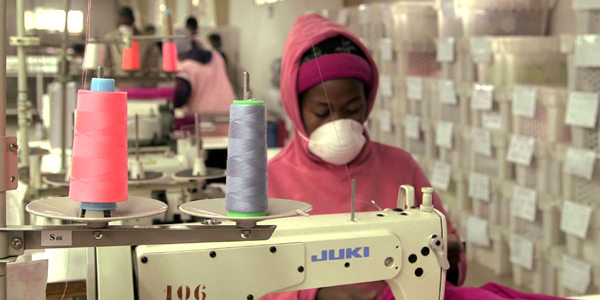
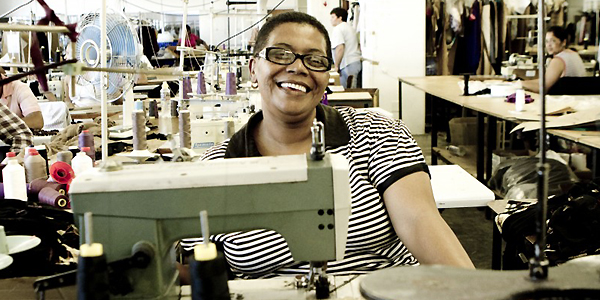
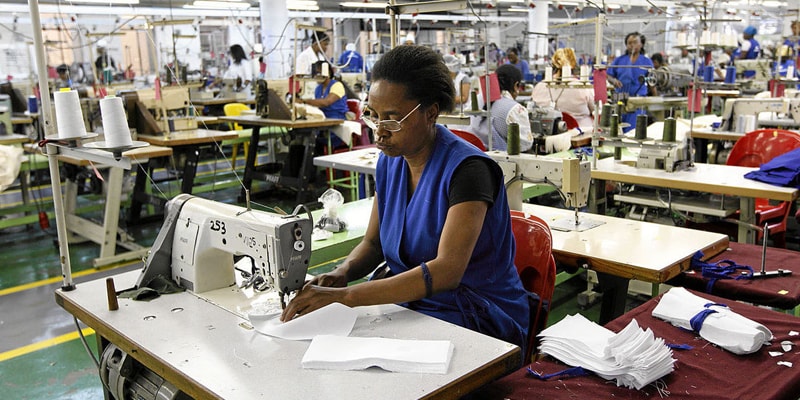
African Garment Factory
Image Courtesy: mg.co.za

A grant of US $ 355.65 million has been approved by the Department of Trade and Industry (DTI) of South Africa to boost its garment and textile sector. The fund allocation will also create and save jobs.

“DTI through the Production Incentives Programme (PIP) within the Clothing and Textiles Competitiveness Programme (CTCP), approved US $ 355.65 million to create and save jobs in the sector,” Trade and Industry Minister Rob Davies was quoted as saying by news reports.

“In addition, US $ 225 million was disbursed until the last financial year,” informed the Minister while addressing the first Clothing Manufacturing Industry Sector Summit hosted in Durban; organized by National Bargaining Council for the Clothing Manufacturing Industry (NBCCMI).

“Throughout the sector, a number of companies which qualified and drew from both programs, were able to save 81,252 jobs. An additional 9 672 jobs were created and the net new jobs grew by 4 785 until the last financial year from the inception of the CTCP,” added Davis in a statement issued by the Government.

Also ReadKenya aims to boost apparel industry

He urged all the delegates to start a dialogue between retailers and manufacturers around local production and not abandon the issues of empowerment and transformation.

 

Tech keyboard_arrow_right Retail Tech keyboard_arrow_right News

Ninian & Lester deploys Centric PLM solution

Centric PLMNinian & Lester, one of the largest manufacturers of underwear in South Africa and having franchise of Jockey brand, has selected Centric Software to provide its Product Lifecycle Management (PLM) solution to better manage information assets, and collaborate in the development ecosystem with suppliers to add flexibility, control, ‘what-if’ analysis, insight and continuous improvement feedback loops to the processes.

The company was looking for new approaches to evolve the way it works and build the capabilities to deliver on its strategy such as reducing lead times to stay ahead in both local and export markets. “We needed to better integrate our teams and enhance on-trend design efficiency to deal with dynamic ‘quick-response’ scenarios, assess risks, improve decision-making and reduce our time to market,” says Manfred Paeper, Business Process and IT Manager, Ninian & Lester.

Centric PLM will offer a comprehensive, intuitive, easy to use solution with a simple yet powerful cross-platform mobile and desktop customizable interface view encouraging high end-user adoption. It will enable the company to shorten cycle times, enhance delivery, bring visibility and transparency into the supply chain, and ultimately expand the value deliver to its customers.

Also ReadManzi deploys Centric PLM to rationalize process

“We are delighted to welcome Ninian & Lester to the Centric family. By bringing constant innovation and value products to the market, we are confident that they will continue to be successful. We are looking forward to partnering with them to help drive their business growth,” says Chris Groves, President and CEO, Centric Software.


Economic ties with China ‘is an opportunity Nigeria cannot afford to lose’

China-Nigeria
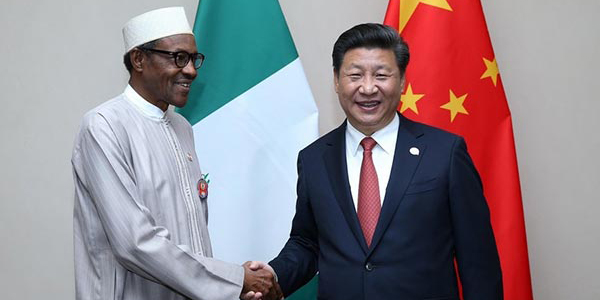
A file photo of Chinese President Xi Jinping (right) meeting Nigerian President Muhammadu Buhari in Johannesburg, South Africa | Image Courtesy: Xinhua

Appreciating the potential of a China-Nigeria economic and trade cooperation as an opportunity his country can’t afford to miss, Nigerian President Muhammadu Buhari has recently announced his country is gearing up to expand and explore new avenues in several industries, including textiles, with a focus on expediting infrastructural development in these sectors.

Maintaining that an economic cooperation between the two nations would benefit both China and Nigeria, Nigerian leader is reported to have expressed his country’s genuine wishes to further strengthen the ties.

Speaking to China’s official news agency Xinhua, before his state visit to China starting Monday, Buhari said the two countries have a lot to gain from cooperating in fields like agriculture, mining, electric power generation, and railway and road construction, besides textiles. His first China visit that begins on Monday, will conclude on Friday.

Also ReadChina to help Nigerian state Kwara set up textile industrial park

China has the technical and financial capacity and the experience of development, while retaining the goodwill to help Nigeria, he said. “So, really, this is an opportunity Nigeria cannot afford to lose,” Buhari reportedly told Xinhua at the Presidential Palace.

Reaffirming his government’s commitment to previously signed contracts by its predecessor with Chinese firms on railway, roads and hydroelectric dam projects, Buhari exuded gratitude towards China’s continuing cooperation with his country. He added that although Nigeria happens to be the largest economy in Africa, the country is still in a bad shape, clearly in need of new projects, which China, being the world’s second-largest economy, can help undertake.

“The opportunities that present themselves for us … are virtually limitless,” he said.

Born in Daura, northern Nigeria, on Dec 17, 1942, Buhari won the presidential elections in March 2015. He was sworn in two months later.


African continent fast emerging as apparel sourcing hub

Africa textile
Image Courtesy: www.youtube.com

The African continent, in general, is increasingly getting noticed by apparel buyers worldwide; and it is not just the countries of Kenya and Ethiopia.

While these two nations have been named in McKinsey & Co’s recent report, alongside Bangladesh, Vietnam and Myanmar, for being among the top sourcing destinations of apparel and footwear products, some of the other African nations that are increasingly getting international attention for being preferred sourcing destinations by apparel and footwear brands are Mauritius, Lesotho, Madagasar, Uganda, Tanzania, Botswana, Egypt, South Africa, and Swaziland. Within the sub-Saharan Africa, East African countries, Ethiopia and Kenya in particular, and Uganda and Tanzania to some extent, are of interest to international apparel buyers.

Also ReadChinese Company plans to set up a textile plant in Ethiopia

According to a report published in South African weekly Mail&Guardian, Ethiopia has been aggressive in its search for foreign direct investment in the garment and leather manufacturing sectors. Several global brands — whether it be H&M or Wrangler, Lee or Calvin Klein — all have presence in Ethiopia.

However, this interest among international brands is not limited to Ethiopia. Since 2013, there has been a growing interest in the other East African countries as well, as potential sourcing destinations for apparel products, McKinsey reported. Besides, the renewal of the African Growth and Opportunity Act (AGOA), which gives certain countries in sub-Saharan Africa duty-free access to US markets, further opened up avenues for these countries.

Also ReadWill Renewal of AGOA augment Apparel Manufacturing in Ethiopia…

AGOA has benefited the apparel segment almost as much as it has the footwear sector in these countries. It has befitted the US as well, where companies and brands have largely imported clothing and leather goods from these countries, thanks to the easy acess rules facilitated by AGOA.


Textile workers take stand against racism in South Africa

stop-racism
Image Courtesy: www.flickr.com

South African Clothing and Textile Workers Union (SACTWU) took to the streets of Cape Town, in protest against racism, with a clear message to end to all forms of racism as well as xenophobia.

Teamed up with Independent News & Media SA, owners of the Cape Times, started the campaign “Racism. It Stops With Me”.

Andre Kriel, General Secretary of SACTWU said, “As a trade union with one of the most racially diverse membership profiles in the country, SACTWU wishes to be at the forefront of this anti-racism campaign. Often workers bear the brunt of racist attacks in the workplace, and generally in society. It is important that the ongoing scathing attacks on our human dignity be arrested, if we are to help prevent our country from facing an explosion of racial hatred. This cannot be good for socio-economic stability, nor for nation-building”.

Also ReadTextile Industry, a high priority sector for South Africa

Kreil further added “It is important that the ongoing scathing attacks on our human dignity be arrested, if we are to help prevent our country from facing an explosion of racial hatred. This cannot be good for socio-economic stability or nation-building.”

Earlier in February, SACTWU embarked on a comprehensive anti-racism campaign. The campaign had gained the required momentum in Independent Media’s 20 newspaper titles and digital platforms, with the media group encouraging debate and discussion on public platforms, in schools and universities around the country.


Business keyboard_arrow_right Retail keyboard_arrow_right News

South African apparel retailers performing well despite sluggish economy

South Africa Apparel Shopping
Image Courtesy: mkeblackbusiness.com

Apparel retailers in South Africa have been struggling to boost sales as shoppers combat high personal debt levels in a sluggish economy. However, Michael Mark, Truworths Chief Executive said the ‘credit environment’ is improving in the country. ‘In-store credit’ is a significant growth-driver for South African apparel retailers and Truworths said that the facility was responsible for 60 per cent of its sales.

Also ReadAfter India, H&M opens first store in South Africa

Truworths reported that its half-year sales zoomed 36 per cent, taking retail sales to R8.5 billion in the period under review.

It has been observed that inclusion of recent acquisitions British Shoestore Office, and children’s clothing stores Earthchild and Naartjie, have improved the sales for the retailer.

Another clothing retailer, The Foschini Group said its sales for nine months to the end of December surged 33 per cent, primarily due to strong Holiday Season. Woolworths, a South African chain of retail stores and one of the largest in the country, too expects half-year Headline Earnings per Share (the main profit measure used in South Africa) to increase by 25 to 35 per cent year-on-year with sales also forecast to go up.


Textile Industry, a high priority sector for South Africa

South Africa Textile Sector
Image Courtesy: capetownpartnership.co.za

South African textile industry, which has been at a dismal state for the last two decades, is now being considered as a “high priority” sector by the South African Government’s New Industrial Policy Action Plan owing to its labour-intensive character. According to the Southern African Clothing and Textile Workers’ Union (SACTWU) apparel and textile industry is entering a period of greater stability and a higher level of growth.

The Statistics SA Quarterly Employment Survey released this week reveals that over the last 12 months – between September 2014 and September 2015 – employment in the CTFL (Clothing, Textile, Footwear and Leather) industry has increased by 1.8%. This was driven by growth in the clothing sector (676 new jobs), textile sector (1,197 new jobs) and the leather sector (268 new jobs).

Much of this development in the sector has been attributed to the concerted efforts by SACTWU’s ‘Save Job Campaign’ and the South African Government’s support measures since 2009. “Significantly, this is the second consecutive quarter that employment in our industry has grown, following the 3% increase recorded in the previous quarter,” said Andre Kriel, General Secretary, SACTWU.

Also ReadDelaware University devises plan to rejuvenate South African cotton textile and apparel industry

Johann Baard, Executive Director of the Cape Clothing Association adds, “The sector had established because of the Government’s support measures, that had led to greater competitiveness and improved productivity mainly due to the installation of new plant, equipment and machinery along with the exchange rate, that have served as a growing disincentive for retailers to source off shore.”


Events keyboard_arrow_right News

After India, H&M opens first store in South Africa

H&M opens first store in South Africa
                   Image Courtesy: about.hm.com

After the recent opening of its first store in India, garment retailer giant H&M opened its first store in South Africa’s Cape Town. The store was inaugurated by H&M CEO Karl-Johan Persson and also present were H&M South Africa’s Country Manager Pär Darj and Store Managers Andries van den Berg and Peter Johannes. The store opened at the V&A Waterfront is a two-level store with an area of 4,700 square meter. The first person in line was gifted a R2,500 gift card, and the following 500 people received a R200 gift card each. The store will and will offer men’s, women’s, and children’s apparels and accessories as well as H&M Home. H&M will open the second store in Sandton City Mall in Johannesburg on November 7, 2015. 


Sactwu cedes dividends to save apparel manufacturing jobs

Image Courtesy: mg.co.za
                      Image Courtesy: mg.co.za

In a bid to resuscitate struggling South African apparel manufacturers, South African Clothing and Textile Workers Union’s (Sactwu’s) has sacrificed its dividend flows in a bid to retain jobs. The union acquired several well-known — but loss-making — apparel manufacturing operations from Seardel Investment Corporation in 2013. Sactwu also took a US $ 6.30 million loan from Deneb Investments, the industrial holding firm split off from Seardel — which now focuses exclusively on media assets — last year. The loan has no fixed repayment period. But as security, Sactwu has agreed to cede its valuable future dividend flows in empowerment investment conglomerate Hosken Consolidated Investments (HCI) and Seardel.


Events keyboard_arrow_right News

FESPA Africa to return with ‘Ignite Your Print Potential’ theme in 2015

Image Courtesy: signafricaexpo.com
              Image Courtesy: signafricaexpo.com

FESPA Africa, the textile printing show will be back in the country in 2015 with the theme of ‘Ignite Your Print Potential’, which will be held on July 22-24, 2015. The show will aim at luring a wider range of exhibitors and cutting-edge technology, in addition to a variety of educational seminars to discuss ideas and market insights. Lorraine Harrow, Marketing manager at FESPA averred, “FESPA Africa 2014 was a great launch event, gaining positive feedback from both exhibitors and visitors. We want to continually improve our exhibitions to serve the needs of the regional print community and by analysing last year’s event. We have developed a targeted plan to deliver a bigger and better exhibition next year.”


Business keyboard_arrow_right Retail keyboard_arrow_right News

Jean-Christopher Garbino, new Chief Executive of Truworths

Image Courtesy: proteaglenmall.co.za
              Image Courtesy: proteaglenmall.co.za

Jean-Christopher Garbino will be the new chief executive of Truworths, South Africa’s leading fashion retailers. It was a positive move to get a new chief executive with international experience, which would give Truworths a global perspective. The 45-year-old Garbino is currently the Chief Executive of Kiabi fashion retail group based in France. Garbino’s European background might be of some concern as the local market was different from the European market in terms of it being a credit-driven market.


Events keyboard_arrow_right News

Participants at South Africa BSM event their Anger at Callous Functioning of AEPC

The core responsibility of the Apparel Export Promotion Council, as the name suggests is to promote garment exports from the country… this is a fact that no one can deny. What is a major concern is that the AEPC is failing not only in its duty to organize BSMs in foreign markets successfully, but is also shaking off the responsibility of ensuring buyer visitation.

Apparel Online had reported in its last edition (AO May 1-15, 2014) that the BSM to South Africa was a major disappointment for the participants, and on collective demand the AEPC has been compelled to return 50 per cent of the participation charges, amounting to Rs. 77,500 per booth as compensation regarding the same. Though this may seem very generous and reasonable, in reality the accompanying letter from the Chairman of AEPC is a shocker…! The letter clearly states that the Council would not take any responsibility for the turnout of the buyers for future events. How can an official and premier body of apparel exporters wash their hands off from what is their prime duty?

The letter by Chairman, AEPC (Apparel Online has a copy of the same) says, “AEPC will not be responsible for the turnout of buyers/buying agents for any BSM/fair/show, etc. The Council will have no liability whatsoever for any kind of refund or payment in this regard.”

Reacting strongly and objecting to the contents of the communiqué, exporters say, “They are wasting our money, time and possible business growth. If they cannot take responsibility of inviting buyers, buying agents at their own fair, what else can be expected from them? In this case AEPC should be dissolved.”

Though the anger has been growing from the last few years, but the outcome of the recent BSM in South Africa, really acted as the boiling point leading to a personal meeting with Chairman at Johannesburg and the decision was taken to give compensation as mentioned above. Rather than giving a healing touch and promising better events in the future, the letter is a setback for participants due to two reasons: First, this is not a cash refund and participation amount will be credited and can be offset only against participation charges towards any other export promotion event within the current financial year 2014-15. In case the facility is not availed in 2014-15, then the amount will stand lapsed. Secondly, as above mentioned, AEPC refuses to be responsible for buyer visitation in such events. Then what is the credibility and purpose of these events, question exporters.

“Are they returning the money or asking us to waste more money, time and resources by participating in another event with the clear announcement that buyers may not be there… How can they say like this? AEPC and its system has become a nexus focusing only on personal interests,” said an extremely disappointed and disillusioned exporter. Exporters are also agonized because despite all this, the AEPC is misguiding the exporters by publishing false information in its home magazine… Will AEPC improve itself or the same ‘gloom’ will continue in the name of export promotion…?