2016 edition of Myanmar International Textile & Garment Industry Exhibition (MTG 2016), the leading trade show tailored for Textile and Garment Industry in Myanmar, recently took place at Myanmar Event Park (MEP) at Yangon. A total of 160 exhibitors from 16 countries displayed a broad range of their latest products and technologies this year at 320 booths.
Yorkers Trade & Marketing Service Co., Ltd organized the show in collaboration with Myanmar Garment Manufacturers Association (MGMA). Knitting machinery, embroidery equipment, bleaching & washing machines, cutting & laying machines, ironing & steaming equipment, sewing machines & parts, chemicals & dies and much more was presented on an exhibition space of more than 7,000 square metres.
85 per cent of exhibitors seemed pleased with the exhibiting experience. Hunt for business partners and buyers was the key purpose for exhibitors to attend the four-day trade show. Tommy Lin Sales of Dotect Needle Co. Ltd., an exhibitor at MTG 2016 commented, “We meet many professional buyers here and receive many orders from them. It’s certainly a best platform for us to expand our business.”
Serving as an important trading platform for textile companies from around the world witnessed 9,812 visitors. One of the visitors, Khaing Mie Mie Win Director of Myanmar Ha Hae shares his ecstatic experience, “We intend to search the sewing machine here and we are satisfied with the products showcased by exhibitors. I think we will visit MTG for the next time too.”
The Myanmar garment industry is out with their 10-year Strategy (2015-2024) which states that the industry will start exporting cut-make-pack (CMP) products to the markets in the US, Canada and Russia, and the EU (except United Kingdom, Germany and Spain where it is already exporting).
It may be mentioned here that Myanmar has been exporting majorly to Japan since 2010. In the year 2013, Japan accounted for 38 per cent of the country’s total garment exports, with Korea a close second at 31 per cent, EU at 14 per cent and all others at 18 per cent. The MGMA also mentions that during 2014 exports to the EU are estimated to have doubled and exports to the US risen from US $ 1 million in 2013 to approximately US $ 20 million in 2014.
The garment industry of Myanmar is growing at a rapid pace with exports growing from US $ 349 million in 2010 to an MGMA estimate of approximately US $ 1.6 billion in 2014. Now with 10-year Strategy (2015-2024) in place, the sector aims to reach US $ 10 billion mark in garment exports from the country.
However, Myint Soe, Chairman of Myanmar Garment Manufacturers Association (MGMA) is of the opinion that the country needs to change the way it works to achieve this vision. He said, “Currently, the garment industry is operating under the CMP system, but we want to shift from the CMP to the FOB (free-on-board) production system,” adding, “The country plans to operate 1,500 garment factories by 2025 and employ one million staffers.”
In order to compensate 178 workers and pay the withstanding salaries, the Taiwanese-owned UniPolar factory based in Myanmar will be up for auction on June 29. The decision has come post the workers of the garment facility filed a complaint with the local authorities against the owner of the company, who has reportedly been missing since the whole episode came into the picture.
“The factory owner didn’t pay salaries for the month of May and then went back home. So we had to seal off his factory according to the law,” said U Kyaw Kyaw Tun, Head of Yangon Region factories and Labour Laws Department.
Additionally, U Chit Paw, Head of Township Department of Factories and Labour Laws has stated confirmed that the factory owner has managed to run away, but he still owes a debt of K 36 million as rent of the factory.
This particular incident highlights the struggle of Myanmar’s textile and garment workers. The UniPolar factory has been in operation since past two years, but still there are reports stating that the factory may not have been officially registered or licenced.
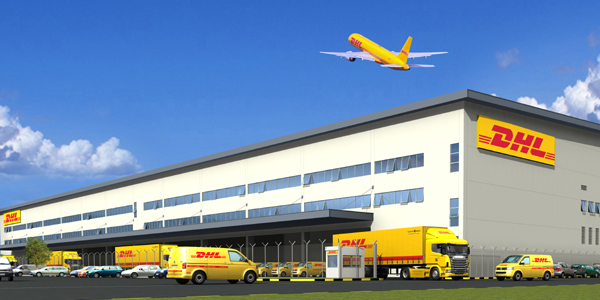
International logistics firm DHL Express is opening its largest facility in Myanmar to cater to the country’s increasing logistics needs, driven by growing garment manufacturing sector.
The country has a growing garment manufacturing industry, which accounts for around 10-12 per cent of its total exports. The sector employs around 300,000 people and in its 2014-15 financial year recorded a garment export value of US $ 1.5 billion, up from US $ 1.2 billion in the prior year.
“DHL launched this facility to cater to Myanmar’s increasing logistics needs, driven by growth sectors such as infrastructure, oil and gas and garment industries,” said Mark Ong, Country Manager – Myanmar, DHL Express, adding, “It is designed to handle massive shipment volumes expected over the next decade – to the year 2025 and beyond.”
The new service centre is located close to the airport and features a 280ft conveyor belt system, high security and full visibility of the shipping process, an x-ray machine, and over 30 CCTV cameras. Yasmin Aladad Khan, Executive VP of Commercial for Asia Pacific and MD of Emerging Markets for DHL Express said that Myanmar is strengthened by the dismantling of trade barriers, continued economic reforms and foreign direct investment, along with its resource-rich land and strategic geographic location at the intersection of China and India. The country is full of untapped potential, and the company is looking to explore that.
DHL Express has been operating in Myanmar for over 30 years and this latest facility, as stated, will support the nation’s fast-growing economy, which is forecast to rise by 8.5 per cent this year. It will also back Myanmar’s strong import and domestic demand by its expensive handling capacity as it will be occupying over 50,000 square feet of land with a built-up area of 32,500 square feet in Yangon.
For nearly a decade Myanmar has been off the global sourcing networks owing to economic sanctions imposed by a number of countries. However, most of these sanctions have now been removed and Foreign Direct Investment (FDI) in the garment industry has grown at an impressive rate. In the wake of these investments, UK-based market analysis agency Textiles Intelligence, has recently published a research report titled ‘Myanmar: Re-emergence as a Global Clothing Exporter’. The report predicts that the country could be more than quadruple the size of its economy between 2010 and 2030. Subsequently, the value of Myanmar’s garment exports and the number of jobs in the garment industry will surge. In order to plan for such expansion, Myanmar Government has published a textile and garment industry sector strategy which includes plans to increase production volume, to improve quality and to develop design expertise.
This independently researched report looks at the development of the textile and clothing industry in Myanmar, its size and structure, and production of fibres, textiles and clothing. The report also features a wealth of information pertaining to garment and manufacturing equipment in Myanmar; companies sourcing from Myanmar; Myanmar’s clothing exports and export strategy; the domestic market; and Foreign Direct Investment (FDI) and domestic investment. Other contents of the report include an analysis of how Myanmar’s infrastructure, employment, labour costs, education and training affect the textile and clothing industry; profile of Prosperity Knitwear Myanmar; and forecasts of the future prospects of Myanmar’s textile and clothing industry.
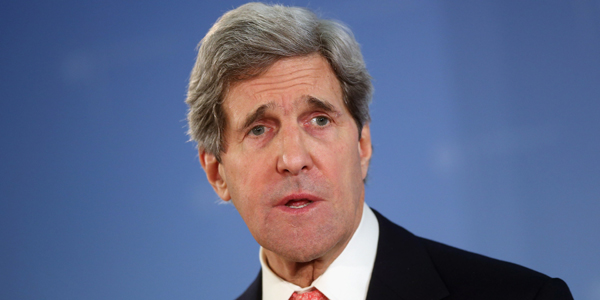
Secretary of State John Kerry | Courtesy: https://newsfirst.lk/
With the easing of US sanctions on Myanmar earlier this week, now more and more companies from the former can find smoother passage into Myanmar’s market, including those doing business in retail apparel and fashion clothing.
In what is being seen as a move to promote reforms, exports and economic development, the United States’ move came as an incentive for the newly elected civilian government, led by President Htin Kyaw and Nobel Laureate Aung San Suu Kyi, to move towards democracy and facilitate economic development. This move has certainly been welcomed by the US companies as well, who stand to gain a lot from this changed scenario. Major US firms like General Electric, Western Union, Gap Inc and Coca-Cola have made business forays into Myanmar.
“We did this to demonstrate support for the new government’s democratic reforms and to promote broad-based, inclusive economic development,” said US State Department spokesperson John Kirby.
These steps, announced by the Department of the Treasury, were intended to promote trade, aid the movement of goods, allow certain incidental transactions related to certain individuals living in Myanmar, and allow more transactions involving designated financial institutions in the country, Kirby said.
The easing of sanctions will now facilitate trade and financial transactions, which have been restricted between the two countries since the military rule in 1988.
This move will help expand General License 20 (GL 20), allowing use of key transportation and trade-related infrastructure, to counter unintended consequences of sanctions that hurt the Myanmar economy and US businesses engaged in the Myanmar market, said the US Treasury Department.
For this purpose, Secretary of State John Kerry will visit Myanmar on May 22 and meet leaders in Nay Pyi Taw to initiate US’s support for the democratically elected, civilian-led government, a statement by the State Department said. “Expansion of GL 20 signals to foreign and domestic companies, that Myanmar is open for business,” it said.
Myanmar, on its end, welcomed the US decision, expressing hopes that easing of economic sanctions would improve trade ties and investment between the two countries.
“It is a good move. I hope bilateral trade will get a boost starting from this year, given the recent easing of some sanctions. Obviously, our trade volume will also increase, thanks to the potential increase in bilateral economic activities,” said Maung Aung, an economist and senior adviser to the Commerce Ministry.
Easing of sanctions will also allow Myanmar’s banks on the blacklist, like Specially Designated National (SDN), to involve in financial transactions with US banks, and connect the country’s financial system with the global economy. Suh banks include Myanmar Foreign Trade Bank, Myanmar Investment and Commercial Bank, and Myanmar Economic Bank.
Earlier, these banks could not directly engage with US banks. They had to depend on banks in Singapore for it. Besides, US investors could not directly invest in Myanmar. A US firm was also not allowed to invest more than $500,000 in Myanmar.
The first quarter of this year saw Myanmar-US bilateral trade reaching new heights at US$124.1 million, with US exports to Myanmar amounting to $75.8 million. Trade figures have also risen steadily with the sanctions being formally eased in July 2012, from $65.8 million in 2012 to $361.2 million in 2015. Total trade value in 2013 and 2014 accounted for $175.7 million and $185.6 million respectively.
A file photo of Han Jen workers staging a hunger strike in October last year. | Courtesy: www.mmtimes.com
In a rare victory for a garment factory worker in Myanmar, the Arbitration Council of the country has ruled in favour of the Han Jen Factory worker who was recently fired for turning up late for work. Not only has the Council ordered the factory to hire the worker, Ko Ye Ko Tun, back, but has also told the company to compensate him for the loss of pay. Ye Ko Tun is, however, to be informed when he can return to work. The Arbitration Council’s decision was announced on April 1.
This worker was among 100-odd labourers who had recently been laid off by the factory, located in Shwe Pyi Thar’s industrial zone.
According to the arbitration body, the company’s decision to lay off Ye Ko Tun was in violation of the regulations, since he had not been given a warning. The council stated that during the hearing of the case, the factory authorities had submitted forged documents.
Speaking on behalf of the company, the factory’s HR manager U Khin Maung Win had reportedly said that workers were only fired when they have been late for work on as many as 19 different occasions. “We can’t accept the council’s decision. We will appeal this case at the Central arbitration council. This was a one-sided decision,” he said.
Meanwhile, Ko Kyaw Kyaw Myint, a former employee of the factory and a union chair, claimed that the factory manager has a tendency to “punish” workers for getting involved in the workers’ union. Ko Kyaw Kyaw Myint claimed that out of the 100-odd workers fired in the past one year, 34 were union members.
Myanmar’s clothing industry is predicted to grow significantly in the coming years, according to a report in the latest issue of Global Apparel Markets from the business information company Textiles Intelligence.
A business information company, Textiles Intelligence, through its recently released report on Global Apparel Markets, forecasts that Myanmar, which was once subjected to 50 years of military rule, is gathering the requisite pace to grow significantly in the coming years, including the clothing industry.
On the similar lines, the Myanmarese government has also published a strategy for the textile and garment industry as part of a document, titled National Export Strategy 2015-2019. The report pushed the industry to move from operating on a cutting, making and packaging (CMP) basis to operating on an FOB (free-on-board) basis; increase volume; improve quality; produce a greater volume of knitted products. On a wider scale the government aims to build its export markets.
Forecasters have predicted that there could be up to 1.5 million jobs in the garment industry by 2020, compared to approximately 230,000 in mid-2015, and that garment exports could rise from US$1.5 million in 2014 to as much as US$12 billion in 2020. Foreign direct investment (FDI) in the garment industry has been growing at an impressive pace in recent years and, following the removal of sanctions, clothing exports from Myanmar shot up by 26.5 per cent in 2013, and by a further 27.4 per cent in 2014.
Myanmar’s garment industry saw a turning point in 2011, when Thein Sein was sworn in as the leader of a military-civilian government and would-be investors and garment sourcing companies based in the West started to turn their attention to Myanmar. This compelled leading retailers to source garments from Myanmar. Like H&M in 2013 was the first western brand to have started garmenting business with Myanmar, followed by GAP in 2014.
However, there are a slew of measures that needs to be taken for further growth, like the industry will need modern machinery, raw materials, skilled labour, social and environmental certification, energy sources that are reliable, a logistics infrastructure and a financing system which runs smoothly.
Leaving aside their mutual refugee issue, Myanmar and Bangladesh have decided to make a joint effort to appeal for the grant of GSP privilege in the US markets.
Both countries, given the volume of exports to the US, should enjoy the GSP status in the US markets, but neither enjoy such a privilege.
In this regard, Myanmar has urged Bangladesh to make a joint effort for seeking United States GSP. This was evident when Khine Khine Nwe Rosaline, Secretary General ofMyanmar Garment Manufacturers Association said during an event in Dhaka, “Now there are many challenges in the world. TTP (Trans-Pacific Partnership) is coming. Why don’t we work together? We can fight together for US GSP,” The move is expected as a measure to counter US-led TPP.
The interaction on the garment sector networking was part of the Bangladesh German Chamber of Commerce and Industry’s (BGCCI) conference on global social responsibility. Myanmar exports $1.8 billion and has set a $10-billion-mark target for the next 10 years, while Bangladesh eyes doubling current exports to $50 billion by 2020.
According to Rosaline, “Working together can ultimately help build good relations between the countries; both countries must be “fully equipped” with proper business rules before embarking on a joint endeavour.”
The Rohingya refugee issue has been a long-standing one, with the Myanmarese government denying citizenship to the Muslim minorities, who fled the sectarian violence in the Rakhine province and took shelter in Bangladesh.
Bangladesh is looking for a gateway to Southeast Asia through Myanmar, and is now trying to work out an arrangement with its neighbour by setting the refugee issue aside.
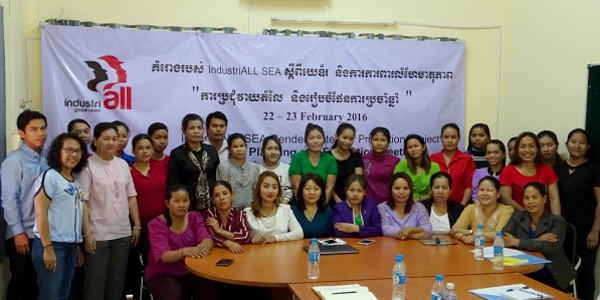
Fifteen women leaders from the textile, garments, clothing and mining (IWFM and MWFM) industries in Myanmar participated in the annual planning and evaluation meeting in Yangon from 18 to 19 February.
Women trade unionists from IndustriALL Global Union affiliates in Cambodia, Myanmar and the Philippines are to make gender equality and maternity protection a priority in 2016, following a series of strategy meetings this month. Participants said that awareness-raising on the concept of gender equality and responding to issues and concerns of women workers would be the focus for their preliminary activities.
They also plan to form women committees in both IWFM and MWFM as part of their action plan. The unions intend to produce accessible information materials on maternity protection law and gender-equality for distribution to members to commemorate International Women’s Day on 8 March.
In a meeting in Manila from 15 to 16 February, the IndustriALL Philippines Women Committee, with its new set of officers, vowed to strengthen women workers through the formation of women committees. They highlighted the International Labour Organization’s Maternity Protection Convention (183) as their main advocacy issue. A resolution was also made allocating 5 per cent of their budget to women and women-related programmes, and to support the 40 per cent gender quota resolution of the world women’s committee for IndustriALL’s upcoming world congress in October. The resolution will be presented to the affiliates’ leaders for adoption.
The thirty women trade union leaders and members who participated in the Cambodia planning and evaluation meeting devised a concrete plan of action identifying organizing, capacity-building, campaign and policy recommendations as the major priorities for the year. The ten IndustriALL affiliates in Cambodia also planned to hold simultaneous mobilizations outside workplaces to kick-off activity for International Women’s Day.
In a bid to boost Myanmar’s textile-clothing sector, French-based NGO Evalliance and Myanmar Garment Manufacturers Association (MGMA) recently agreed to implement the 2016-17 Action Plan, an MoU for which was signed last year.
After holding a meeting with the Myanmarese counterpart in which the two parties worked out the course of action which will be put in place from here on, Jean-François Limantour, President, Evalliance, said, “The Myanmar garment sector has a huge potential for competitiveness and enormous possibilities to increase its exports to the European Union. No doubt that the democratic process in Myanmar paves the way for a successful, strong and friendly cooperation with the European textile-clothing industries and markets.”
The Action Plan for the 2016-17 aims to make Myanmar self-sustaining by increasing garment export from €400 million in 2015 to €1 billion in 2017, besides creating more employment opportunities and lessening the country’s dependence on other countries for its textile needs.
According to the plan, Evalliance is set to have a permanent office in Yangon for better cooperation between EU and Myanamar with respect to clothing and textile sector.
Evalliance is a not-for-profit association, which builds partnership on behalf of European Union (EU) with Indo-Chinese Peninsular countries in textile, clothing, luxury goods, leather and footwear.
Yangon Region Labour Relations Department under Ministry of Labour in Myanmar has planned to take action against a garment factory owner for failing to attend conciliation meetings aimed at resolving a labour dispute. Owner of the Htate Tan Myanmar garment factory, U Min Min has been alleged to be a regular absentee even for the township-level meetings.
Daw Lwin Lwin Myint, Deputy Director, Yangon Region Labour Relations Department said, “I think U Min Min is running away. He repeatedly failed to attend meetings about the dispute, so we have sued him under the labour law. We will sue every boss who disobeys the law or arbitrates rulings.”
Earlier in November 2015, the imposition of ‘K3600’ – a minimum daily wage rule, by the Myanmar Government witnessed a wave of industrial action across the country. U Aung Win, Vice Chairman, Myanmar Garment Manufacturers Association said, “Both labour and management should comply with labour laws and heed the council’s rulings in order to improve industrial relations.”
About 220 workers at the factory walked out in December last year, setting up a permanent camp outside the gates in support of their claim for unpaid wages. Earlier this month, Yangon arbitration council has ruled that the 10 days’ unpaid wages dating back to October and wages for the whole of the month of November should be paid by the factory owner.
Partner with India's Premier Fashion Business Platform
Position your brand at the centre of the apparel industry by
partnering with Apparel Sourcing Week — where BRANDS,
MANUFACTURERS, RETAILERS and
TECHNOLOGY PROVIDERS come together to shape the future
of fashion sourcing.