Business keyboard_arrow_right Retail keyboard_arrow_right News

Uniqlo unveils ‘Made in LA’ denim

Uniqlo Denim
Image Courtesy: nookmag.com

Japanese fashion label Uniqlo has introduced a new category for its denim jeans – ‘Made in LA’ denims – offering four different colours of slim fit mid-rise jeans.

These denims have been designed and manufactured in Los Angeles, USA from recycled denim, which further fortifies Uniqlo’s commitment to sustainable apparel/manufacturing. Moreover, according to leading fashion news portal Apparel News, the dye process for the jeans includes using a sustainable garment dyeing process called ‘VaraBlue’, through which, the denim uses overall less energy to manufacture the jeans.

Also ReadUniqlo and Disney strengthen ties

Also, the fashion brand, in collaboration with British designer Hana Tajima, has unveiled a line of hijab headscarves and tunics in the UK. The assortment ranges from hijab headscarves, relaxed jeans, rayon blouses, long dresses, innerwear and headbands.

On associating with Hana, a Uniqlo representative averred, “Our second collaboration with Hana this spring/summer season will introduce essential pieces that reflect her style for modest fashion while combining our LifeWear concept in which is to focus on enhancing the wearer’s lifestyle.”

Uniqlo is a renowned casual wear designer, manufacturer and retailer. The company has been a wholly-owned subsidiary of Fast Retailing since the year 2005.
Roland DG launches Eco-Solvent Printer/Cutter VG-640/540

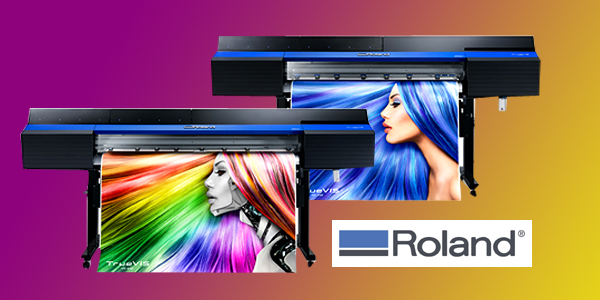
Roland DGRoland DG Corporation, a Japan-based manufacturer of wide-format inkjet printers and cutters worldwide, has announced the launch of the TrueVIS VG-640/540 64″ and 54″ printer/cutter, a new generation of advanced wide-format, eco-solvent inkjet printer/cutter to be released under the TrueVIS brand name. Amongst its various applications, heat transfers for apparel are enlisted by Roland DG.

According to Yuko Maeda, Division President of Roland DG Business Development Unit, the TrueVIS brand expands Roland DG’s technical capabilities in ink formulation, print head design, precision control, and firmware engineering, resulting in far greater flexibility for Roland DG customers moving forward. “We will now be able to match the most appropriate head technology to each application and market that we serve, delivering the best available solutions to all of our users,” he said.

Also ReadRoland DG introduces inkjet digital textile printers

TrueVIS VG series printer/cutters are equipped with four newly developed Roland DG FlexFire print heads which control the metallic plate attached to the ink chamber more flexibly, for a higher firing frequency. The FlexFire print heads also deliver precision droplet placement in three sizes, and an approximately 25 per cent wider print swath compared to previous Roland DG models. Maeda informed, “The combination of the new FlexFire head and new TrueVIS INK – engineered specifically for the print heads – delivers stunning fine details and vibrant colours.”

The VG-640/540 uses new TrueVIS INK which comes in cost-effective 500cc pouches that fit neatly into reusable cartridges that slide into a hidden ink bay for clean operation with less waste. In dual CMYK configuration, up to one litre of ink can be loaded for each colour, ideal for high-volume, unattended production.


Mimaki launches UJV55-320 LED-UV inkjet printer

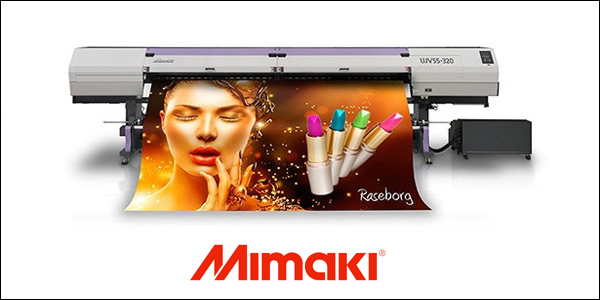
Mimaki UJV55-320Mimaki, a pioneer in manufacturing of wide format inkjet printers and cutting plotters, has introduced UJV55-320 – a 3.2 metres wide Light-emitting Diode (LED) ultraviolet (UV)-curing inkjet printer. Instant-curing UV ink enables multi-layer printing that reproduces high-quality design with two-layer printing (colour and white) and three-layer printing (colour, white and colour).

As per the company’s website, UJV55-320 is a roll-to-roll-type inkjet printer with a special UV-curable ink that can be cured by UV radiation. The UV-curable ink does not require drying as in general water-based and solvent inks, enabling the initialization of processes and operations immediately after printing.

Also ReadMimaki USA introduces fluorescent, light black dye sublimation inks

According to Mimaki, the UJV55-320 wide format printer can deliver speed of around 110 square metres per hour and print resolutions of up to 1200 dpi, depending on the substrates. It can also print on uncoated media and does not require drying, which enables processing and operation immediately after printing, thereby significantly shortening the operation time.

This model is also equipped with LED lights for checking the finishing on the backlit signage during printing. Real-time checks reduce missed printing and thereby decrease wasted media, improving the production efficiency.


Business keyboard_arrow_right Sourcing keyboard_arrow_right News

Toray Industries develops health monitoring textile

Smart-Textiles
Image Courtesy: thefutureofthings.com

Toray, a leading fibre manufacturer company in Japan, in cooperation with Nippon Telegraph and Telephone Corp, has come up with an innovative textile that is capable of monitoring the health of people, and in this case, company employees. This was revealed by the company’s president Akihiro Nikkaku.

Speaking at press conference in Kanazawa, Ishikawa Prefecture on Friday, Toray President Akihiro Nikkaku said, “We are going to strengthen the development and production of high-function, value-added textile products.” He also stressed that the new textile would focus on the graying population in Japan.

Also ReadUniqlo and Toray aim for 1 trillion Yen business

The textile, called ‘hitoe’, is embedded with wearable sensors that can record a person’s heart rate and electrocardiogram. The synthetic fibre-maker envisions the new textile useful for construction site workers or workplaces with irregular shifts. It would enable their supervisors to receive a remote warning when the device detects worrying signals from an employee.

Earlier, Toray has also worked on health-enhancing fibres that contain ingredients that protect the skin. Toray via this newly developed textiles aims for ¥300 billion ($2.6 billion) in sales in healthcare-related business by fiscal 2020.


Business keyboard_arrow_right Sourcing keyboard_arrow_right News

Internet of Things makes its way into Japanese textile industry

IOT
Image Courtesy: d1udmfvw0p7cd2.cloudfront.net

The Internet of Things (IoT), which is a network of physical objects like devices, vehicles, buildings and the like, embedded with electronics, software, sensors, and network connectivity, connected through the internet, is increasingly making its way into the manufacturing industries of Japan, including textiles.

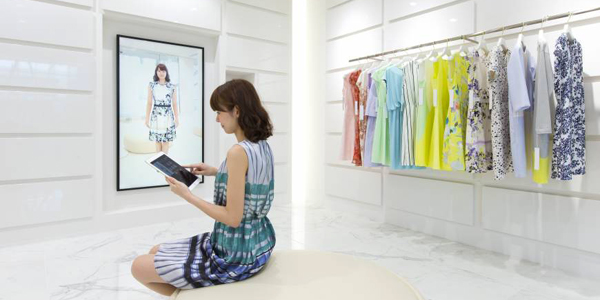
IoT is already being used in a wide variety of sectors, including services industry and transportation infrastructure, in the United States and Europe. Japan has started moving in a similar direction. Textile manufacturer Seiren Co is one such comany, which has installed virtual changing rooms in department stores, particularly in Tokyo.

The company has adopted innovative digital dyeing technology Viscotecs to create such virtual changing rooms, through which shoppers can simulate wearing clothes of different sizes and patterns in front a large screen that is connected to a tablet computer. Seiren plants take orders via the Internet and start making the clothes to order. Shoppers receive the products about three weeks later.

Also Read –  Google files patent for interactive textiles

According to a Seiren official, creating such virtual rooms helps the company reduce inventory losses that eventually leads to reduction in costs.

IoT has recently garnered a lot of attention in many industries and countries. For instance, Germany has termed the application of IoT in manufacturing industries as Industrie 4.0, indicating that this is the Fourth Industrial Revolution.

The governments are making earnest efforts to catch up with the latest trend –IoT. In this regard, the IoT Acceleration Consortium was founded to promote technological development and trials through governmental, industrial and academic collaboration in October 2015.

Meanwhile, US research firm Gartner Inc, in a study, has predicted that IoT will generate sales gains, cost cuts and other economic benefits valued at $1.9 trillion in 2020.


Business keyboard_arrow_right Sourcing keyboard_arrow_right News

Japan keen on lending support to Pakistani textile sector

Pakistan Textile Sector
Image Courtesy: ipsnews.net

In a bid to support the Pakistani textile sector, Japan International Cooperation Agency (JICA) in Yokohama is currently in discussions with the Pakistani government to chalk out possible avenues to assist the sector. It is among the Japanese development agencies that are working hard to increase the level of textile imports from the Pakistan.

Hideaki Shimizu, who served as an adviser in the textile sector to JICA for two years until 2015, has always believed in the potential of Pakistan. “Pakistan is traditionally a cotton-producing country, and has done well in recent years to integrate production and improve both upstream and downstream operations,” he said.

The current efforts by the development agencies of Japan is a consequence of a number of efforts taken last year. In 2015, JICA supported a delegation of Japanese businesspersons during Expo Pakistan, the country’s largest trade fair, and arranged a delegation of executives from Pakistan’s leading textile companies to Thailand. A Pakistan-Japan Textile Day was held in October 2015 that brought Japanese companies to Lahore and Faisalabad — a step to introduce manufacturers and buyers.

Daisuke Fukumori, Deputy Director of JICA’s South Asia division, said “We are currently in the negotiations stage, and information regarding the projects that Japan can undertake has not yet been confirmed.” He further stated, “Details of the final package will be designed to meet the needs of the Pakistani government, and the agreement should be completed within this year.”


Business keyboard_arrow_right Retail keyboard_arrow_right News

Apparel firm Itokin to be acquired by Integral

Acquisition
Image Courtesy: european-coatings.com

Apparel firm Itokin, which has been struggling financially for a while now, is going to be acquired by Japan-based investment fund Integral for around US $ 140 million. Integral will purchase shares in the company through private placement for 4.5 billion yen (approx.) to attain 98 per cent of voting rights.
Integral will also reportedly slash number of brands under the company to around 20 from the current 28, and consolidate stores to about 1,000 from 1,400 at present. However, the buyer will carry on with mainstay brands such as Hiroko Koshino.

Also ReadCode Green Apparel Corp may acquire 10Star Apparel

The firm will also try to bring the brand back to profit-making by taking e-commerce initiatives in the year ending in January 2017. The fund is further mulling over increasing the corporate value in the coming three to five years, with possible plans to list Itokin on the stock market.

Lately, it has been observed that many apparel firm have been losing market share to private-label brands that offer competitive prices and are quick to respond to current fashion trends.

The news has come as many retailers are assessing their performance in the changing retail landscape. Last year only, apparel retailer World closed around 500 stores. Hit by weak market, giants like Macy’s have decided to shut 40 stores across the US. Even Walmart has closed down 269 stores across the globe (154 alone in United States), noting poor performance at these point of sales.


Business keyboard_arrow_right Retail keyboard_arrow_right News

TSI Holdings slashes apparel production in China

Apparel ProductionTSI Holdings has lowered production at its units based in China. The company is looking to farm out more work to units in inland China and South-east Asia, where labour is much more inexpensive.
The Japan-based clothing company had sold its jacket and dress plant in Suzhou, Jiangsu Province, to an anonymous buyer. The reason behind selling the unit is touted to be the rising cost of production at the unit which was opened in 1994. Moreover, plant in Qidong will also witness drop in production.

Also ReadApparel production scale in Asia to expand 2.4 per cent of global outputs by 2030

However, the company earlier maintained quality of its products through in-house production, but of late observed that the quality variance with outsourcing has been negligible; besides the cost of running the facilities have also come down as the production work gets shifted to units in more financially viable regions.

TSI Holdings emerged in the year 2011 due to the unification of Tokyo Style and Sanei-International. The company has upheld production at Tokyo Style’s facilities in Japan and overseas.

Considering the fact that around 70 per cent of the company’s production is being done overseas, TSI is now feeling the need to face-lift production as foreign exchange rates and other factors involved in the production process are taking the cost further.


Events keyboard_arrow_right News

Novel paper-fibre socks introduced by Goldwin

Paper-fibre socksJapanese manufacturer of socks and hosiery products, Goldwin has introduced new socks, C3fit Arch-Support Socks, made using paper-fibre WA CLOTH HYBRID.

WA CLOTH HYBRID is an innovative, eco-friendly fabric that was presented at the recently held ISPO Munich trade show. Goldwin is the first company to use it in its C3Fit socks, which combine graduated compression, body conditioning, and comfort for every movement. The socks provide excellent breathability, which helps in avoiding trapping of heat and sweat inside the shoes. The socks wick away the undesirable moisture from sweat inside the shoes, maintaining dryness.

Besides, C3fit Arch socks feature cross taping structure, with two vertical arches and three horizontal arches that support the arches of the foot, thus reduces chances of arch injuries. Moreover, the toe and heel areas are made with stronger yarns for better durability even during extreme conditions. The C3fit socks not only support body conditioning during exercises, but also prevents swelling after an intense workout or a race.

Also ReadSteps Footsocks develops invisible socks with Nilit Duelle duo-coloured fibre

WA CLOTH HYBRID is made by twisting and weaving shreds of paper that creates unique texture that does not stick to the skin. This quality reduces the chances of getting blisters that are caused by the sock material rubbing against the skin. The fabric offers natural odour control and UV protection, and is said to provide five times more durability to the socks than the regular running socks.


Ricoh acquires DTG printer maker AnaJet to strengthen business

AnaJet DTG Printer
Image Courtesy: anajet.com

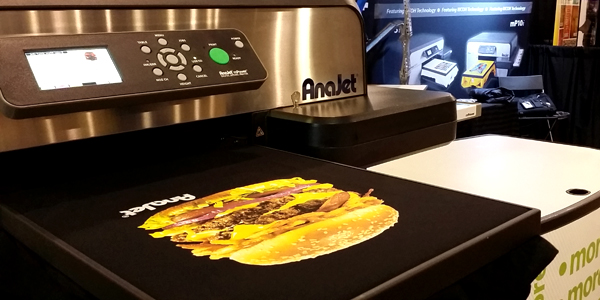
Japan-based specialist in production print solutions, document management system and IT services, Ricoh Co. recently announced its acquisition of AnaJet, which is one of the first companies in the world to mass produce direct-to-garment (DTG) printers.

The terms of acquisition declare that AnaJet will continue operating under its current name and management team, and maintain local operations that include more than 50 employees at its headquarters.

Speaking about the acquisition, Junichi Matsuno, General Manager of Ricoh Ltd.’s Inkjet Business Division said, “It is the latest strategic investment by Ricoh to strengthen its industrial inkjet business while enabling its customers to move forward new ideas and drive imaginative thinking. With AnaJet’s DTG printer solutions combined with the broad Ricoh portfolio, customers will now have the ability to deliver a broader solution set to their end users more effectively.” Ricoh plans to improve its position in the industrial inkjet market with the introduction of DTG printers, where it has an established name in inkjet print head development.

Also ReadDirect-to-textile inkjet printer to be introduced by Mimaki

This is not the first operation of Ricoh in Southern California region, as it has another subsidiary, Ricoh Electronics Inc., which manufactures digital copiers, assembles chips onto circuit boards, and builds all-in-one machines that can print, copy, scan and fax. With its headquarters in Tokyo, Ricoh Group currently operates in around 200 countries.


Events keyboard_arrow_right News

JIAM 2016 OSAKA to host exhibitors from 13 nations

JIAM 2016 OSAKA
Image Courtesy: urban-k.co.jp

The 11th edition of Japan International Apparel Machinery (JIAM) trade show will be held at INTEX OSAKA from April 6-9, 2016 under the theme ‘Innovative Solutions and Advanced Processing Technologies’.

The show, which will run as Japan International Apparel Machinery & Textile Industry trade show this year, will be hosting 204 exhibitors from 13 different countries, out of which 59 (31 domestic, 28 overseas) will be exhibiting for the first time.

Also ReadTEXPROCESS AMERICAS 2016 – Visitors registration now open

Apart from the exhibits, JIAM 2016 OSAKA will hold exclusive seminars and special exhibitions introducing latest textile processing technologies and trends. At these seminars, few of the topics that will be discussed are – Latest Market Trends of the Sewing Industry in Ethiopia and other East African Countries; Future of Made-in-Japan Products; Development of e-Textile, Photovoltaic Textile, and RFID Fibre; and Digitalization of Fashion and Future Aspects of Textile Industry.

Around 30,000 visitors are expected to turn up, including apparel manufacturers, interior goods manufacturers, embroidery and printing manufacturers, textile processing unit owners, retailers, and students. This year, the total exhibition size has grown by 25.4 per cent.

Mimaki acquires La Meccanica

Mimaki
Image Courtesy: mimakiusa.com

Mimaki has acquired Italy-based digital textile printers’ manufacturer La Meccanica Costruzione Tessili. Even though the amount for which Mimaki has bought La Meccanica is yet to be revealed, it has been noticed that La Meccanica had sales of approximately US $ 6.5 million in 2014 and around US $ 557,000 in capital on hand at the time of the deal.

“We are aiming to acquire the manufacturing know-how of digital print devices and brand power to give a boost to our existing products and improve our competitiveness in the textile inkjet printer industry in Europe and the world,” Mimaki said on expanding its reach in the European textile and apparel market.

Also ReadPrinting equipment maker Mimaki set to enter Indian market

Mimaki is a Japanese manufacturer of wide-format inkjet printers and cutting machines for the sign graphics, industrial product and textile & apparel markets. It specializes in producing innovative, high quality and high reliability products, based upon its aqueous, solvent, UV-curable and textile inkjet technology.

Recently only wide-format printer manufacturer EFI purchased Reggiani, an Italian digital inkjet textile printer manufacturer, and now Mimaki acquiring La Meccanica, will certainly help the Japanese manufacturer maintain its lead in the global market.