The 79th edition of the Pitti Immagine Filati exhibition in Firenze, Italy, scheduled to take place from June 29 to July 1, 2016, will witness participation of SHIMA SEIKI ITALIA S.p.A., Italian subsidiary of leading Japanese computerized knitting machine manufacturer SHIMA SEIKI Mfg. Ltd. The manufacturer will participate in the Fashion At Work section of the exhibition, aimed at being appealing to the technical and creative interests of visitors by providing hardware and software solutions for design, manufacturing and processing of knitted goods.
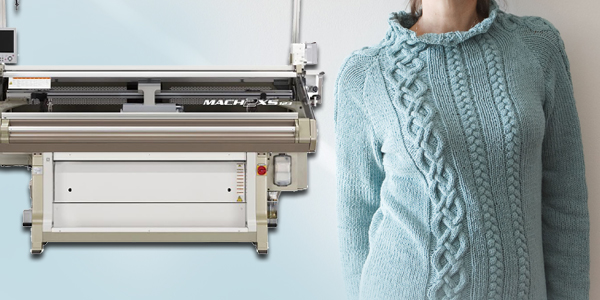
On display will be the MACH2XS WHOLEGARMENT® knitting machine. The flagship machine has technological innovation such as SHIMA SEIKI’s original SlideNeedleTM on four needle beds as well as the company’s patented spring-loaded movable sinker system. Besides this, latest version of SHIMA SEIKI’s SDS-ONE APEX3 3D design system will also be exhibited.
At the core of the company’s “Total Fashion System” concept, APEX3 provides comprehensive support throughout the apparel supply chain, integrating production into one smooth and efficient work flow from yarn development, product planning and design to production and even sales promotion.
Demonstrations of knitwear produced on its latest line of computerized knitting machines will also be on showcased at Pitti Filati, including revolutionary seam-free WHOLEGARMENT® knitwear that features superior fit, comfort and draping characteristics, as well as new proposals in knit-weave hybrid textiles produced on the SRY series machine.
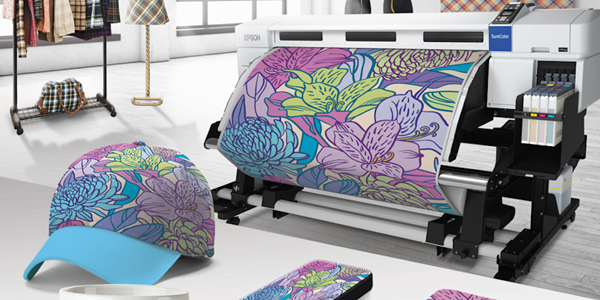
Epson Italia SpA is reportedly going to completely acquire Fratelli Robustelli, one of the leading manufacturers of textile printers.
The reports claim that while the entry of Robustelli into the Epson Group will allow it to expand its reach to more customers around the globe, this strategic move will also back Epson to take advantage of Robustelli’s capability in accelerating the development of digital inkjet textile printers with a wider line-up of products, through joint R&D.
Sunao Murata, COO – Professional Printing Operations Division, Epson averred, “The market for high-quality digital textile printing is expanding, and I believe that formalizing our collaboration with Robustelli in this way puts us in a great place to meet the needs of the growing numbers of customers who are seeking to leverage the advantages of advanced digital solutions that will help drive their businesses forward.”
Additionally, Epson will use its already established sales and service network to make Monna Lisa – registered trademark of Robustelli – available in more countries and regions across the globe. “We will work closely with our colleagues at Robustelli to take Monna Lisa to the next level and remain leaders in the field,” asserted Murata.
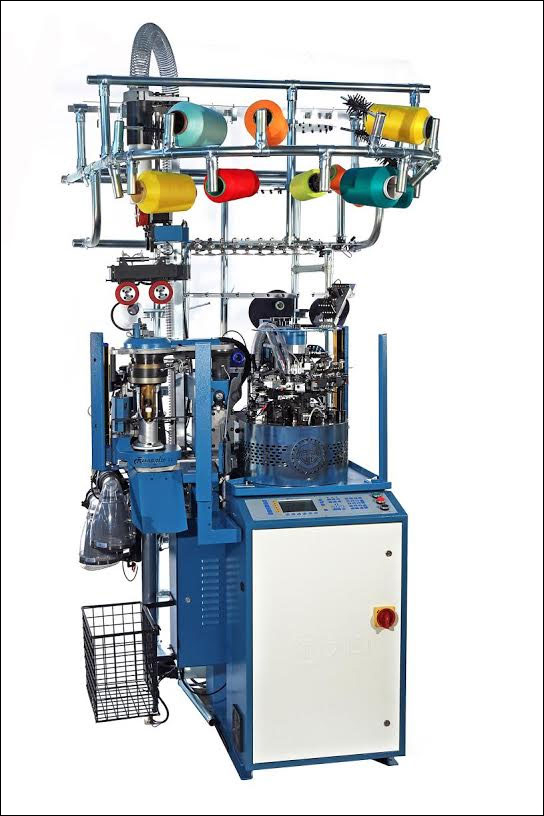
Italian sock knitting machine manufacturer Busi Giovanni has completed the development of its latest machine, named BUSI 500 DOPPIO, with a 5″ diameter, one feed, available in 52 to 96 needle formats.
BUSI 500 DOPPIO is a single cylinder sock knitting machine with latch needles in the dial giving the possibility of knitting socks with broad rib and terry. The terry device enables the machine to produce sandwich terry, and to fully automatic switch from plain stitch to half terry and to full terry.
According to the manufacturer, this model can produce true rib, exactly like double-cylinder machines, in such a heavy gauge, beyond patterns in three colours per course plus ground, terry sections or full-terry socks and double-welt socks. It can also combine the double welt with a true-rib sock structure. The various available options on this machine are RIMAGLIO device for classic linking, storage feeders, BTSR yarn flow sensors, Vertical or horizontal yarn rack, Production monitoring programme (SK-MON), Pattern and article development programme (ART-GEN)
Since 1958 Busi Giovanni Srl has specialized in the design and construction of single-cylinder machines with rib needles in the dial for the production of high-quality stockings, socks & tights. The company is a supplier to the most important producers of stockings, socks and tights, for the men’s, women’s and children’s markets – classic, patterned, sports, technical-sports, as well as medical, with special solutions for graduated compression. Busi sells in more than 50 countries around the world through a network of partners that provide distribution services.
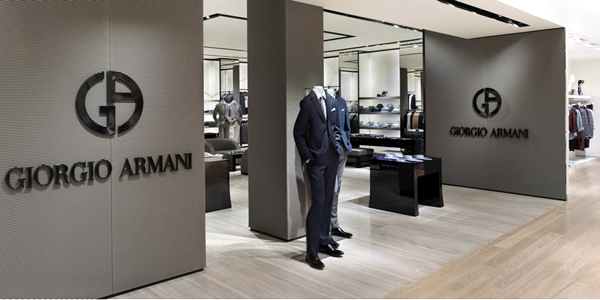
Italian luxury fashion house Armani noticed 4.5 per cent more growth in the year 2015 compared with the previous year.
While its sales revenue totalled Euros 2,650 million in the 2015 fiscal year, gross operating profit (EBITDA) increased by 1.18 per cent, reaching Euros 513 million. Wholesale revenues, including licenses, reached Euros 4,000 million.
Giorgio Armani, President – Armani Group said that the financial results are excellent. “These results are the fruit of a policy of diversifying lines of the group, along with coordination of distribution channels and strengthen links with our partners,” he explained.
Founded 1975, Armani designs, manufactures, distributes and retails haute couture, ready-to-wear, leather goods, shoes, accessories, home interiors, etc. and markets these products under several labels: Giorgio Armani Privé, Giorgio Armani, Emporio Armani, EA7, Armani Collezioni, Armani Jeans, Armani Junior, and Armani Exchange.
Santoni, the Italian pioneer of manufacturing circular knitting machinery, has transferred its technology for SWD technology range of warp knitting machines to Nippon Mayer, the Japanese subsidiary of German warp knitting premier – Karl Mayer. Nippon Mayer will take over the complete range of products including patents, relevant manufacturing equipment as well as the entire stock of machines and spare parts.
The after-sales service for the installed base of machines will be taken over by the company effective June 1, 2016.
The transfer has been made by Santoni to concentrate and further develop its core business of circular knitting. The technology provider has been active in seamless warp knitting since 2004. The company developed its own range of compact machines for the application of seamless garments, medical- and lately shoe-fabrics. They hold a number of patents for machines as well as textile technology.
Karl Mayer will integrate the SWD technology into its Double Needle Bar competence centre at Japan-based Nippon Mayer and extend the relevant product range.
Italian luxury fashion house Gianni Versace has appointed Jonathan Akeroyd, who served as CEO of Alexander McQueen from 2004 till May 2016, as its new Chief Executive Officer. He succeeds Gian Giacomo Ferraris, who joined Versace in 2009.
“We are delighted to welcome Jonathan Akeroyd as our new CEO. Jonathan brings a proven track record in building global brands, steering growth and driving strategic development. His industry expertise and vision will be key to advancing the next phase of Versace’s development,” said Donatella Versace, Vice President & Artistic Director.
At Alexander McQueen, Jonathan was responsible for the growth and international expansion of the brand, working with the creative and leadership teams during one of the label’s most robust periods.
Thrilled about his new role, Jonathan averred, “It is an honour to be joining such a dynamic and innovative organization. Versace is an iconic lifestyle brand recognized globally as a premier name in luxury. I look forward to implementing a long-term business strategy that supports the visionary and creative direction of Donatella Versace and her team. This is an exciting opportunity to take Versace to even greater success.”
Versace designs, manufactures, distributes and retails fashion and lifestyle products including haute couture, women’s and men’s ready-to-wear, accessories, etc. The brand’s products are available globally through a network of over 180 Versace retail stores.
Italian fashion retailer Benetton Group has reported that the year ended December 31, 2015 didn’t bring much joy for the company in terms of revenue.
The clothier noted a revenue drop of 1.2 per cent to € 1,529 million in the period under consideration. However, the retailer noticed that while direct sales surged by around 6 per cent in the reporting year, indirect sales also reached gradual stabilization in both volumes and margins terms.
In all, net loss for Benetton totalled € 46 million due to charges of € 21 million and taxes worth € 18 million. Its (consolidated) EBITDA zoomed 34.5 per cent to € 54 million in the 2015 fiscal from € 40 million in the prior year. Operating profit was € 2 million against an operating loss of € 17 million in 2014. Also, the Benetton stores, which sell knitwear products, were refurbished with the company’s ‘On Canvas’ concept. The renovation attracted more customers to the stores, resulting in 20 per cent increase in store sales.
Based in Ponzano (Italy), Benetton Group is a global fashion brand which has a network of about 6,000 stores in the main international markets around the world.
Leading Italian fashion group Prada’s Asia-Pacific sales slumped to EUR 1.08b (at current exchange rates) for the year ended January 31, 2016, accounting for a decline by 4.4 per cent from the previous year.
In this regard, CEO Patrizio Bertelli said, “Throughout 2015, the luxury goods market had to deal with an economic environment, characterized by volatile financial markets and by heightening geopolitical tension in different regions across the world. These conditions are still present, and 2016 is expected to be affected by instability, which makes any short-term forecasts uncertain. Bearing this in mind, and in order to ensure the group achieves satisfactory profit levels, we have recently implemented a thorough review of all operating processes. The results, in terms of greater efficiency and productivity, will be apparent in the months to come.
“We will pay particular attention to new forms and methods of communication designed to develop a relationship between our brands and an ever-growing audience, based on a permanent dialogue embracing the various parts of the Prada universe. At the same time, we will continue to pave the way for the sustainable long-term growth of the group with investments, aimed at enhancing the distinctive features that make our brands unique: excellent product quality with contemporary and innovative design and capacity to interpret the desires of our ever more sophisticated and demanding customers,” he added.
The overall net revenue of the retailer for the year 2015 reported a downfall in 0.1 per cent.
However, the Japanese market indicated a growth (at current exchange rates) of 10.7 per cent, owing to the increased number of Chinese tourists flocking the country. Not taking in consideration the effect of exchange rates, sales in Japan rose by 3.9 per cent. According to the company, this positive trend has been noticed in the Japanese market since 2010.
UoP Vice-Chancellor Prof Upul B Dissanayake (Left) & TJ Group CEO Sriyan de Silva Wijeyeratne sign the MoU | Image Courtesy: https://origin.adaderana.lk/
With advancement in textile technology, Sri Lanka too could not stay far behind. In fact, Textured Jersey Lanka PLC (TJ), the largest textile manufacturer in the region, recently signed a Memorandum of Understanding (MoU) with the country’s University of Peradeniya (UoP) to make confident headway into the realm of smart textile.
While the company will fund the research on development of advanced textile materials, an expert research team appointed by the UoP will actually carry out the research and development, according to a company statement. Textured Jersey will thereafter utilise this research to manufacture smart textiles, which will eventually open up new markets and meet the growing needs of their current clientele.
While this venture is expected to benefit both the company and the university, its long-term goal is to take the textile industry in Sri Lanka and the region to the next level.
“This is an exciting proposition for us, and we look forward to working with the University to create some revolutionary changes in the industry,” Sriyan de Silva Wijeyeratne, CEO of the TJ Group, is reported to have said.
The MoU encompasses a number of Research Projects, ie, textiles with antimicrobial properties, superhydrophobic stain resistant properties, anti-pilling properties, conducting yarns and antistatic properties as well as scratch-resistant and shape-memory properties. Some of these projects will also be supported by the National Science Foundation (NSF), with whom the varsity has signed a separate non-disclosure agreement (NDA).
“More will be demanded of textiles in the future, as consumer demands grow and apparel manufacturers are challenged to produce better precision fit garments for which the first raw material needed is the fabric,” Wijeyeratne said, adding, “We are ready to meet all these challenges, with the introduction of intelligent functionalities to our fabrics and products; at the same time encouraging new skill sets among our graduate students. This initiative is another step taken by us in furthering the weft knit textile industry.”
The research team from the Faculty of Science of the university will be headed by Prof RMG Rajapakse, Senior Professor, Department of Chemistry, and Dr S S Gunathilaka, Senior Lecturer of the Department of Chemistry. Besides funding the main projects, TJ will provide grants for five PG students, pursuing their M Phil/PhD degrees, for their involvement as Research Assistants for each of the projects undertaken by the Team.
While the university will conduct research relating to products made by TJ, in order to introduce smart functionalities to their products, the company will provide necessary chemicals and other materials the research team would require to conduct their experiments. The company will also provide the opportunity for students nominated by the research team for the various projects, to visit their factory premises and to get practical knowledge under the supervision of their Manager, Product Innovation, who would be working closely with the students.
“As a premier university of the country, we are committed to supporting our local industries by all means in order to improve their product qualities, decrease production costs and to increase profits obtainable so as not only to survive the industrial products in the future global market but also to create new products that present day society is demanding,” said UoP Vice Chancellor Prof Upul B Dissanayake.
Centric Software, pioneer in providing software and solutions for fashion, retail, luxury and consumer goods companies, has launched CSB – a cloud-based, SaaS PLM solution specifically tailored for small businesses in Italy. As per the company release, with an ultra-fast implementation, Centric for small business is based on innovative technology and key industry learnings inspired by more than 145 PLM projects with leading fashion, consumer and sporting goods companies.
The software stresses on functionality tailored for small businesses to give access to the same innovations and benefits accessible to larger companies, helping them level the competitive playing field. “With Centric for Small Business, we provide inspired and inclusive tools and key best practices previously limited to PLM larger-scale implementations to help small companies across Italy be more competitive on a global scale,” summarizes Chris Groves, CEO of Centric Software.
In a separated development, Centric will showcase innovation at IT4Fashion in Florence, Italy. Besides this, arena – the leading Italian swimswear firm will also share a first-hand testimonial after adopting Centric 8 PLM. An introductory seminar on Centric for Small Business will also be held on May 12 in Bologna.
World’s leading provider of advanced weaving solutions ITEMA has announced its results for FY 2015 ended December 31. Total sales at the Group were up 11 per cent, while weaving machine sales were up 14 per cent in the reporting period. Spare Parts business also surged by 4 per cent.
Commenting on the results, Carlo Rogora, CEO of the Group said, “I am especially proud to announce yet another year of brilliant results at ITEMA Group. We are now entering the fourth year in a row of continuous growth, with +80 per cent more looms sold compared to 2012. This is a truly remarkable milestone, for which I also thank shareholders, customers, employees, agents, suppliers and partners worldwide for each and everyone’s contribution to our success. The innovative mindset, the fighting spirit, and, most of all, the commitment to Customers to offer only the smartest, most game-changing weaving technology are just some of the factors that set us apart.”
The Group will remain focused not only on meeting and exceeding weavers’ needs, but on going beyond and anticipating future market requirements. It will also continue to concentrate on its extensive R&D efforts on offering better, smarter, faster solutions, increased performances, reduced consumption and enhanced user-friendliness, the company said.
Italian luxury fashion house Ermenegildo Zegna Group has reported a 36.6 per cent drop in its profits for the fiscal year 2015 to US $ 51 million against US 80.7 dollars in 2014. Its EBITDA dived 21 per cent to US $ 166 million compared to US 210 million last year. However the company noted a 4 per cent rise in revenue to US $ 1.43 billion.
In the period under consideration, Zegna entered into a JV with Dubai’s Al Tayer Group to expand its reach in the Middle East market. As per the agreement, Al Tayer will operate all Zegna stores in the UAE, which were earlier looked after by UAE Trading. The brand operated 523 boutiques at the end of the fiscal.
The fashion firm had also set up a new manufacturing centre in San Pietro Mosezzo, to establish strong supply chain for its clothing business in the reporting period. It already has three other separate manufacturing centres for casual wear, outer wear and leather apparel, and accessories in Parma, Italy. Besides this, a centre for knitwear production was set up in Verrone, Italy.
Engaged in making men’s clothing and accessories, Zegna is among the leading menswear of Italy. It manufactures suits for brands such as Gucci, Yves Saint Laurent, Dunhill and Tom Ford.
Partner with India's Premier Fashion Business Platform
Position your brand at the centre of the apparel industry by
partnering with Apparel Sourcing Week — where BRANDS,
MANUFACTURERS, RETAILERS and
TECHNOLOGY PROVIDERS come together to shape the future
of fashion sourcing.

 The 79th edition of the Pitti Immagine Filati exhibition in Firenze, Italy, scheduled to take place from June 29 to July 1, 2016, will witness participation of SHIMA SEIKI ITALIA S.p.A., Italian subsidiary of leading Japanese computerized knitting machine manufacturer SHIMA SEIKI Mfg. Ltd. The manufacturer will participate in the Fashion At Work section of the exhibition, aimed at being appealing to the technical and creative interests of visitors by providing hardware and software solutions for design, manufacturing and processing of knitted goods.