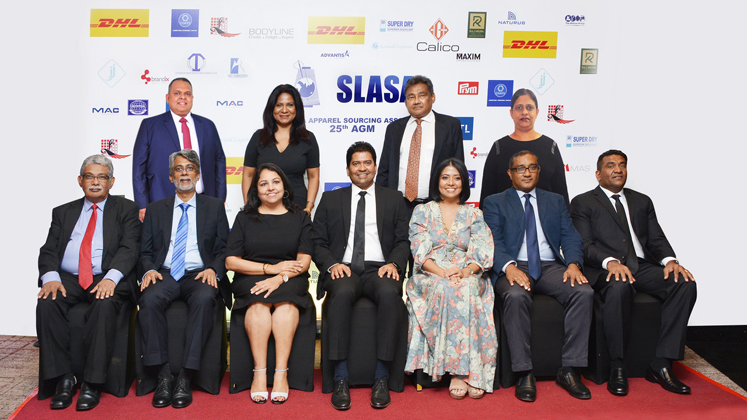
The Sri Lanka Apparel Sourcing Association has recently held its 25th Annual General Meeting recently under the aegis of the Charge d’Affaires of the EU Thorston Bargfrede for the post-business session.
During the meeting, Wilhelm Elias was re-elected Chairman, while the Vice Chairmen elected were Shweta Dhir and Azmina Kareem, Treasurer Denver Jayasundara and Secretary Gayan Galapitige as office bearers for the year 2022-23. Gopal K Iyer was appointed Secretary General for the Association.
The message that emerged in the meeting is that while the apparel industry had shown extraordinary tenacity and resilience through Covid and the economic crisis well evidenced by the good export results Sri Lanka was showcasing in 2022, there was a need to transform and that too with urgency.
Commending SLASA members for demonstrating the maturity of the industry and emerging stronger and more vibrant post-pandemic, Elias said, “We adapted to new ways of doing business while also keeping the country’s needs as priority. There was no rule book to work on but business leaders demonstrated how the industry was flexible and quick to adapt while reaffirming Sri Lanka’s reputation of being a safe pair of hands.”
He added that in the next half of 2022, external forces are emerging, prompting a drop in numbers with galloping inflation in West, customers being over-stocked and disposable income reducing.
Elias said competitor countries will try hard to keep business they gain from Sri Lanka even temporarily and hence; the industry must ensure that buyers are given good reason to move back to Sri Lanka.
Vice Chairman Azmina Kareem had similar sentiments, augmenting Elias’ message that the industry needs to focus on opportunity.
“Customer expectations are moving beyond to an end-to-end service model and suppliers are being empowered to do more for brands which is the bigger expectation of the brands. The traditional buyer-supplier relationship is diminishing,” averred Azmina. She also emphasised a rebranding for Sri Lanka as a trading destination, taking advantage of the short transit times and cost competitiveness
“Fabric sourcing needs to be diversified; we must hedge our risks with a healthy mix of near shore and indigenous fabric sourcing, focusing on aesthetics together with innovation. And the conscious consumer is here to stay which, with Sri Lanka being far ahead in terms sustainability initiatives, we can be the first port of call for many labels who plan to become transparent and responsible. Thirdly, we must showcase our product strengths, creating showrooms with shipped products constantly re-quipped with newness and market intelligence to buyers – sufficient with just sketch, swatch and digital representations,” Shweta Dhir detailed a three-pronged approach.
To meet the industry target of US $ 8 billion by 2025 and determined to rally the troops, Elias stressed the need for relationship building which will come under stress in the months to come.
“We are not the most cost-effective country, but we must transform our renowned resilience and tenacity into opportunity by building on our strengths and re-thinking our strategy, keeping that foundation of relationship building strong,” commented Elias.