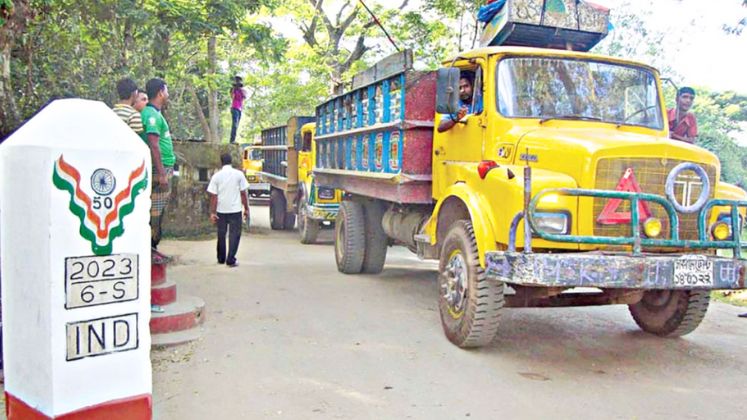
In a statement, the Indian Ministry of External Affairs (MEA) has announced that the withdrawal of its transshipment facility to Bangladesh for third-country exports, was due to ‘some developments’ that preceded the decision. MEA spokesperson Randhir Jaiswal emphasised the need to consider these recent events to understand the full context of India’s move.
While Jaiswal did not specify the nature of these developments, he reiterated India’s commitment to maintaining a positive and constructive relationship with Bangladesh, reaffirming New Delhi’s support for a “democratic and inclusive Bangladesh.” He also assured that the withdrawal would not hamper regional trade, noting that Bangladesh can still engage in trade with Nepal and Bhutan through Indian land ports.
The decision was explained by cargo congestion at Indian airports, which was reportedly impacting Indian exporters. However, sources familiar with the matter revealed that Bangladesh had already decided to close three land ports used for yarn imports from India, citing infrastructure constraints. This move, recommended by Bangladesh’s commerce ministry in March, occurred before India revoked the transshipment facility.
The closure of these ports raised concerns in New Delhi, especially considering yarn’s vital role as a raw material in Bangladesh’s garment industry. Some analysts perceive the shift towards sea port-only imports as an attempt by Bangladesh to open the market to Pakistani suppliers, albeit at higher costs, a move that reportedly did not sit well with Indian officials.
The development comes amid ongoing diplomatic sensitivities, including Pakistan’s Foreign Secretary Amna Baloch’s visit to Bangladesh, the first in 15 years. Jaiswal acknowledged the visit briefly, stating, “We have taken note of it.”
Additionally, Jaiswal addressed reports of Bangladeshi nationals allegedly involved in violent protests against the Wakf Amendment Act in West Bengal’s districts of South 24 Parganas and Murshidabad. He stated that the Indian Ministry of Home Affairs would take appropriate action and that all Bangladeshis in India, whether legal or illegal residents, would be dealt with according to Indian laws.
Regarding threats from the Bangladesh Khilafat Majlis to march to the Indian High Commission in Dhaka over the Wakf Amendment Act, Jaiswal dismissed the matter as an internal issue of India.
The move to revoke the transshipment facility marks a significant development in India-Bangladesh relations, highlighting underlying tensions related to trade, infrastructure, and regional diplomacy.





 Bharat Tex Special Report 2026