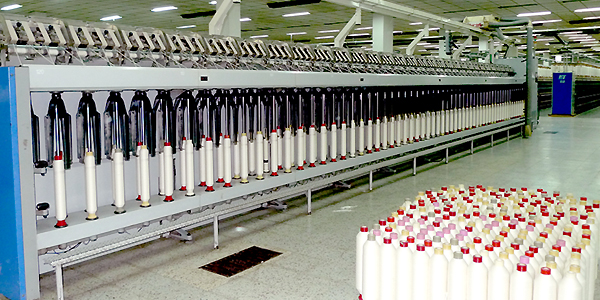
The measures taken by the Bangladeshi Government of hiking the gas prices and reducing subsidies on power saving has not been appreciated by the textile mill owners of Bangladesh. At a seminar on ‘Energy Efficiency and Textile: Lifeline of the Economy’, Tapan Chowdhury, President, Bangladesh Textile Mills Association (BTMA) said, “As a backward linkage industry for readymade garment export, our mills play a very significant role in the economy. But the sector has been put in a disadvantageous position in recent times due to the increases in minimum wage and gas tariffs for captive generators, which the textile millers and spinners use.”
The 1,400 textile mills in Bangladesh contribute 13 per cent to the gross domestic product of the country, 85 per cent to knitwear exports, and 35 to 40 per cent to the woven products export. Recently, gas rates had been increased from BDT 4.18 per cubic metre to BDT 8.36 per cubic metre for the textile sector, last year as the Government claimed that textile mills had been wasting precious gas by running captive power plants. Standing against, BTMA claims that textile mills’ energy-efficiency level in Bangladesh is to be around 75 to 80 per cent as compared to 31.5 per cent for the national grid.
BTMA attributes this high energy-efficiency level to cogeneration, which is the use of a heat engine or power station to generate electricity and useful heat at the same time, and the heat generated in production of electricity is used as thermal energy. Currently, the gas-based captive power plants made by the textile millers generate about 1200 to 1300 megawatts of electricity.
Also Read – Bangladesh’s textile millers slammed for unplanned factories
About BDT 8,700 crore has been spent on setting up 28 textile mills, which were not able to start operations due to closing of gas connections, which if would have been operating, could generate 1.5 lakh jobs. In reply to the grief expressed by textile mill owners and BTMA, Prime Minister’s Energy and Mineral Resources Advisor, Tawfiq-e-Elahi Chowdhury assured that Government will be able to supply 300 to 400 mmcf gas within the next two years as the state owned Bapex has been drilling 10 new wells. “We will invest further if the government guarantees us gas supply within the next two years, as the textile and spinning mills require uninterrupted supply with adequate pressure,” said AK Azad, Former President of Federation of Bangladesh Chambers of Commerce and Industry.