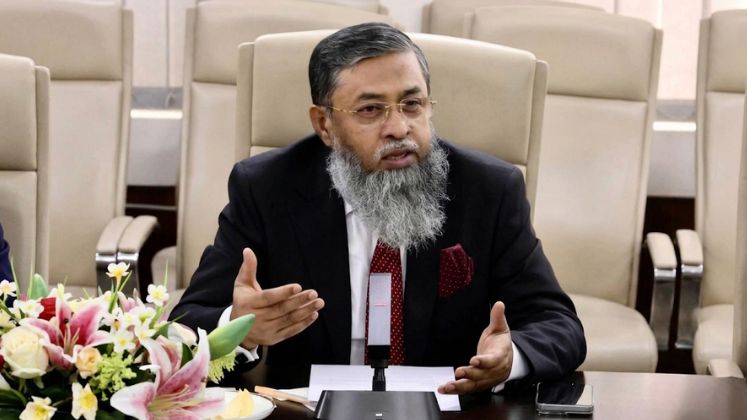
The President of the Bangladesh Knitwear Manufacturers and Exporters Association (BKMEA), Mohammad Hatem, has criticised Bangladesh’s taxation framework as overly complex and detrimental to investment, warning that the current system could discourage both domestic and foreign investors.
Hatem expressed concerns over what he described as structural issues within the country’s tax administration, particularly the involvement of policymakers in tax collection activities. He argued that such an arrangement represented a conflict of interest and should be discontinued.
Hatem stated that the business community’s primary concern was not the level of taxation but the complexity of the system. According to him, businesses would be willing to accept existing tax rates provided the overall framework was simplified and made more conducive to commercial activity.
The BKMEA president also criticised the advance income tax mechanism, arguing that companies are often required to pay taxes irrespective of whether they generate profits or incur losses. He said this places additional financial strain on businesses, particularly those facing operational challenges.
He further noted that advance tax deductions and the lack of efficient refund mechanisms frequently result in companies bearing a significantly higher effective tax burden than the official corporate tax rate. According to Hatem, this creates a situation where actual tax payments exceed the rates prescribed on paper.
Hatem warned that the current taxation model creates a misleading impression of tax collection performance while simultaneously discouraging business expansion and fresh investment. He argued that without meaningful reforms, investment growth in the country could remain subdued, with both local entrepreneurs and international investors potentially reconsidering new projects.
The comments come amid growing calls from the business community for a more transparent and streamlined tax regime. Industry leaders have increasingly advocated reforms aimed at simplifying tax procedures, improving compliance mechanisms and enhancing the ease of doing business as Bangladesh seeks to strengthen its competitiveness and attract greater investment.
Business groups have consistently argued that a predictable and efficient tax environment will be essential to supporting economic growth, industrial expansion and job creation in the years ahead.






 Bharat Tex Special Report 2026