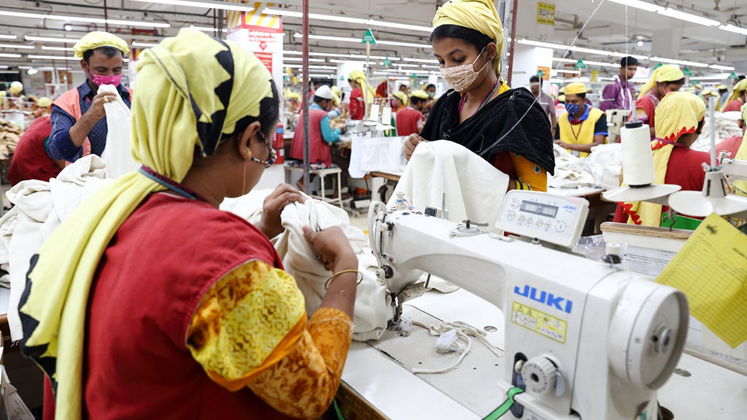
The Coronavirus pandemic last year, brought to the fore the so-called fragility in the buyer-supplier relationship as the mutual relationship between the two underwent a lot of strain consequent to large-scale order cancellations and alleged payment defaults by the brands and retailers that put the industry under tremendous pressure.
However, of late, things seem to be slowly and steadily getting back to normal as a substantial quantity of the cancelled orders have reportedly been reinstated already and the issue related to some of those that are not yet reinstated, seem to be headed for a closure soon. Not only this, some brands have also taken it upon themselves to work towards the welfare of the industry, especially the workers, who were perhaps the worst sufferers of the pandemic as reports suggests tens of thousands of garment workers have lost their jobs on account of COVID-19 and are staring at an uncertain future.
To start with, the Edinburgh Woollen Mill or EWM, which garnered a lot of negative press for its alleged cancellations of work orders that had its suppliers in Bangladesh struggling to survive, reportedly agreed to purchase the cancelled orders now.
As per reports, EWM Group Chairman John Herring, has reportedly told suppliers in Bangladesh that its new owners will purchase cancelled orders that are sitting in factories ready to be shipped even as the Bangladesh Garment Manufacturers and Exporters Association (BGMEA), which is the apex garment makers’ body in the country, wrote to Herring seeking the money owed for clothing goods cancelled in March last year while also asking for the goods sitting in its members’ factories to be collected.
It may be mentioned here that the EWM Group, which owns Peacocks, Jaeger, Bonmarché, and the eponymous Edinburgh Woollen Mill, collapsed into administration in 2020 even as the retailers were subsequently bought back by a Steve Simpson-backed, who is the Chief Operating Officer of EWM, international investment consortium.
Replying to the BGMEA President Faruque Hassan on the letter written earlier by the trade body, Herring even though maintained, ‘The EWM Group has no shareholding in the company of the new owners and therefore has no control over its day-to-day operations,’ and reportedly added that the new owners were happy to take the stock that sits in Bangladesh factories that are finished and ready to ship.
We are also of the understanding that they have credit facilities in place, ready to transact, reportedly maintained Herring, in what seem an indication that things might very well get resolved amicably.
Also Read: COVID-19: How long before garment workers are vaccinated?
Earlier speaking to the Apparel Resources, on the issue of the so-called strained buyer-supplier relation in the aftermath of the pandemic, the BGMEA President had maintained that given the monopsony in the global apparel market where buyers dominate, the power imbalance between the buyers and suppliers is quite obvious, but the extent of fragility of the relationship was unimaginable, especially in terms of poor contract terms and their compliance, and absence of legal framework to settle the disputes across borders.
He also went on to add, “So, we have seen many cases of unethical sourcing practices. Instead of blaming and shaming, I will be working to unite the stakeholders including buyers and workers’ representatives, development partners like the ILO to ensure sustainable and ethical business practices across the industry. It is the collaboration and partnership between brands and suppliers that has helped us to achieve tremendous growth over the last decade, and my goal will be to work together so that we can find a way to combat this global crisis and turn around.”
The true spirit of collaborative partnership needs to return among buyers and manufacturers again, reiterated the BGMEA President.
In the meanwhile, in another development, PVH Corp, which owns Calvin Klein and Tommy Hilfiger brands, has reportedly partnered with The Power of Nutrition, a charitable foundation, to provide women in Bangladesh’s apparel sector with essential nutrition services even as the joint mission aims to help tackle undernutrition of working mothers and pregnant women in the fashion giant’s suppliers’ factories in the country.
According to the suppliers’ updated list as of December 2020, PVH reportedly has businesses with around 52 Bangladeshi companies from the apparel industry, and Plummy Fashions Ltd, the greenest knitwear factory in the world, is a Bangladeshi supplier of PVH Corp.
Such kinds of projects have already been taken up in the apparel industry, mostly in factories having a direct business with brands, by the Government, brands and development partners, reportedly stated the Managing Director of Plummy Fashions Md Fazlul Hoque even as while welcoming this initiative to improve nutrition for Bangladesh’s female apparel workers, Faruque Hassan added a discussion was ongoing to introduce another programme with the support from five partner brands including the PVH.
“At PVH, we recognise that we have an important role to play in investing in the health and prosperity of our people and their communities. Through our partnership with The Power of Nutrition, we are supporting an innovative initiative to provide access to critical services for working mothers and ultimately empower women in the global supply chain – a crucial priority within our Forward Fashion strategy,” reportedly maintained Smruti Govan, Senior Manager, Corporate Responsibility at PVH.
Michelle Thompson, Director of partnerships and brands at The Power of Nutrition, reportedly underlined, “This partnership is a great example of businesses playing an active role in improving the health of the communities they work within while benefiting from pooling resources and expertise with other sectors for maximum impact.”
The latest developments, if at all, make one to understand that bygones are bygones and a new era of buyer-supplier association, marking the start of all-round, wholistic collaboration between brands/buyers and the industry might be in the offing, which, of course, only time can tell.