The industry as a whole is working strategically to stay competitive, but the struggle for survival in the case of the small- to medium-level exporters, doing business from around Rs. 2 crore to Rs. 25 crore is much more intense today. These exporters prefer to work directly with the buyers for fast decision making and are sceptical of working through buying offices, interestingly many of them share very cordial and family-like relations with their overseas buyers. Most of them are following minimum requirements in safety and social norms, but not too much into it. These exporters are open to working with stock lot fabrics and have few overheads which help them to be competitive. Yet, the need to remain competitive and stay alert on market needs is paramount. Beating the competition, many exporters have found innovative ways to differentiate and keep the business moving with product being at the centre of the strategy.
Set styles, varied value addition
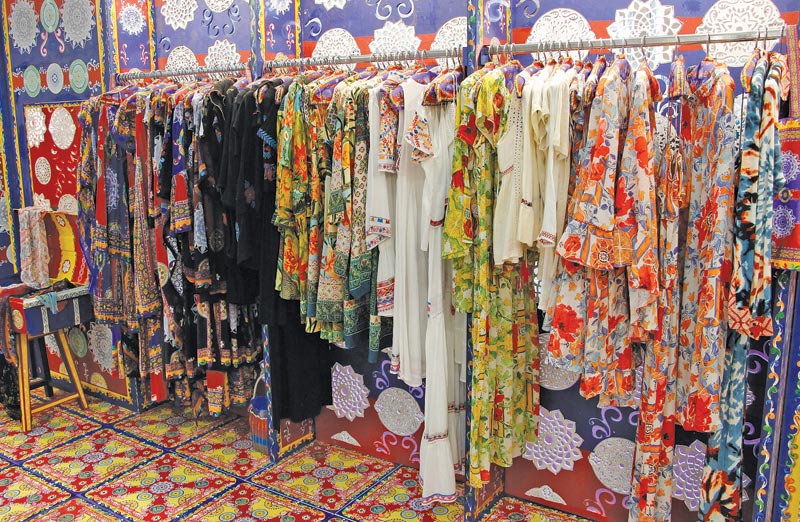
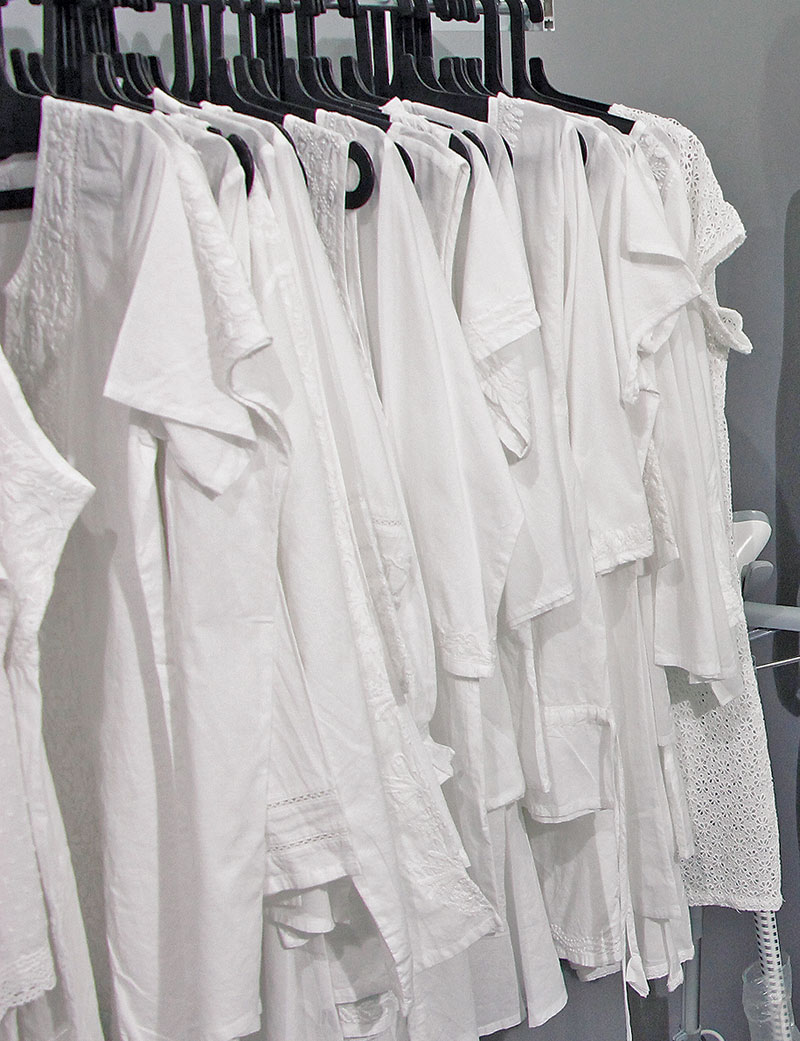
While most exporters are constantly experimenting to keep pace with trends, moving against the tide the Jaipur-based exporter Ganga has devised a unique way to give fresh products to their buyers every season. “We keep our silhouettes very basic, while working on a few set styles mostly in whites. What we do to give a fresh appeal is the value addition on the styles. Since the stitching is set, which does not take much time, and value addition of mostly embroidery is decided, then it becomes easy to reproduce. This way we can keep our prices low and offer something fresh at the same time, says Rajesh Kumat, Proprietor of the company.
Akin to the strategy of Ganga, Minqo Impex is also relying on basic concepts with option to value add at the buyer side or on their instructions. “The strength of our company is manufacturing only cotton all white tops, the market strategy is to give buyers the liberty of picking their choice of pieces and smearing them with their colour pallets and then add Indian techniques like schiffli and chicken kaari for the final look,” shares, Deepak Chandra of the company.
Creating niche within category
Beachwear has become a popular category with many mid-segment players today and for a buyer to differentiate one company from the other sometime becomes very difficult due to the similar use of fabrics and presentation of the product. Growing and constantly investing in the category, Pune-based exporter Star Impex, which specializes in resortwear, has created its niche using only digital printing as a value addition and making flexible garments to double up as evening wear also. “Most manufacturers of beachwear in India are not really concentrating on quality and feel that making wraps and lose tops in sheer fabrics construe beachwear, but we are investing in product development so that different garments can be used as beachwear and for other occasions also. Further, digital prints in multi-colours and designs are our forte,” shares Roshan Lala of the company.
Another company that was capitalizing on similar strength in beachwear was Kokeva Designs, which has been in the business for 25 years manufacturing 35,000 pieces per month for markets in Russia, France, Germany, Australia and UK. The strength of the company lies in offering varied washes and play with fabrics, to create unique concepts in beachwear. “For our S/S ’17 collection we have constructed the garments in such a way that they can be converted from beachwear to casual and even partywear,” said Naveen Duggal, President of the company.
Using high-end technology for perfect product

Even though qualifying as a medium level exporter with a turnover of Rs. 18 crore, SD Enterprises, Okhla, New Delhi boasts of having 12 Shima Seiki flat knitting machines and is in the process of adding 4 more, as business is on the upsurge. Manufacturing, both light weight summer sweaters and heavy gauge winterwear, the company feels that the strength lies in the use of technology to get consistency in quality and quick deliveries. “Summers in Europe are quite chilling in the evenings and sweaters are very popular outerwear with women, so we have strategized to offer best of technology in this category with machine for complicated intarsia for the design edge,” says Vineet Sood, MD, of the company. The response has been very good and Vineet feels that with a combination of supreme technology and responsive service, ‘price’ is no longer a discussion point, so growth is based only on capability. In fact, he proudly shared that recently he created 150 samples in just one-and-a-half days because of his setup.
New products for first entry advantage
Clifton Exports, Tirupur is a name known for circular knits having in-house facilities from spinning to finished product. With a proactive approach, this company which counts Europe as its major market has made a strong attempt to break into the American market with a knitted bralet, the latest fashion craze among youngsters in America. “A bralet is usually made of woven material, but we have attempted to give one in knits and from the response of the buyers it seems to be a winner,” says Anil Varghese, GM Marketing of the company. He adds that today, having good quality products is not enough, it is important to have something unique to attract buyers, otherwise exporters are caught up in the price web.
Work on core strengths with international twist
While many exporters struggle to give something new to the buyer, Sarc Orginals, Jaipur considers tie and dye its biggest strength. “Our marketing strategy is to stay with Indian techniques on internationally-inspired silhouettes keeping tie and dye as the base. Stone wash on fabrics with a lot of bright tie and dye, bagru and block printing have taken this season by the storm. The innovation in the collection is the tie and dye base with 5-7 more techniques applied on the same piece for example, spray, hypo, block printing and appliqués and mixing the fabrics with laces, georgette and embroidery georgettes,’ shares MK Maheshwari of the company.
Another Jaipur-based company Shah Originals, which is working for France, Spain, Italy and American markets for the last 40 years, is continuously playing on its strength of mixing fabrics, prints, different hand-done embroideries and the fusion of bright colours with Rajasthani elements to create its collections. “We are not thinking about expansion but are focused on current status and working on more creative designs, embroidery patterns, and experimenting with prints of different types, like digital, screen and rotary,” avers CD Mehta, Proprietor of the company.
Nature as the driver for product
In today’s world, ‘nature-inspired’ products are really very sought-after and building on this strength Shivam International creates garments that are made from natural fabrics using natural dyes. Their collections are very different from others in the city of Jaipur and many Japanese buyers in particular are very fond of their products. “We are small exporters working on small order sizes, but each piece speaks quality and is inspired from nature. This has been our USP and we are not looking at expansion, but to work with like-minded buyers for whom sustainability is not a concept but a commitment,” says Atul Goenka, President of the company.