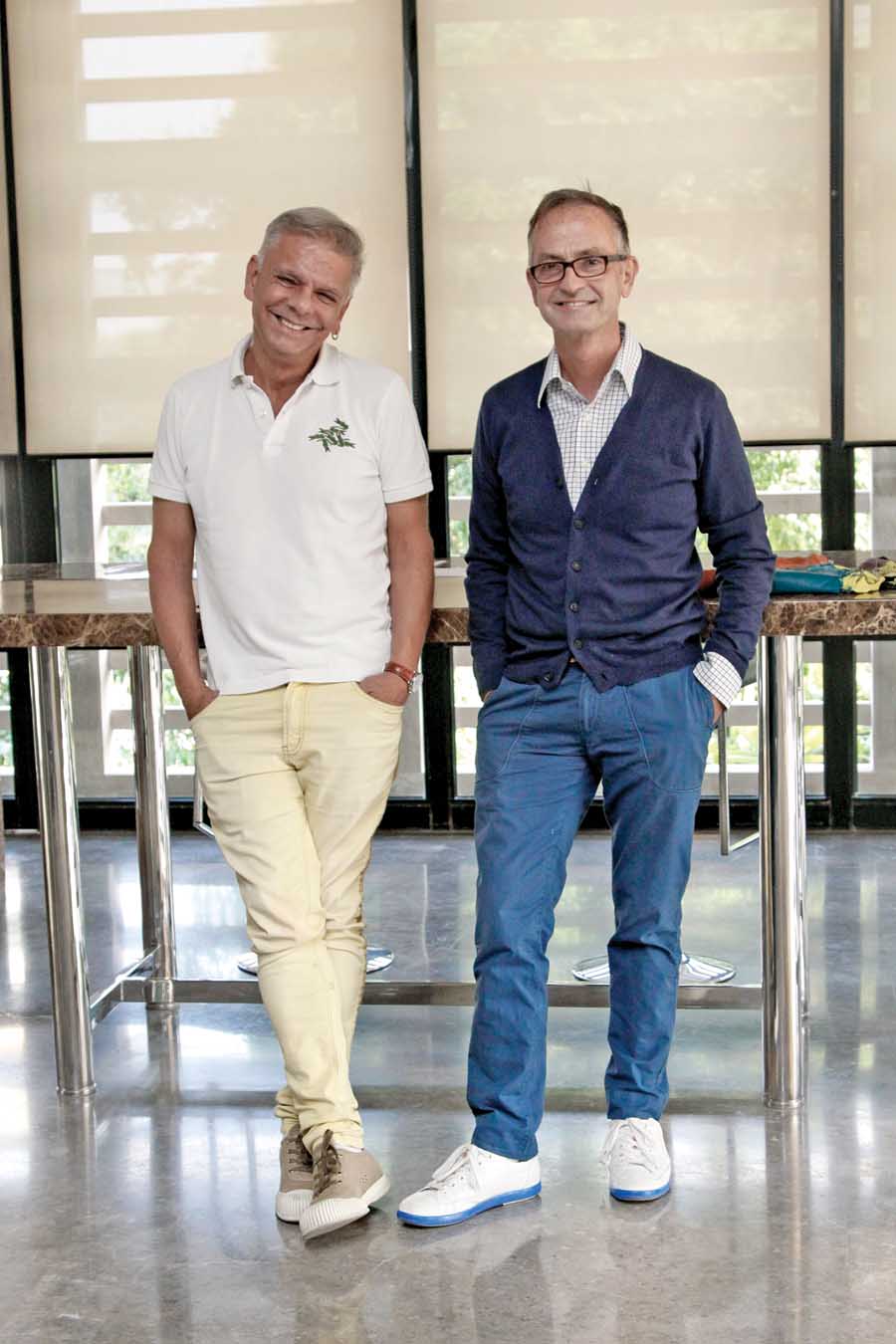
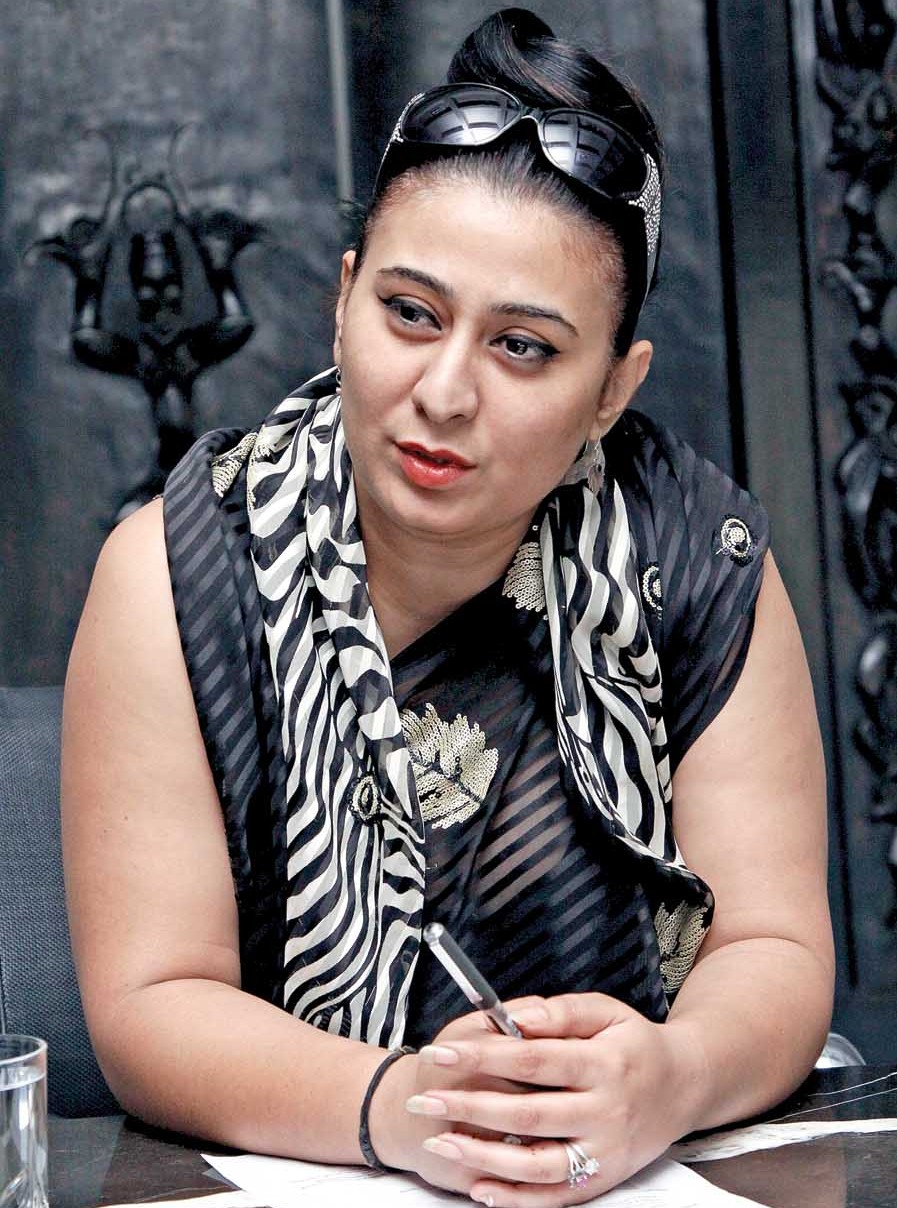
In the business of apparel manufacturing, the two words: ‘industrial’ and ‘luxury’, have rarely been clubbed together. This is due to the fact that an industrial setup is generally required for manufacturing bulk commodity products, whereas a specialized setup of talented artisans would suffice for a luxury-manufacturing unit. The difference lies in the expertise and mindset required for manufacturing a volume-based product as opposed to a high-end product. Perhaps the only company to integrate both business models in India, has been Lecoanet Hemant India Pvt. Ltd., by successfully manufacturing and exporting high-end apparels and accessories with heavy surface embellishments for global brands like Balmain, Kenneth Cole alongside volume-based productions for Indian brands, viz. Madura and Wills. In an exclusive interaction with StitchWorld, Hemant Sagar, Director of the company, highlights his vision of becoming an ‘Industrial luxury brand’. Managing the company with business partner Didier Lecoanet, Hemant recently appointed Pooja Tankha, to spearhead the export division of the company.
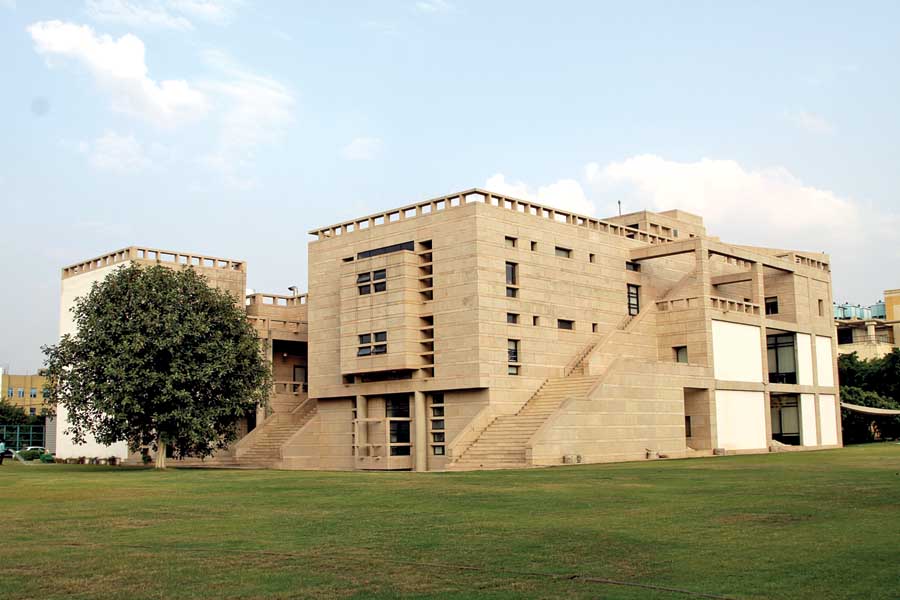
The idea, born out of their friendship, developed while studying at the school of haute couture Ecole de la Chamber Syndicale de la couture in Paris, has come a long way. Today, Lecoanet Hemant has become a complete fashion house, with its operations based in India. The company has its own manufacturing units, producing for some of the best designers and luxury brands of the world. “Before learning fashion, I learned about industrial apparel manufacturing, and working in a sewing line. And only after the factory hours I was allowed to sew dresses for my collections,” recalls Hemant, who has inculcated in himself the culture of hard work and discipline.
It was in 1981 that Hemant set-up a small workshop in Paris with Didier, employing 45 people, which got high recognition from the Ministry of Industry, France. Later in 1984, the company became a part of the prestigious society of haute couture designers – Chambre Syndicale de la Haute Couture. “I had to come back to India to set-up an industrial fashion house of certain scale,” states Hemant, who wanted to fill the void created by the declining number of haute couture manufacturers and the ever-increasing demand for haute couture.
“My inspiration has been luxury brands like Ferragamo, LV, Fendi, Hermès and Bottega Veneta, whose products are handmade but in an industrial environment,” adds Hemant. Presently, the company has 700 sewing machines, four 15-head multi-colour embroidery machines from Unix and a hand embroidery setup of 40 people in-house and 400 outsourced, in Gurgaon (Delhi-NCR). 80% of its revenue comes from the exports of haute and prêt couture products to luxury brands in Europe and USA. Understandably, product development is the strength of the company, which it leverages by providing creative support to its buyers. This includes suggesting the right fabrics, accessories and techniques for better styling, fitting and competitive costing. “Our buyers are willing to pay us more to ensure that the product’s look and quality is up to the mark,” asserts Pooja. The company also does ready-to-wear lines for the same set of buyers.
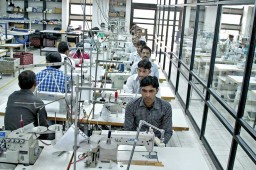
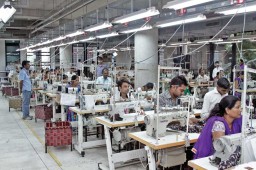
The first task for Lecoanet Hemant’s design team is to analyse the sample styles and design specifications provided by the buyer before jumpstarting the product realization process. “Each designer is assigned to handle a team of sewing operators and is made responsible for the drape, fall and fitting of not only the samples but also the final product,” shares Pooja. The company has integrated IT solutions, wherever possible, in its operations to increase transparency for workers’ efficiency and improving productivity. IT intervention starts with the Optitex CAD systems for pattern making.
In order to monitor garment profitability, it is essential to track orders by controlling the production process, especially the cut-to-ship ratios. Since fabrics and accessories are majorly sourced from overseas at premium prices (owing to the relatively small quantities), controlling their consumption during the production process is a must as it directly impacts the cost of the product. “At Lecoanet Hemant, merchandisers are not pressured for finding a ‘cost-effective supplier’ rather the focus is on finding reliable and quality-conscious vendors with swift turnaround times,” says Pooja.
Perhaps the only company to integrate both business models of industrial and luxury, Lecoanet Hemant India Pvt. Ltd. has been successfully manufacturing and exporting high-end apparels and accessories for global brands like Balmain, Kenneth Cole alongside volume-based productions for Indian brands, viz. Madura and Wills.
Interestingly, small but specialized groups of sewing operators have been formed for making different products such as corsets, gowns, dresses, leather garments, leather accessories and ready-to-wear apparels like shirts, tops, T-shirts, etc. The groups are managed by pattern masters/supervisors who in turn report to the designers. Each group is likened with a small workshop that has its individual cutting centres, which use single ply cutters, straight knife cutters and round knife cutter as per the number of fabric lays. The quality parameters vary from group to group as per the garments’ specifications. Shop-floor layout is manipulated in order to ease material movement between these workstations.
For the high-fashion products, the make-through production system is used to ensure maximum control over the quality of the product and consistent output. “Usually groups consist of five sewing operators, and if the garment is complex, more than one group would be involved in manufacturing a style,” adds Pooja. On the other hand, for the volume-based export business, the progressive bundle system is used. These systems are adopted on the basis of the product type and its complexity. Each operator’s performance is monitored via the job cards by tracking KPIs such as right-first-time quality percentage and the kind of operations being done by them, which in-turn defines their incentives. For in-line quality inspections, quality checkers are stationed at random checks in the assembly line. Since the manufacturing is heavily dependent on the skill set of the sewing operators, they are imparted knowledge of dress making as part of a group, along with knowledge regarding sewing different types of fabrics, and their properties. “We hire skilled workers who are well-versed with the intricacies and peculiarities of sewing different fabrics,” avers Pooja.
Presently, the company has 700 sewing machines, four 15-head multi-colour embroidery machines from Unix and a hand embroidery setup of 40 people in-house and 400 outsourced, in Gurgaon (Delhi-NCR). 80% of its revenue comes from the exports of haute and prêt couture products to luxury brands from Europe and USA. – Pooja Tankha
However, the consistency in quality standards is not dependent on the skill of the workforce as the quality standards are pre-defined and operators are filtered through the same standards before the final hiring. As per their performance against the company’s quality standards, the operators’ job profiles and descriptions are defined. The same process is also the basis of the skill matrix maintained by the company. Moreover, regular and timely workshops are conducted for the operators on understanding of sewing operations, correct needle usage for different base fabrics, technical information of fabric handling, etc. Recently, a workshop was conducted in association with NITRA to enhance technical skills and knowledge of sewing machine operators. It also focused on providing soft skills and instructions on workplace safety – topics that are becoming increasingly relevant in today’s manufacturing environment.
The sewing machines installed in the company are basic machines with under-bed trimmers, which offer increased flexibility and in turn is harnessed by the skilled workforce. A world-class working environment is provided to the workforce. Ample overhead lighting systems and LED needlepoint lights are provided for optimum illumination. Busbars have been installed on the shop floors to aid swift and smooth movement of machines, which is a natural consequence of frequent style-turnover.

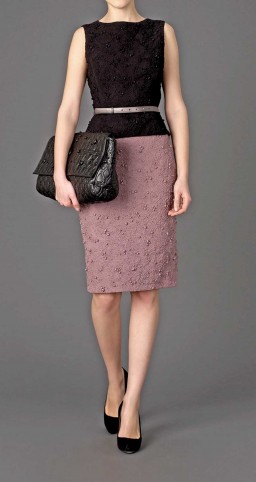
The embroidery department is well equipped to handle various kinds of techniques viz., hand embroidery and specialized machine embroidery. The department houses a set of single head machines which allow numerous variations in terms of heavy thread work, sequins and stylized designs on other materials such as leather. “Such machines are best suited for our requirements due to their flexible and versatile nature. Skilled operators ensure maximum utilization of these specialized machines,” informs Pooja.
The focus of the company is to produce ‘Right-the-first-time’ or ‘Zero defects’ quality levels as rejections and alterations add to the downstream cost of the product, which is exponentially higher in high fashion productions. The operators earn US $ 250 per month on an average, which is well above the industry average. “It is not just the amenities provided by us, rather the environment of the company where the focus is on making sewing operators the dress makers,” shares Pooja. The company conducts many training programs and workshops for its employees, spreading awareness about workplace sexual harassment, family planning and alcohol addiction. Management related workshops and programs are also conducted for the middle management.
Although no lead times are defined for high fashion products, the company boasts of a 90% on-time shipment percentage. “We do not have a lean period because buyers work as per 4 seasons and book our capacities for 1 or 2 seasons in advance,” adds Pooja. With such influx of orders, the company refrains from overbooking its capacities. “We cannot sew a masterpiece under pressure,” concludes Hemant.