London, the newly declared fashion capital of the world, recently organized its first garment sourcing fair, the London Garment Expo, to mixed reviews. As official media partners, Team Apparel Online were special invitees to the inaugural event which was dominated by participants from India with 32 exhibitors. The team interacted with buyers, exhibitors, visitors and the organizers to analyze the undercurrents of the UK market and the growing acceptance of India as reliable sourcing base. Many interesting angles emerged…
Conducted in the Olympia grounds of London city, by Perfect Management London, there was little to fault on the execution of the event, but still many felt that the event lacked the glamour of a major sourcing event befitting of London. The visitation at the event was also not as good as expected and most attributed the low footfall to slow market conditions. On one hand buyers were expecting to see a larger number of suppliers from allover the world, while on the other the exhibitors had to be content with maximum visitation from small wholesale or boutique buyers, with no fixed orders.
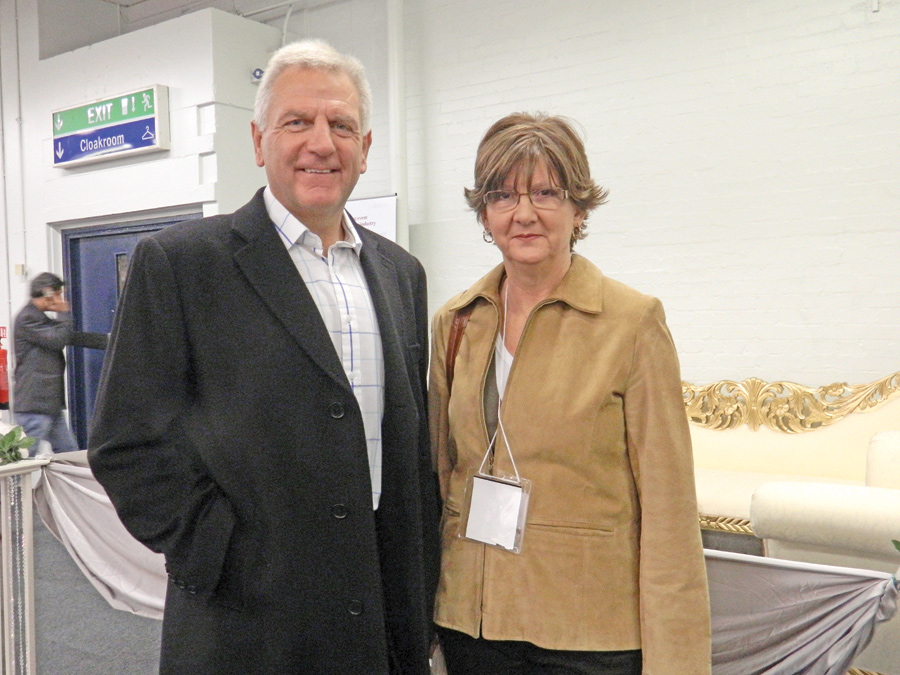
One bright spot for Indian participants was the growing inclination of international buyers to work with Indian players. “We love what India has to offer and would like to source from the country that is why we are here to search some new garment manufacturers. We are focusing on textiles with a lot of print and colour, for both men’s and women’s wear. A-line dresses, tunics, for day wear is mainly what we are looking at in terms of silhouettes, as both our boutique as well as the brand is focused towards a vintage style clothing, including prints and basic contemporary wear,” said Margie Gormley, representing Fox and Bear brand and her boutique in London by the name of Camden Thrift Store.
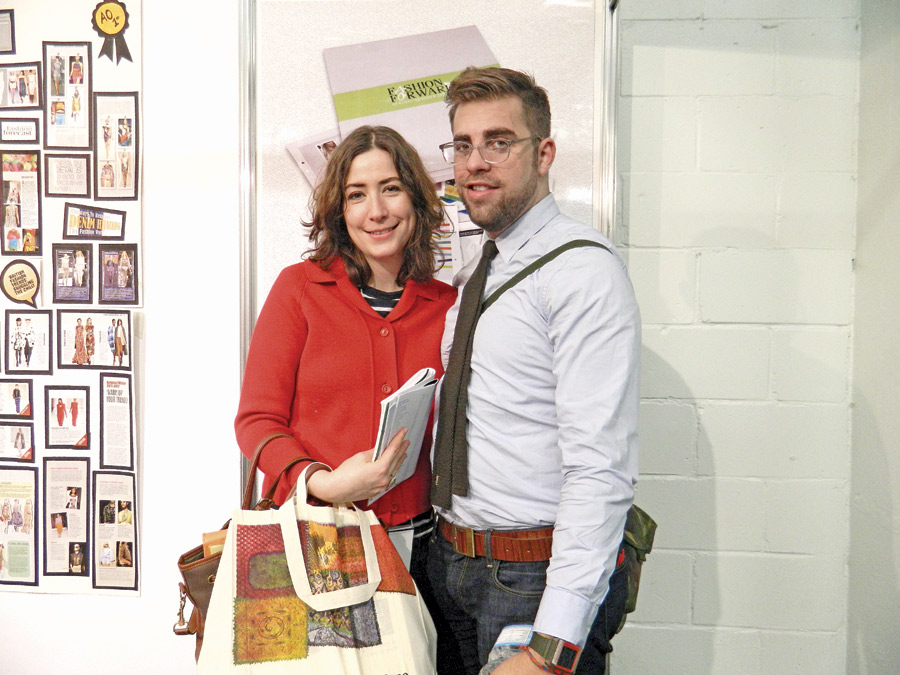
Adding onto the strengths of the Indian market, Grace Cooptaha from Tomabangsaufi in Malaysia said, “We would like to source our bead and sequin work with some embroidery from India, as there is no comparison to the quality of handwork available in India. We are also looking for nice silk because we make sarongs for the Malaysian and Indonesian market where we mix traditional techniques and elements from every culture, with a little contemporary touch to make it more global for which I am specifically looking at tribal prints, embellishments and different colours from India.” Commenting upon the fair, she added, “London garment expo needs to develop to the level of London Fashion Week, including their brochures and sponsors so that it makes it a must visit event, for which the organizers need to be more creative. London is a big city with a lot of serous and extravagant fashion which leaves the organizers with no excuse to not be creative.”
Nicole Watkinson from the Design Atrium in London, who was representing her new startup brand in women’s wear for 25 years to 40 years old women particularly, liked the detailed trims that India is showcasing at the moment, specially the application of laces as trims along with general applications of the cotton fabric. “In times of recession, when the market is flooded with lower price garments we are looking the other way by trying to build a brand that is high on respect, high fashion and more quality ,which becomes a bit more different than what is already available right now. Also, we want to cater to more new and specific markets such as mother and baby with more fashionable products with greater design orientation. In terms of quantities we are looking at only 500 pieces but high on quality in a line of 5 to 10 garments with 2 to 3 fabrics in total,” said Nicole. Commenting upon the fair she said, “We think there should have been more variety of countries participating, especially from Turkey as we predominantly only see Indian participants here.”
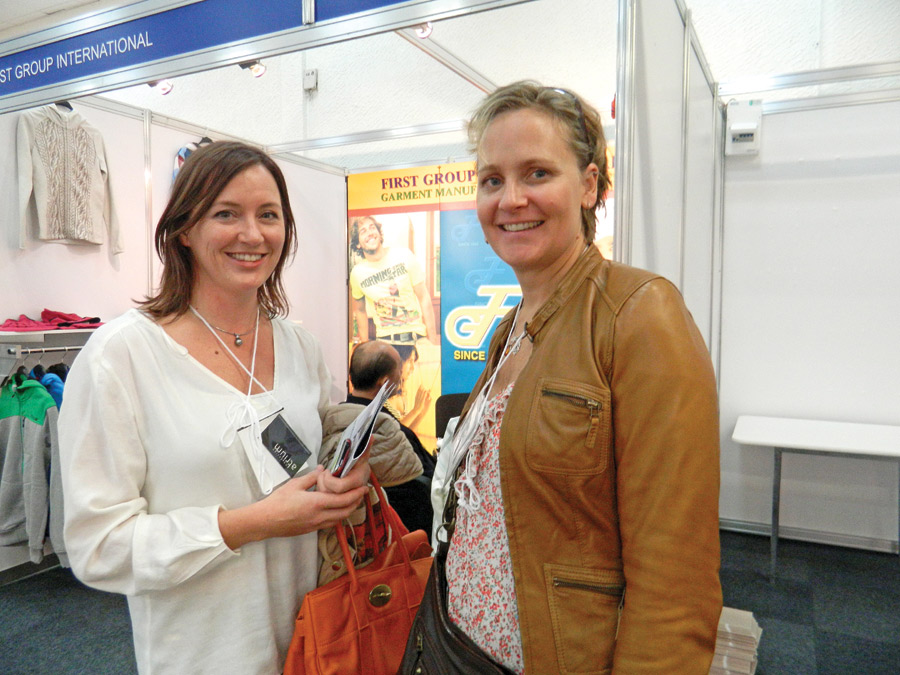
Throwing light on the image of India as a manufacturing base for international buyers, Vik Kumar, Channel Manager of V Amici, an online shop that caters to formal shirts for men’s office wear, in moderate quantities of 1000 pieces said, “I wish to source good quality from India as I personally want to present to the UK market that India is not what it used to be 10 years ago when the garments used to shrink and loose colours. But building confidence for Indian products in the Western world is still quite hard, though brands like Superdry selling products that are made in India, is surely changing the country’s image, but we need to further build on it. Good prices and good quality is what will make India succeed in the nearing times.”
Explaining the lack of business that took place at the fair from the buyer’s end, Marti Borthwick, Sourcing Manager of The Edinburgh Woolen Mill, Scotland said, “Most of the retailers are more interested to see what is on offer rather than placing orders directly. They want to understand what new products, techniques are available that they don’t have, what are the looks that are coming in the next six months and opportunities that they can have for themselves and therefore such fairs are more of relationship building for us. For us as a company, we deal both in menswear and women’s wear.”
[bleft]It was obvious that there is an increased demand from global players to work with India, but countered by the lack of platforms and an authentic database from where the buyers can meet and know about genuine suppliers. While embellishments, cotton, bead work, beachwear and dresses still seem to be the favourites sourced from India, the general sourcing trend has shifted to simpler shapes and individualistic designs rather than printed and jazzy ones. [/bleft]
A regular visitor to IIGF, Karen Hutchings, Director of Goose Island, was present at the fair looking for new manufacturers. “It is very unusual to have an Indian apparel show in UK, so we came here to support the effort. We are looking for some new manufacturers for ladies wear, with good designs, cuts and quality; with some amount of embellishments in sequins, but are not placing orders at the moment. Working with India has been a good experience in terms of pricing, quality and deliveries.”
Buyers, not only from boutiques and brands, sourcing fashionable goods, but from more focused product areas also visited the fair. R M Marshall from R M Solutions, which works closely with the aircraft industry, was looking specifically for workwear suppliers and corporate wear, which included smart uniforms for cabin crew and blouson jackets for corporate wear. Another buyer Marie Summers from North of England and Director of Timeless, which is an international production house doing shows for corporate events and theaters, was looking to source costumes and materials in smaller quantities of 100 to 200 pieces. From India the company wishes to take back sequined fabrics, embellished garments and rich textiles like silk for which they were looking to find some new manufacturers.

Exporters look for new directions
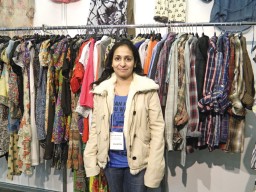
Most of the exporters complained about the minimal footfall and unanimously agreed that reasons like recession, lack of proper publicity and advertising throughout the UK market and absence of an authentic buyer database with the organizers led to a slow response. Rajnish Chaddha, Owner of Rohan Inc., stressed on the fact that AEPC should operate on an updated database that would help the Indian delegates in a much better way in the future. “This fair was an opportunity for us to come back into the UK market after 15 years, but I could not see any big buyers and apart from posters and banners put up in the tube stations no other publicity effort was visible, which was disappointing. Some old buyers who already work with India were not even informed about the fair.”
“The main reason for the slow footfall is the recession both in the US and EU,” stressed Swati, Director, Khemka Klothing who added further, “We used to do a lot for American market, but two years back the market came down, we expected it to recover this year but we have not seen any signs of recovery yet. Even the European market which was doing well previously has come down by 20% and our business itself has been hit by 20%, from last year.” Added, Rajni Seth, Merchandising Manager, Rahul Fashions, “The recession has affected the apparel business in a big way as buyers are asking us to work for lower prices and earlier we were getting orders for 5000-10,000 pieces from big brands, but now those quantities have been reduced to 1000-2000 pieces from the same buyer. The brands are not keeping stocks and the order cycle has also been affected, for instance earlier we were producing styles in a rotation of about 10-20 styles per month, but now we are making only 1 or 2 styles in a month.”
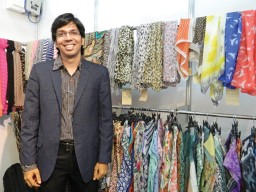
Many exhibitors from India were entering the UK market for the first time and were looking to build contacts and find new opportunities in London. “The response was slow with visitation mostly from small buyers, which is only a tiny percentage of our business. London was never a focus market for us so I am hopeful to tap business from UK,” said Nikhil Thukral, Director, Maharana of India.
[bleft]Most of the exporters complained about the minimal footfall and unanimously agreed that reasons like recession, lack of proper publicity and advertising throughout the UK market and absence of an authentic buyer database with the organizers led to a slow response.[/bleft]
With business being affected and a general slowdown hitting the profits, the emerging trend of small buyers seems to be the new future of apparel exports. With some serious orders of 500-800 pieces coming from small buyers, who aim to grow in times to come, exporters should now also concentrate on the small buyers as Rajni believes, “that they ask for really cheap prices, give late approvals and they don’t understand the seasonal problems and if not services quickly move on to China.” Supporting the thought even Swati said, “We should now look and support the small buyers as they might turn into volume business for us. Big factories usually don’t follow this practice, but as we have come down to orders ranging from 1000-1500 pieces all the buyers are welcome.”
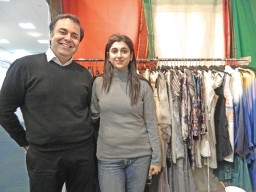
With some exporters willing to take small orders, other players like S K International and Swati Exim still aim to tap the big players. “We don’t cater to the small buyers as it makes the whole process more expensive and people are not ready to pay the price. Also this was not the right time to hold the exhibition with the recession going on and no clear season being specified for the collections,” reasoned Shashi Nangia, MD, Swati Exim. “Small buyers in the market are not really a new trend, they have always been in and out of the scene, and it’s just that earlier not many used to entertain them, but now due to the slack in orders from bigger buyers, exporters have started entertaining them as well. But our setup is such that we can’t really entertain the small buyers as the minimum quantity order that we take is of 1000 pieces,” added Tejal Patel, Director, Paras Industries.
Working even with the smaller buyers seems to have taken an ethical and green pathway now. In UK, buyers are demanding test reports and SEDAX certifications. Supporting this observation Rajni states, “The buyers are really strict about the test reports and compliance issues now, compliance in fact have been really important for the past four years now. Even the small buyers are looking for compliant organizations as their Government has asked them to work only with organizations that are compliant.”