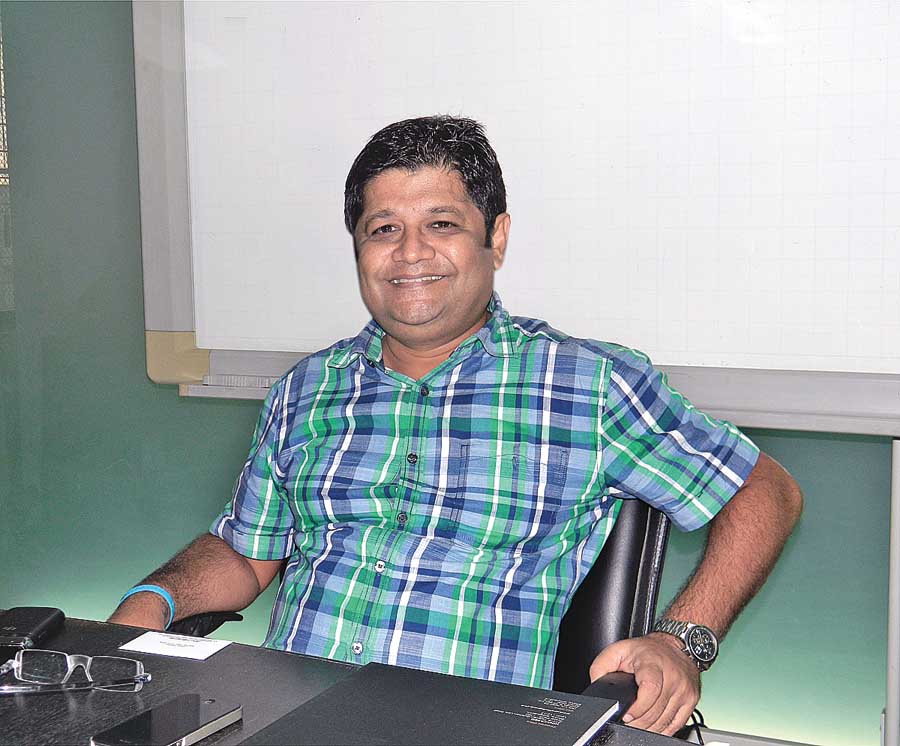
With its sprawling manufacturing plant in Gazipur, Epyllion Group has dedicated 50% share for kids/juvenile clothing. Catering to buyers like Abercrombie and Fitch, Marks & Spencer’s, Esprit, G-Star, to mention a few, H&M is soon going to be in its buyers’ list. Team Apparel Online – Bangladesh met with Reazuddin Al-Mamoon, Managing Director of the company to know why he decided to get into manufacturing of kids garments in which so many criticalities are involved. He says, “You will not get what you deserve; you’ll get what you negotiate…”
“It’s always good to do a business where there are few players to compete with. Everyone cannot handle kidswear as there are so many quality and compliance norms, so when I have fewer competitors, I can make more money,” candidly states Mamoon who prefers doing value-added pieces, and has a very valid reason for doing so. “To be honest, majority of the garment exporters prefer doing basic garments but they miss out on one thing that buyers have umpteen choices in basics and that they would go to only those vendors who give them the best price,” says Mamoon. Defying the myth that kidswear have limited styles, Mamoon adds that there are a lot of styles and detailing in kidswear.
The company started its business with C&A, and today they are the biggest knit suppliers for the retailer in the world. Epyllion also works with M&S and H&M. “We are the full package supplier to all these companies, offering them designs right down to manufacturing,” adds Mamoon.
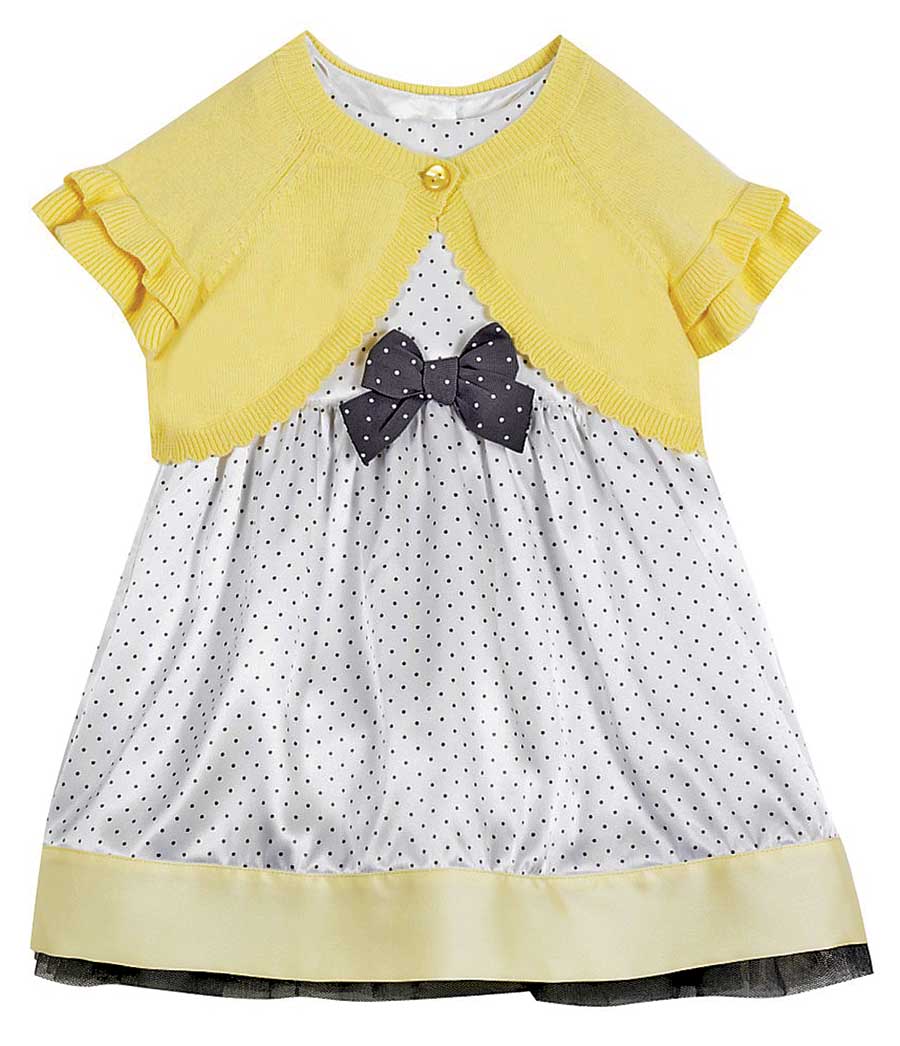 Epyllion since its inception has focused on producing value-added kidswear mainly because of two reasons: Firstly, to be different from other competitors; and secondly, to fetch better FOBs and yet be competitive. “To get good and dedicated buyers, it is very important to be different from other manufacturers. One needs to change, and add on value propositions to stay ahead of competition,” shares Mamoon.
The company believes that change and adopting the best of the technologies is the very essence of growth. “Along with quality services to our customers, we look to it that we move on and change with the changing needs of the time,” asserts Mamoon. Epyllion claims to be one of the pioneers in getting automation in garment manufacturing. “We started the use of IT in our garment manufacturing process and now have full-fledged IT department to take care of our IT needs. We even have our own capacity planning software,” avers Mamoon.
Passionate about sports, especially cricket, Mamoon motivates his young team by citing examples of cricketers who play for their country as a team yet their individual performance is also counted. “I have young people in my company and a few older ones too as you need to balance the aggression with acumen and guidance. I am not at all worried that my workers will make mistakes; the problem starts when some people who do not take decisions, thinking that they may make mistakes. I don’t want such people. I want each of my employees to contribute his best so that my company contributes to the nation,” said Mamoon.
[bleft]It’s always good to do a business where there are few players to compete with. Everyone cannot handle kidswear as there are so many quality and compliance norms, so when I have fewer competitors, I can make more money,”[/bleft]
For Epyllion, one order means one style and the company has set minimum order quantity which is around 5,000 pieces per style in two colours with few exceptions for regular clients for the relationship value. The fabric is decided for dyeing only after the order size is confirmed. “The usual orders we get are around 10,000 pieces and at times it also goes up to 200,000 pieces as the FOB may vary between US $ 1.5 to US $ 4.5 and for babies wear, the basic garment varies between US $ 1.25 to US $ 3,” shared Mamoon.
When asked why would a company do kidswear when its manufacturing requires several stringent safety regulations, compliances and also when the fabric consumption is low… not forgetting that manufacturing the same is also not easy too.
[bleft]“Testing means increasing costs, and in kidswear right from tests like colour fastness to rubbing, shrinking, elongation, you name it and it’s done. If there are 20 tests, the buyers tick all, which is undoubtedly an additional cost. That is why we decided to have our own lab which is accredited by a third party multinational testing lab. Once we get accreditation from one buyer, others won’t hesitate to allow us to test our products in-house.” – Reazuddin Al-Mamoon, Managing Director, Epyllion Group[/bleft]
“Firstly, the shade variation in fabrics which is an ongoing problem while converting the fabric into a garment is lesser in kidswear due to the size of the garment; and secondly, when the delivery date is missed we need to send the garments by air which is very costly for adult clothing, but in kidswear the airlift cost is much lesser as the weight is lesser. Apart from this there are fewer players to compete,” replies Mamoon with confidence.
Organic cotton in kidswear is a huge market for Epyllion, for which a lot of organic cotton yarns is imported from India. Kidswear being the priority business for Epyllion and the category being highly sensitive pertaining to compliances, the company has put up its own lab which was commissioned three months back. “Testing means increasing costs, and in kidswear right from tests like colour fastness to rubbing, shrinking, elongation, you name it and it’s done. If there are 20 tests, the buyers tick all, which is undoubtedly an additional cost. That is why we decided to have our own lab which is accredited by a third party multinational testing lab. Once we get accreditation from one buyer, others won’t hesitate to allow us to test our products in-house,” reasons Mamoon, who started his career as a banker and then decided to get into garmenting with two lines having 60 machines. Today, the company is a vertically integrated company with more than 100 knitting machines and 80 lines for garmenting housing around 3000 sewing machines.
Standing at an annual turnover of US $ 145 million, with two factories and 10,000 workforce, the company is targeting US $ 160 million in next FY.




 Bharat Tex Special Report 2026