The European Union is a unique landscape of many countries with diverse cultures and fashion sensibilities and tapping this market requires a very focused and planned approach, as it is a huge market with great potential. Interestingly, in 2018, clothing stores in the EU generated a turnover of €222.4 billion through retail sales of which approximately 148.17 billion came from imports from various manufacturing destinations.
The fashion supply chain is very complex having numerous operations taking place along the entire supply chain, which includes designing, sourcing the products at the right price and on time, sorting, transport, storage, quality control, packaging, palletising, preparing orders for clients and/or its own stores and finally selling in retail formats. Each of these stages not only adds a value that contributes to the overall cost of the product, but also adds to the risk of failure of any part of the supply chain, which disrupts the availability of the product; an eventuality that the retail chain has to be prepared for. Complicating the dynamics further is the constant demand for changes in product assortment that invariably generates changes in the whole supply chain.
Creating a bridge between the retailer and manufacturers of fashion, with commitment to meet all the evolving needs of retail is a wide buyer/sourcing matrix that includes direct sourcing by major retailers, representative sourcing by international trading houses and also distribution of fashion through a vibrant wholesaler/importer network spread across the region.
The major retailers and brands of Europe are known to most companies that are manufacturing for fashion and most of them either have liaison offices in sourcing destinations or are represented by global trading companies in manufacturing countries. Amongst the top 250 retailers of the world that have origin in Europe and are major buyers for the manufacturing destinations are IKEA Group (27th; US $ 37.4), Sainsbury (28th, US $ 36.6), LVMH Moët Hennessy (32th, US $ 33.3), Inditex (35th, US $ 28.9) and H&M (43th, US $ 23.2). Retailers like M&S, C&A, Primark, Next to name few, also feature prominently as major buyers.
However, the retail story for manufacturers in sourcing destinations is not limited to buying by these retailers/brands, there are the trading houses who buy on behalf of retailers like Li & Fung, New Times, Asmara which have international presence, and then there are also some trading houses which are local to each country like Triburg, Impulse and source exclusively within a country.
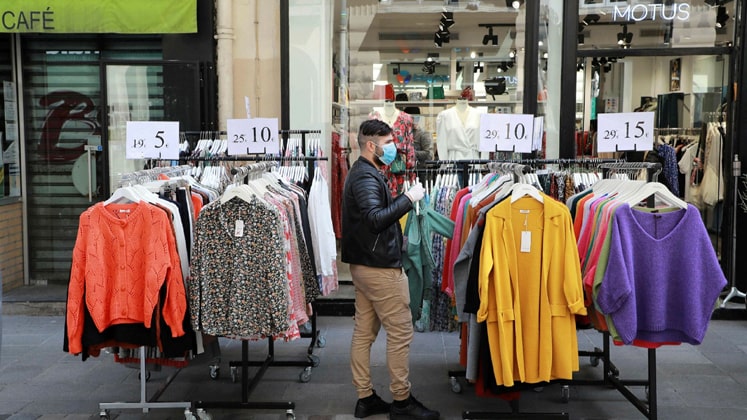
Besides the big retail/brands, Europe is also dotted with over 3.6 million smaller chains and stores, buying for which happens through a strong fashion wholesaler structure within those countries and who buy locally through robust international networks. Reaching these retailers is a challenge, but could be very fruitful if the right approach is put in place. Many exporters in manufacturing destinations work for the European market through these wholesalers/importers who represent buying by smaller brands, labels and boutiques, besides numerous chain stores that also have their own brands and private labels. It is pertinent to note that even the big retailers buy from the wholesaler/import network to fill their shelves for current favorites, short notice demands or when their deliveries do not reach them on time and the retailers/brands need merchandise to fill the gap.
Wholesalers play important role in fashion distribution network
Acting as an interface between producers, importers, manufacturers and retailers, there are currently 1.8 million wholesale enterprises representing various industries in Europe that engage around 10.6 million people. With a collective turnover of €5.970 trillion, many wholesalers provide integrated B2B services on national and international markets, as well as attractive financing solutions, thereby offering additional support to their customers.
Though it is difficult to peg just how many fashion-specific wholesale companies are active in the region, official data claims that in 2016, clothing and footwear wholesalers in the EU generated a turnover of approximately €147.6 billion, and in 2019 buying by wholesalers/ importers in fashion clothing was to the tune of €80 billion, highlighting the role they play in the fashion supply and distribution chain.
These wholesalers are working on both the traditional stock model of operations where wholesalers get apparels manufactured based on what they believe will work with their client base and stock the same for sales in their warehouses, as also the more recent approach- Dropshipping, wherein a store doesn’t keep the products it sells in stock, but instead, it purchases the item from a third party and has it shipped directly to the customer.
Some of the wholesalers/importers who are active in the Europe and sourcing from South East Asia and are working as pure aggregators of fashion clothing for smaller retail formats include Accent Aps, Aperitif Sjaler, Baba Jaga (Denmark), Oliver Sarl, Sarl Nayats, Atmiya Sarl (France), Atchaum, Beltra Tex, Cada Chica (Belgium) ; Cardoon Collection, Franchetti , Granath Living (Sweden) to name a few. In fact, almost every country such wholesaler/importer operations exist which feed fashion retail.
It is interesting to note that many wholesalers have themselves developed highly successful private label brands in collaboration with suppliers and are sourcing for these products categories directly, which they eventually sell to retailers across the region. Many wholesalers/imports are stockiest of only well-established brands. The avenue for business collaborations is many, it is critical to identify what works best for both parties.
While each country in the European Union has its own set of wholesalers there are some that work across the region and source fashion in large quantities from all major manufacturing destinations for retail formats across the EU. These wholesalers operate either as standalone showrooms, collective presence in dedicated trade centers and modern-day B2B Malls, and/or also as online fashion wholesalers, which is the most recent addition to the wholesaler network and has gained traction because of the restrictions on travel post outbreak of the pandemic.
The most sought out wholesale opportunities are at Trade centres/B2B malls that provide manufacturers an opportunity to search for the buyer that matches their capabilities, product strengths, capacities and work systems including payment terms, under one roof.
One such well-established wholesale destination is The Fashion Centre in Paris, a unique B2B Mall of fashion wholesalers that boasts of over 260 wholesalers’ showrooms of clothes, shoes and accessories. Famous fashion trade centres in Germany include Dong Xuan Center, Berlin and IMOTEX, Pronto Moda.
Some wholesalers that are very accessible online, include – Missi Clothing, Q Clothing, Parisian (all based in UK); Ever Pretty, Inter Grosshandel and World of Wear (Germany); Catwalk (France); B2B Griffati (Italy); Albano’s and HHG (Spain); Stock Polska and Yournewstyle (Poland). All these wholesalers have active websites and contacts can be established through the official links, many of them also have showrooms for retailers that would like to see the product before placing an order.
It is imperative to understand that wholesalers are very competitive and the prices they offer to manufacturers is usually below what a retailer would directly offer through its sourcing network. It is here that innovation plays an important role for measuring competitiveness. Also, being so close to the consumer, wholesalers receive feedback every day on how well they, and the overall market, are performing. To reflect this in retail and consumer needs, they can incrementally adapt their services and value propositions accordingly, through continual innovation.
In a highly competitive market, European buyers always remain interested in knowing about new suppliers, but they connect only if they get something better than what they are getting from their current suppliers – and that’s logical. Hence it is very important for manufacturers to get the approach right when connecting with the buyers. Some key considerations:
- Know your USP before meeting the buyer
- Understanding buyers in a value chain
- MOQ and price matter…
- Create a website and promote it online
- Find potential buyers in online databases and sector associations
- Trade events and shows help too
Identifying a buyer either in direct retailing or through a wholesaler is the beginning of a long journey to establishing trade relations that create a win-win situation in the long run, so it is critical to understand the buyer, what type of retailers they represent and according set the tone of business opportunities in line with internal strengths.
Small buyers, importers and wholesalers account for 70% of apparel exports from India
Looking to tap new buyers in Europe…Get the right approach!



 Bharat Tex Special Report 2026