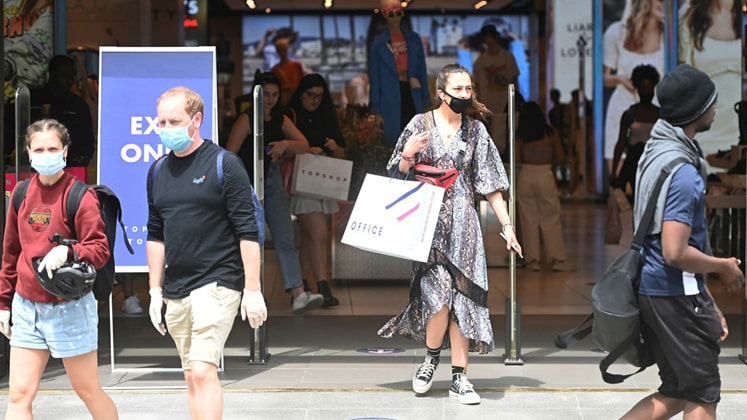
The European Union is a unique landscape of many countries with diverse cultures and fashion sensibilities and tapping this market requires a very focused and planned approach. Though the major retailers and brands of Europe are known to most companies that are manufacturing for fashion and their websites clearly define the product assortments that they stand for, the region is dotted with over 3.6 million smaller chains and stores, represented by a strong wholesaler structure. Reaching them is a challenge, but could be very fruitful if the right approach is put in place.
Acting as an interface between producers, importers, manufacturers and retailers, there are currently 1.8 million wholesale enterprises in Europe that engage around 10.6 million people. With a collective turnover of € 5.970 trillion, many wholesalers provide integrated B2B services for national and international markets, as well as attractive financing solutions, thereby offering additional support to their customers.
While each country in the European Union has its own set of wholesalers, there are some that work across the region and source fashion in large quantities from all major manufacturing destinations. Amongst them a few of the better-known names are: Missi Clothing, Q Clothing, Parisian (all based in UK); Ever Pretty, Inter Grosshandel and World of Wear (Germany); Fashion Centre and Catwalk (France); B2B Griffati and Brands Distribution (Italy); Albano’s and HHG (Spain); Stock Polska and Yournewstyle (Poland).
Amongst the top 250 retailers of the world that have origin in Europe and are major buyers for the manufacturing destinations are IKEA Group (27th; US $ 37.4), Sainsbury (28th, US $ 36.6), LVMH Moët Hennessy (32th, US $ 33.3), Inditex (35th, US $ 28.9) and H&M (43th, US $ 23.2).
In a highly competitive market, European buyers always remain interested in knowing about new suppliers, but they connect only if they get something better than what they are getting from their current suppliers – and that’s logical.
So, if you are an apparel manufacturer, residing in any part of the globe, then you need to find only those European buyers who perfectly blend with your company. Here it is important to remember that any supplier that approaches a buyer in Europe’s highly segmented market without proper research and analysis may have to bite the dust, more than often. The question then is how you find the preferred buyer in Europe.
Know your USP before meeting the buyer
It is important to understand one’s unique selling points, or USP, before meeting a buyer. Isn’t that the most basic homework to do? The product or the service that makes you stand out in a crowd is what will help the supplier to stand out in front of the buyer. And if it is not your product, it could be the cost, innovation or any special product that not many other suppliers are making; in other words anything that makes you and your product unique will get you closer to the preferred buyer.
Understanding buyers in a value chain
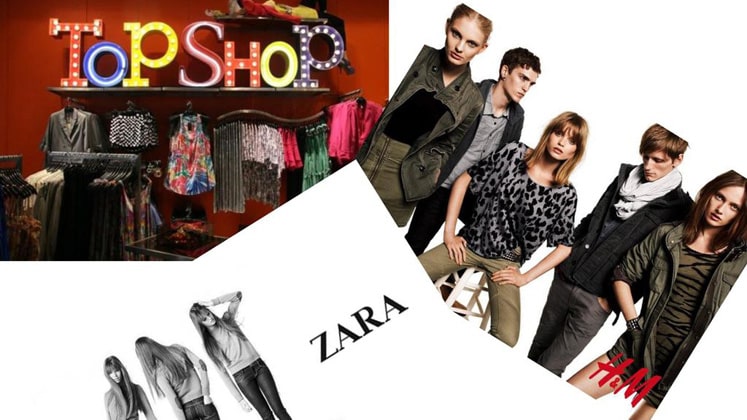
In a value chain, there are buyers with different needs and different market sizes and each of them needs to be approached differently. If the target is fashion retailers, then H&M (Sweden), Zara (Spain), Topshop (UK) or Hema (the Netherlands) remain some of the big names across Europe. Then there are multi-brand retailers like Asos or Zalando which sell existing brands and may have their own collections as well. Such retailers place small test orders first and if the item sells well, they end up placing the actual production order. Yoox is another such multi-brand retailer.
Then there are brands like Kings of Indigo (North Holland) and Drykorn (Germany) that develop collections 6 to 12 months in advance. These brands focus a lot on price aspect and demand flexibility in quantities and qualities. While some like Li & Fung are located near or in the production countries and primarily do sourcing and logistics, some others like Dr. Rehfeld (Germany) and Trademarktex (Denmark) work from Europe.
MOQ and price also matter…
A small or a medium-sized apparel manufacturer in a developing country should approach buyers like intermediaries, followed by small- or medium-sized (niche) brands and retailers in the medium- to high-price segment. Those having large factories can focus on larger orders for multi-brand online platforms and big brands – provided they also have right certifications and production efficiency. Some of the low-, medium- and high-price segment fashion brands and retailers across 7 big European apparel markets (Germany, the UK, Italy, France, Spain, the Netherlands and Sweden) include the likes of Hugo Boss, s. Oliver, New Yorker, M&S, Superdry, H&M, Diesel, Sisley, Promod, Nudie Jeans, G-Star and Massimo Dutti, amongst many others.
Create a website and promote it online
Whether many apparel suppliers believe in having their own website or not, the fact remains that if a buyer, say in Germany or Italy or any other country, is not able track a supplier online, then that’s a business opportunity gone waste. So, in addition to having a professional website, which doesn’t require much investment, the supplier should focus on attracting potential buyers through social media platforms. Since we are talking of luring European brands and retailers, the suppliers can best connect them through LinkedIn and then join specific apparel sourcing groups to build contacts. Building contacts through Facebook and other platforms are only bonus.
Find potential buyers in online databases and sector associations
There are many websites that will allow you to search and find potential buyers in a database of European companies. Retail-Index (https://www.retail-index.com/) is an online database with profiles of major apparel retailers in Europe. Other way is to sign up on matchmaking platforms used by European apparel buyers and then connect with them. Alibaba is one such platform that is world’s largest online B2B marketplace and also one of the most popular platforms in Europe. It allows buyers search for suppliers of many different products, not only apparel, but also by country, product category, MOQ, total revenue and certifications. Besides, there are many other platforms like Foursource (https://www.foursource.com/), Indiamart and Sewport (https://sewport.com/). Indiamart (https://www.indiamart.com/) is globally the second-largest online B2B marketplace after Alibaba, and is aimed at Indian suppliers.
Talking of sector associations in the apparel industry, these represent and support member companies, and thus offer opportunities to connect with potential buyers. Besides, the International Apparel Federation, the European Branded Clothing Alliance, which represents more than 60 member companies, is also popular in Europe. Then there’s Eurocommerce that consists of 34 big European retailers and wholesalers. While the Fashion Council Germany supports over 100 German fashion brands and retailers, FHCM supports high-end apparel brands of France. Similarly, suppliers can find the best of British fashion brands at the UK Fashion and Textile Association. And if someone is interested in Swedish fashion brands, then the best place to be at is the Association of Swedish Fashion Brands. For those looking for buyers in specific apparel categories, there’s PCIAW (for workwear) and Children’s Fashion Europe (for kidswear)
For an overview of national sector associations across Europe, check the member page of EURATEX (https://euratex.eu/), which is the European confederation of textile and apparel associations.
Trade events and shows help too
There was a time trade fairs were the most important events for buyers and suppliers to meet and do business. They may have lost their relevance lately, but still one can find best of the European buyers in shows like Texworld, Intertextile, Premiere Vision (all good for fabric buyers), Apparel Sourcing, Interfilière, ISPO, A&A (for apparel manufacturing buyers) and Italy’s Pitti Filati (for fibre and yarn manufacturers). Once the event is over, suppliers can reconnect with them by sending them samples or responding to the queries asked by buyers at the event.
Support organisations too can help apparel industry in developing countries by offering export coaching. Active participation in developing programmes can go a long way in setting up a business potential in Europe. Confederation of British Industry is one such organisation that offers export coaching, including marketing advice and matchmaking to SMEs in 35 countries.
While all the aforementioned factors may not necessarily guarantee finding a buyer, but it surely will help in the journey to start the export business with the European fashion sector.
As someone rightly said ‘little by little one walks far’!



 Bharat Tex Special Report 2026