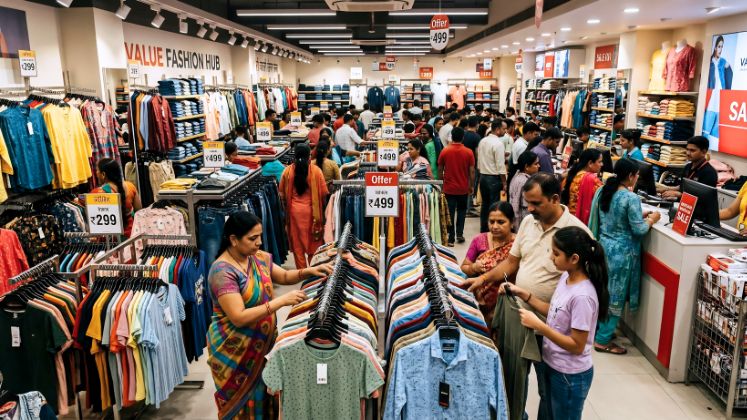
Value apparel retailers are likely to report 16% year-on-year revenue growth in Q4 FY ’26 and are expected to outperform premium retailers, driven by a recovery in same-store sales growth (SSSG) and expansion in retail space.
According to HDFC Consumer Discretionary report, Value-focused companies such as V-Mart Retail are expected to report +24% YoY revenue growth to Rs. 9.7 billion (US $104 million), with SSSG of around 12%, while Vishal Mega Mart is likely to post 16% YoY growth to Rs. 29.7 billion (US $319 million). In comparison, premium and department store formats such as Shoppers Stop are expected to deliver relatively muted growth of around 6% YoY to Rs. 10.8 billion (US $116 million), reflecting weaker discretionary spending in higher price segments.
The sector’s growth is also being driven by aggressive retail expansion, particularly in Tier-2 and Tier-3 markets. V-Mart added 29 stores (net) during the quarter, taking its total store count to 577, while Vishal Mega Mart is expected to add around 30 stores in Q4 FY ’26. Trent, which operates Westside and Zudio, is projected to report 20% YoY revenue growth to Rs. 49.4 billion (US $530 million).
Aditya Birla Lifestyle Brands is expected to see moderate growth of 7% YoY to Rs. 17.5 billion (US $188 million) in its lifestyle segment, although its youth and innerwear businesses are projected to grow faster at 28% YoY to Rs. 3.9 billion (US $41.90 million).
Profitability in the apparel segment is expected to see a modest improvement, with margins rising by around 40 basis points YoY, driven by operating leverage from higher sales volumes. V-Mart’s EBITDA margin is projected to increase by 150 bps to 10.3%, while Vishal Mega Mart’s margin is likely to remain stable at 14.1%.
In contrast, Shoppers Stop may see margin pressure, with EBITDA margin declining by 30 bps to 2.8% due to discounting and weaker premium demand.
The broader consumer discretionary universe is expected to report 23% YoY revenue growth and 29% YoY EBITDA growth in Q4 FY ’26, with apparel being a key contributor to the recovery.
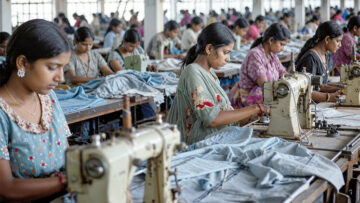
The improving outlook in apparel retail is also expected to support the upstream textile value chain, including fabric and garment manufacturing.





 Bharat Tex Special Report 2026