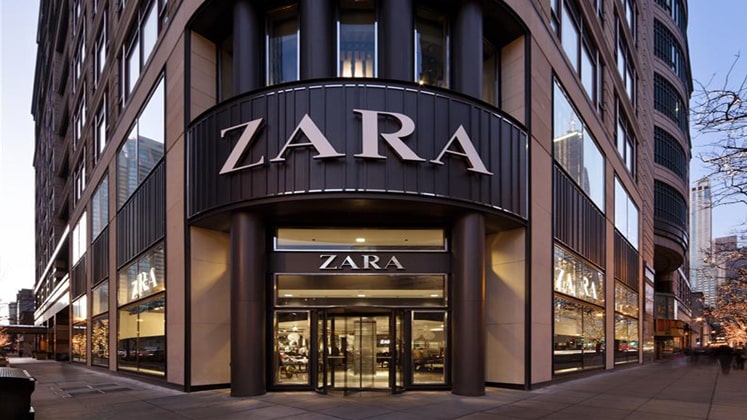
Spanish retailer ZARA and its owner Inditex Group have revolutionised the industry through fast fashion at rock bottom prices which is often rebuked as it pushes low quality disposable garments, dubious labour practices and environmentally irresponsible fabrics. But contrary to the perception, it is considered amongst the most sustainable brands in the world witnessing a sharp YOY business increase. ZARA’s extensively accepted business model has kept its customers happy and the company on top form by providing clothes that keep its consumers looking fashion forward. Talking exclusively to Apparel Online, Raúl Estradera, spokesperson for Inditex throws light on the group’s sustainability efforts and its inherent importance for the growth of the company.
Importantly, sustainability and environmental management have been amongst Inditex’s strategic variables since 1995, out of which building environmental friendly stores equipped with cutting edge technology for energy saving aimed at reducing CO2 emissions, has brought the retailer at the helm of being amid the top global brands working towards a sustainable future. While building eco-stores on one hand, the company is also currently refurbishing and redesigning its existing stores to improve their technology, optimize their environmental management and lower CO2 emissions by 30 per cent. “Inditex Group has been operating an environmental policy and a global environmental management system that allows us to maintain the company’s pace of growth while also meeting stringent environmental standards,” informs Raúl. Incorporating various green features, the company reaps energy savings of 30 per cent and water savings of 70 per cent per year in a traditional store while reducing its carbon emission rate by over 150 tonnes annually.
The Spanish retailer has added state-of-the-art efficient vehicles to its current fleet, contributing to packaging reduction, while training its drivers to lower fossil fuel consumption. ZARA’s fleet of lorries, which transport more than 200 million items of clothing a year, use 5 per cent biodiesel fuel which allows reduction of CO2 emissions by 500 tonnes. Further, the Group provides training to its employees on environmental awareness, while improving their personal and professional development. “Various awareness campaigns and specific multimedia-based training programmes are also organized to educate the staff in sustainable practices, such as limiting energy consumption, using sustainable transport and modifying behaviour patterns,” adds Raúl.
-
The Eco-efficient Store Manual helps minimize the environmental impact on all sustainability variables through a 30% decrease in energy consumption.
-
Inditex reached an agreement with the Galician Regional Government (the Xunta de Galicia) to create a Seed Bank and implement a Forest Eco-system Improvement project.
-
Pull & Bear plans to replace printed catalogues with an online version and plant 16,500 trees in the Sierra Gorda Biosphere Reserve in Mexico.
-
OYSHO supports WWF campaign to raise public awareness about the situation of the seas and make consumers and policy makers responsible for their protection.
In addition, the clothing label has promised to eradicate discharge of hazardous chemicals from its supply chain and product by 2020 following public pressure, in response to the Greenpeace’s Detox campaign. As part of this radical change in production, ZARA plans to enforce its suppliers to disclose all releases of toxic chemicals from their facilities to surrounding communities. “For our products, we are promoting the assessment of eco alternatives in the development of new auxiliary products and materials, while we are promoting more efficient water consumption at own manufacturing centres, stores and throughout the supply chain,” reveals Raúl. ZARA uses ecological fabrics and supports organic farming by making some of its garments out of organic cotton (100% cotton, completely free of pesticides, chemicals and bleach).
Through implementation of an eco-friendly management model in all the ZARA stores, the clothing label aims to reduce energy consumption by 20 per cent, including the design itself, the lighting, heating, cooling systems and the possibility of recycling furniture and decoration. Recycling hangers and alarms, which are picked up from any of the stores are processed into other plastic elements, and is an example of the label’s waste management policy. Millions of hangers and alarms are processed each year and both the cardboard and plastic used for packaging are also recycled.
Globally, the company is leaving no stone unturned to maintain its position as one of the sustainable brands. In India, through the Vidya Project, which was initiated in 2009, the company checks risks associated with unauthorized subcontracting as the country accounts for a total of 5 per cent of the group’s manufacturing. The Vidya Project eliminates employment of workers below the age of 18; guarantees supply of safe drinking water; workplace health and safety; emphasizing on fire prevention plans; employee training, etc; guarantees that the minimum wages are paid; and minimize or fully eliminate the suppliers need to outsource work to subcontractors in around 622 factories in India. “The Vidya Project, an initiative of the Inditex Group’s Corporate Social Responsibility teams, is intended to correct risks associated with the use of unauthorized outsourced work in northern India. It particularly stressed the need to upgrade technology and boost the production capacity of all suppliers as a vital tool for exerting control over the outsourcing process,” maintains Raúl.
Although, ZARA has expanded its presence globally, the Spanish apparel company has built its strategy around consumer trends, embracing the fast-changing tastes of its customers. To do this successfully, ZARA has developed a highly responsive supply chain that enables delivery of new fashions as soon as a trend emerges. Strategic global expansion, a commitment to sustainability efforts and keeping consumer demands at the forefront, ZARA continues to be a leading global retail brand… “Because it is our responsibility towards our clients, towards our employees, and towards the sustainable development of our society and environment,” concludes Raúl.