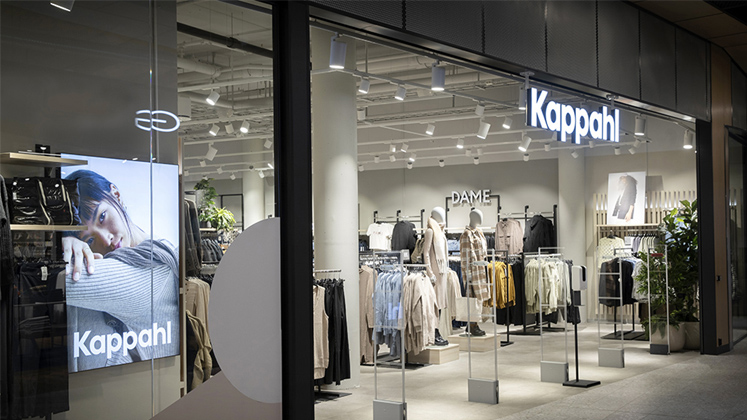
The 2021 sustainability report of Kappahl, released today, sets out a new climate change strategy, a new code of conduct and new collaborations that clearly demonstrate its serious commitment to sustainability.
Founded in 1953 in Gothenburg, Sweden, the Kappahl Group is a leading fashion chain in the Nordics, with around 370 Kappahl and Newbie stores. 75 per cent of its range is made of more sustainable materials, with the goal being to make it 100 per cent by 2025.
In a release, the company said that a fashion chain requires adaptation to act in a sustainable and responsible manner. Kappahl has, therefore, produced a climate change strategy with the aim of achieving growth, while at the same time cutting its carbon footprint to half by 2030.
It covers the entire chain, from the design stage through production to the user phase. It includes switching to renewable energy in production processes, offering circular, sustainable solutions, and choosing markets for which air freight is not required.
“Kappahl will both grow and be aligned with the Paris Agreement climate goals. We will achieve our financial growth targets, and our carbon emissions will decrease each year. It is therefore pleasing that we achieved a record sales performance and a reduction in emissions in 2021,” said Sandra Roos, Vice President – Sustainability of the company.
Elisabeth Peregi, CEO of the company, said “Looking ahead, successful companies will also have to be sustainable. We need to have a profitable business model, with fewer garments in circulation, and be able to offer longer lasting clothing with circular, sustainable solutions.”
Kappahl also revised its code of conduct, Sustainability Commitment, in 2021. The responsibilities and obligations of the entire supply chain under the code are to ensure that human rights are respected and that climate change issues are considered at every stage. This applies to Kappahl, its suppliers and their sub-contractors.
“Our code is designed to engage our suppliers to feel driven by our commitment to create long-term relationships and act with fairness and integrity towards one another as business partners,” says Sandra Roos.