Registering a continuous downside of revenues since 2010, KappAhl, listed as Sweden’s second largest chain of stores for women, men and children, has recently recorded its biggest downfall as net sales decreased by 5.8 per cent for the first quarter of 2012, and sales in comparable stores fell by 8 per cent, compared to the same period last year. Blaming its decline on its own ‘misguided’ women’s range which failed to attract the customers and led to increased inventories in the past, clearly visible are even weaker signs of recovery in the near future. The company has consequently slowed down its rate of expansion by postponing the planned opening of stores in Austria concentrating on earning profitability in its existing markets…
From an exceptionally large inventories pile-up in the financial year of 2010-2011, last year was mostly about a higher than normal percentage of clearance sales having a negative impact on sales of new goods, and higher purchasing costs due to suppliers’ shortage of capacity, rising raw materials costs along with increasing payroll expenses. Commenting upon the negative growth chart back in 2010 – 2011, Christian W. Jansson, President and CEO then (Till 30th November 2011) was found saying, “We had a weak start and an even weaker continuation. This is nothing we are proud of. The foundation of all we do is to offer value-for-money fashion with wide appeal. The weak market, combined with our offer being too narrow, ultimately led to reduced profitability and a high inventory level, which we are working hard to rectify. At the same time as we are selling our stocks we must fill our stores with new items, which is a balancing act that takes time.”
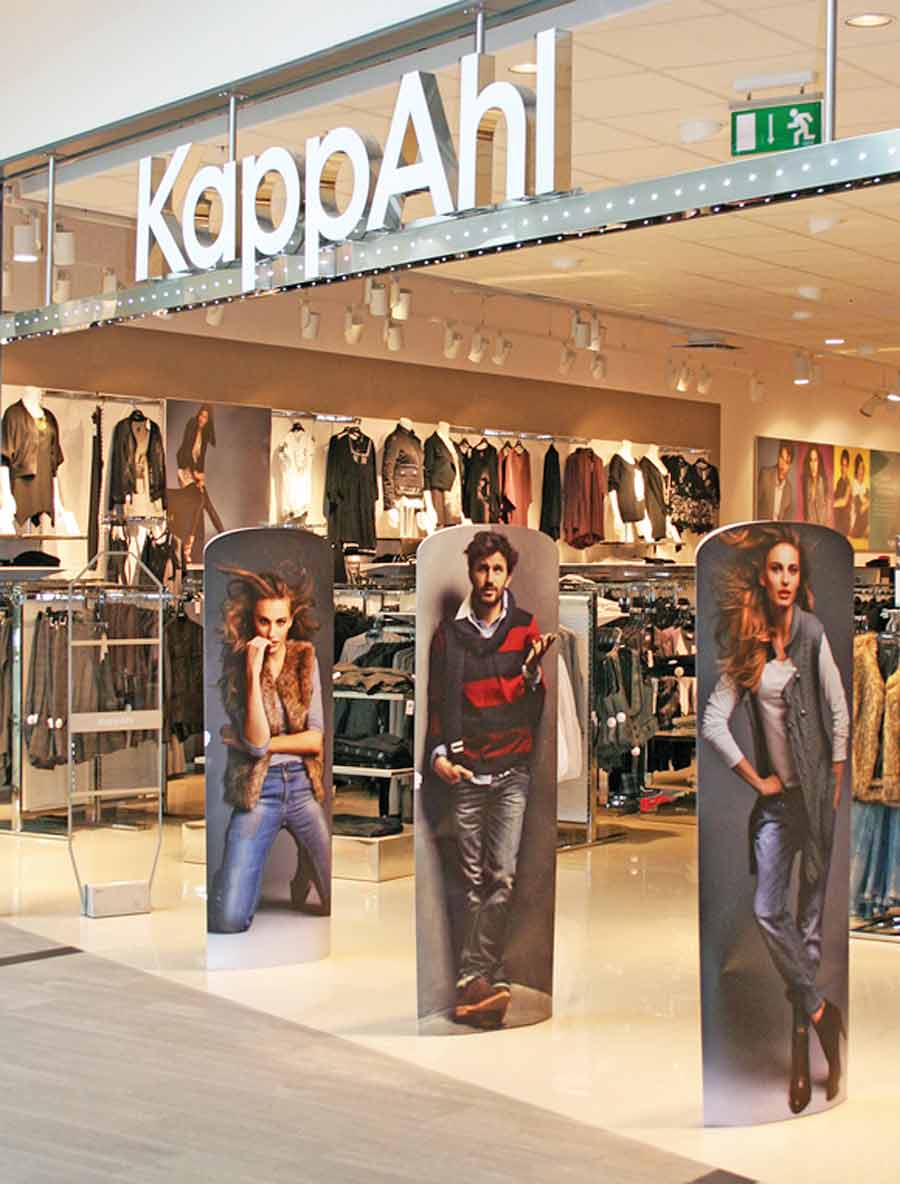
Even the appointment of a new CEO has not led to too much of a change in the company’s downturned situation, as he continues to tow the same lines, but with some hope for recovery. “Behind us we have a quarter in which work on reducing the inventory level has had an effect. The second quarter is traditionally a quarter with a lower inflow of new goods and a high percentage of clearance items. This means that performance in the first quarter runs into our second quarter,” said Johan Åberg, the current President and CEO, explaining the company’s present condition.
From the news filtering from the headquarters it is learnt that in order to regain lost market share, the woman’s range will be priority in 2012, keeping in mind that the brands prime focus and main target group has always been adult women aged 30-50 with families who might not spend most money on clothes, and buy just for themselves – they often shop for the whole family. Thus the company’s strategic market position is based on a broad range of fashionable and good-value clothes and accessories for women, children and men. Failing to catch the attention of the most vital business market of women in the past few seasons, the company has learnt an important lesson that when customers are uncertain, they prefer items they are comfortable with rather than the latest fashion. Losing this contact with the needs of their clients, KappAhl is now undertaking corrective measures to return to the ‘heart of fashion’ – where the brand’s real ideology belongs.
Adding a lot more design ingredients which are right on trends in terms of variations in prints, colours and fabrics, along with customer focus and assortment in women’s wear products in particular; the revised collections will have a wider appeal at reasonable prices. Finding it important to analyze ‘who’ their customer is and ‘how’ she wants to dress, a perfect fit will also remain its key aim. Having expert pattern constructors, even the smallest pleat or notch is examined and corrected, so that the garments fit beautifully and comfortably.
Implemented last year in 2011, was an extensive cost savings programme to review every single cost incurred by the company, greatest of which were salaries. As a result of this strategy, costs are accepted to fall by about SEK 150 million by the end of 2012, and already in the first quarter, expenses decreased by 3 per cent compared to last year showing a somewhat positive sign for the company. After several quarters of increased inventory, the same has levelled out now and is predicted to fall further in the future, which means the need for sale now onwards is not the same as previously. Looking at every opportunity to perform better in the future, the brand is still struggling with some improved yet unsatisfactory signs of growth, leaving consumers and manufacturers both in a fix.