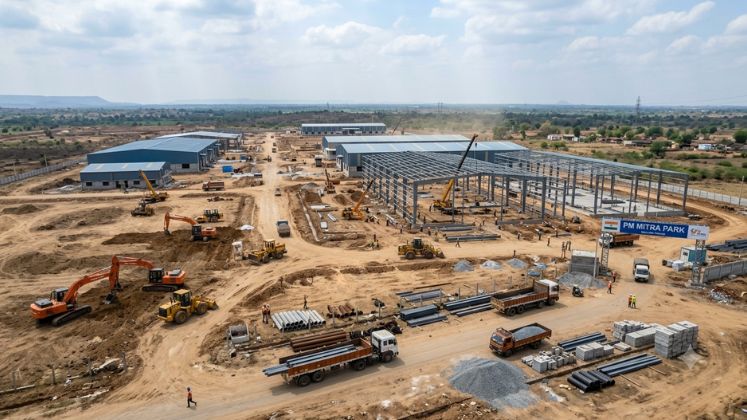
Two public-private partnership (PPP) projects under the PM MITRA scheme have received approval from the Public Private Partnership Appraisal Committee (PPPAC), clearing a key milestone towards the launch of the bidding process. Together, the two integrated textile parks are expected to attract around Rs. 20,000 crore (US $2.12 billion) in investment into India’s textile sector.
According to sources, the PPPAC recently approved the bid documents for the proposed PM MITRA parks at Lucknow in Uttar Pradesh and Vansi in Gujarat’s Navsari district.
The two greenfield integrated textile parks will be developed by private developers under the Design, Build, Finance, Operate and Transfer (DBFOT) model.
Each park is expected to attract investments of approximately Rs. 10,000 crore (US $1.06 billion) and create around 100,000 direct jobs and a further 200,000 indirect employment opportunities. The concession period for both projects has been fixed at up to 50 years.
The Lucknow PM MITRA Park will be developed across 1,000 acres through a special purpose vehicle jointly owned by the Centre and the Uttar Pradesh government, with equity participation of 49% and 51%, respectively. The project involves an estimated capital expenditure of Rs. 1,946.92 crore (US $206 million) to develop core infrastructure, plug-and-play facilities, common utilities, housing and logistics infrastructure.
Meanwhile, the Gujarat PM MITRA Park at Vansi in Navsari district will be established over 1,142 acres through a similar joint venture between the Centre and the state government. The project carries an estimated cost of Rs. 3,209 crore (US $340 million) and will include investments in civil infrastructure, common effluent treatment facilities, power infrastructure, commercial amenities and logistics infrastructure.
During the appraisal process, the PPPAC recommended several refinements to strengthen the concession framework before the bid documents were issued. These included revisions to bidder eligibility criteria, mid-term performance assessment milestones, land pricing mechanisms, termination payment provisions, user charge regulations and technical specifications for shared infrastructure, including common effluent treatment plants and zero-liquid discharge systems.
The committee also considered safeguards to ensure sustained project development throughout the concession period and to prevent developers from front-loading revenues through early land monetisation. Project authorities accepted several of the committee’s recommendations, including greater clarity on technical specifications, uniform qualification criteria and improved provisions relating to termination payments.