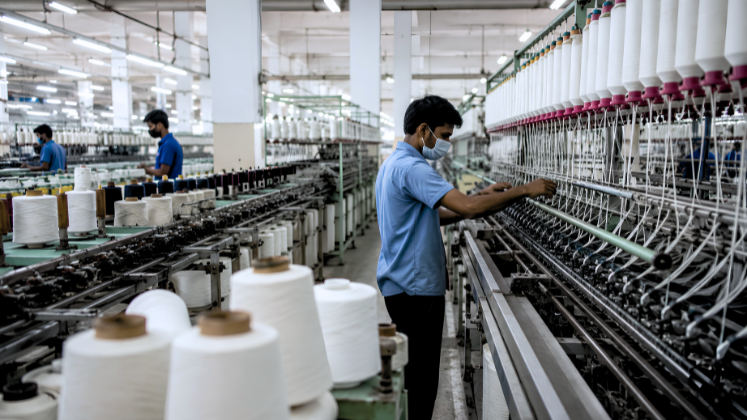
India’s Ministry of Textiles is planning to expand textile manufacturing into states such as Chhattisgarh, Kerala, and Jharkhand as part of a strategic effort to reduce reliance on established textile hubs like Tirupur, Surat, Panipat, and Ludhiana.
Traditional clusters often face recurring challenges, including seasonal labor migration and saturated infrastructure, which can disrupt output. By opening up new regions, the government hopes to create a more resilient supply chain that can better support the target of increasing India’s global textile export share.
Apart from the newly identified states, Telangana, Odisha, and Madhya Pradesh have also emerged as important garment manufacturing hubs. These states have attracted significant investments from both national and international apparel and textile companies.
Under the third phase of the Production-Linked Incentive (PLI) scheme, the Ministry of Textiles has set up a dedicated unit to work with companies and state governments to implement new projects and facilitate investments. The PLI scheme, which covers Man-Made Fibre (MMF) apparel, fabrics, and technical textiles, is expected to remain a key driver of the sector’s next investment cycle.
Industry leaders noted that expanding textile manufacturing into new states will require significant investment in infrastructure, skilled workers, and supply chains. Unlike established hubs such as Tirupur and Surat, these regions will need time to develop the support systems needed for efficient production, which could lead to higher costs and project delays in the initial stages.